LAST TIME Trump warns Iran over Strait of Hormuz mine: 'Consequences will be unprecedented'


US President Donald Trump has warned Iran that it will face “unprecedented” consequences if it mines the Strait of Hormuz. The American press writes that the regime in Tehran has already started to launch mines in the strait.
“If Iran has placed mines in the Strait of Hormuz – we have no information that they have – we want them removed, immediately! If the mines were placed, for whatever reason, and they are not removed immediately, the military consequences for Iran will be at an unprecedented level. If, on the other hand, they remove what was placed, it will be a huge step in the right direction!” wrote Donald Trump, in a post on Truth Social.
Trump announces destruction of more Iranian ships
Trump also warned that ships involved in possible strait mining would be destroyed.
“We are using the same technology and missiles used against drug traffickers to permanently eliminate any boat or ship that attempts to mine the Strait of Hormuz. We will deal with them quickly and violently,” the US president wrote.
Shortly after this message, Donald Trump returned with a new post, in which he announced the destruction of some ships that could be used in mines.
“I am pleased to report that in the last few hours we have struck and completely destroyed 10 inactive minefields, with more to come!” Trump said.
Unofficial information about strait mining
CBS News reported that a US official said on condition of anonymity that Iran is preparing to deploy naval mines in the Strait of Hormuz, using small boats that can carry two or three mines.
Iran's stockpile of mines is not precisely known, but estimates in recent years have ranged from 2,000 to 6,000, produced in Iran, China or Russia.
CNN also cited intelligence sources as saying that the mining process had already begun, but on a fairly small scale.
Iran would still have 80% or even 90% of the small vessels it had before the start of the war, vessels that could be used in the mining operation to lay several hundred mines.
Also, the operation to block the strait could also be supported by missile batteries located on the coasts of Iran, as well as boats with explosive charges.
Several oil tankers were attacked
The US Navy has turned down almost daily requests from the naval industry for military escorts through the Strait of Hormuz since the start of the war with Iran, saying the risk of attacks is too great at this time, according to sources familiar with the matter, cited by the Reuters news agency on Tuesday.
The US Navy's assessments point to a continued disruption to Middle East oil exports and reflect a divergence from President Donald Trump's statements that the US is prepared to provide naval escort whenever necessary to resume regular shipping on this important sea route.
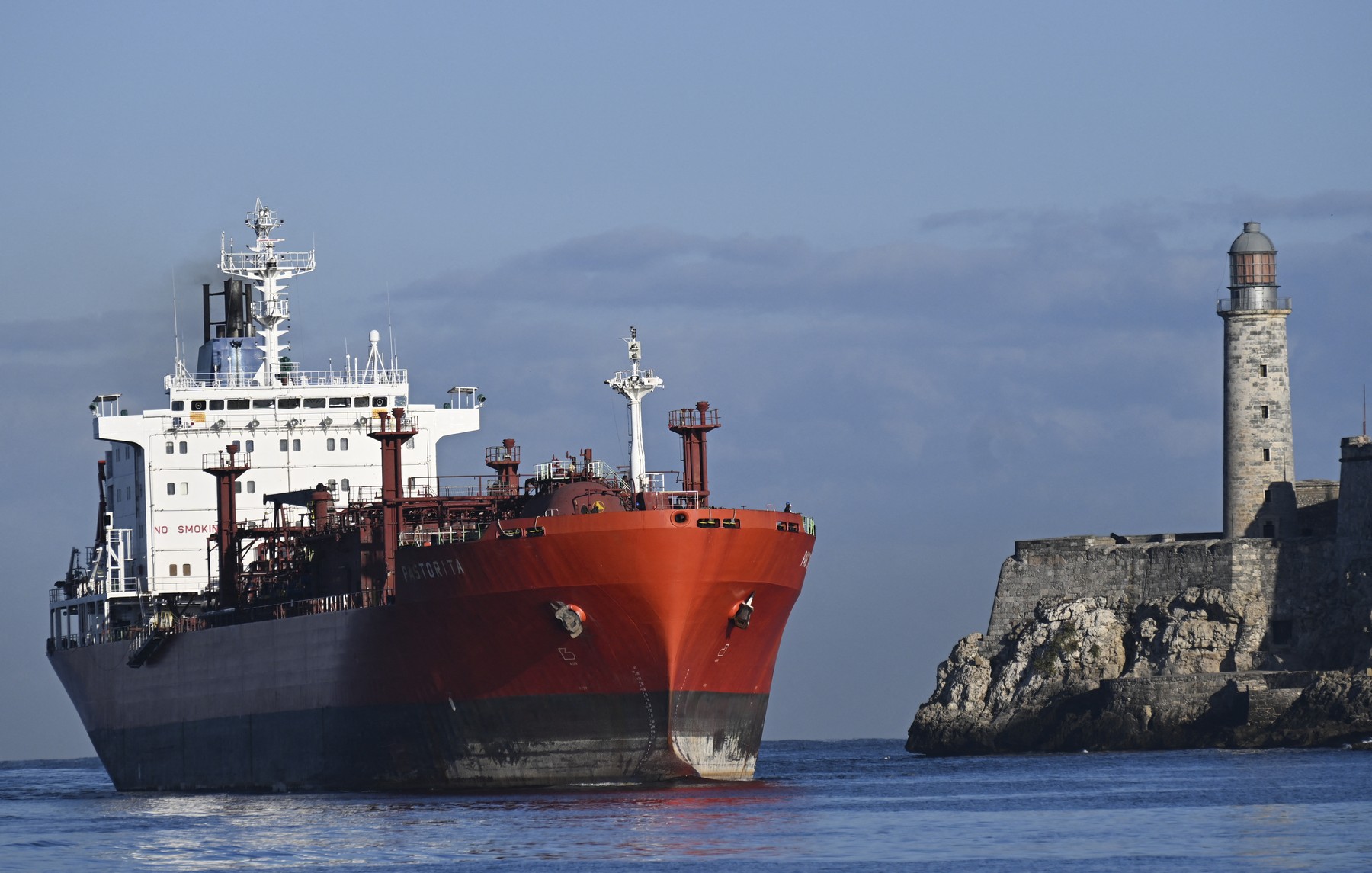
Shipping through the narrow Strait of Hormuz has been virtually halted since the start of the US-Israel war against Iran more than a week ago, stymieing exports responsible for about a fifth of the world's oil supply and sending global oil prices soaring to levels not seen since 2022.
A senior Iranian Revolutionary Guard official said the strait was closed and Iran would fire on any ship that tried to pass, Iranian state media reported last week. Several ships have already been hit.
“The US Navy has yet to escort an oil tanker”
White House spokeswoman Karoline Leavitt said earlier on Tuesday that the US has not yet escorted any oil tankers through the Strait of Hormuz, contrary to a since-deleted X message by Energy Secretary Chris Wright.
However, the US Navy is prepared to do so if necessary, Leavitt said, according to CBS News.
“I was made aware of this post,” Leavitt said during a White House press conference.
“I have not had the opportunity to speak directly with the Secretary of Energy on this subject. However, I know the post was deleted fairly quickly and I can confirm that the US Navy has not escorted any tankers or ships to date, although of course that is an option that the President (Donald Trump) has said he will certainly use if and when necessary at the right time,” the spokeswoman added.