Do you have a plot of land without a local plan? A timely decision is better than no decision at all


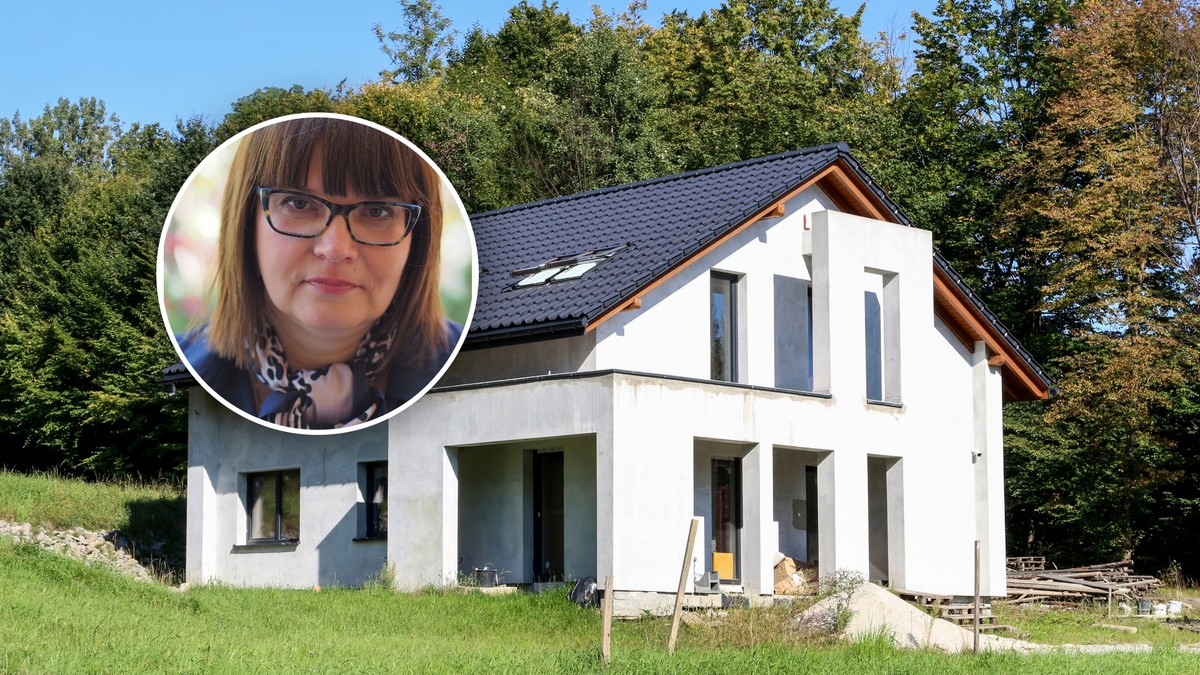
For plot owners, who last year began to apply en masse for decisions on development conditions (also referred to as WZ or “wuzetka”), the greatest practical importance is the possibility of obtaining a decision for an indefinite period.
This option gives you freedom to decide on the moment of investment implementation and eliminates the risk that the “wuzetka” will expire during the long procedure of obtaining a building permit.
Read also in BUSINESS INSIDER
From January 1, 2026, in principle, all decisions on development conditions issued after that date will be time-limited and will expire after five years from the date on which they become final.
Dr. Agnieszka Grabowska-Toś, managing partner of the Kancelaria Radców Prawnych Kania Stachura Toś, expert of the Real Estate Committee of the Polish Chamber of Commerce, notes that – what is particularly important – in many cases, obtaining a new decision after the expiry of the previous one could turn out to be impossible, for example due to the limitations resulting from the general plan.
In her opinion, concerns landowners were concerned not so much with the introduction of a five-year validity period for the General Meeting's decisions after January 1, 2026, but with the risk that after its expiry they will not be able to obtain another decisionif their plot is not included in the general plan in the development area.
However, at the end of last year, the Sejm passed an important change that provides for a significant exception to the new rule.
Which decisions on development conditions will be valid for an indefinite period?
If the owner of the plot submitted an application for determination of development conditions before October 16, 2025, and the decision is issued after January 1, 2026, it will also be indefinite – explains Dr. Agnieszka Grabowska-Toś.
And he emphasizes that only the date of submission of the application is crucial here, not the date of initiation of the proceedings.
See also: See also: How to build a building without permission? Six things you need to know
Not only the deadline for submitting the application is important
Decisions on development conditions that were issued before January 1, 2026 and became final before that date will also remain indefinite.
— It is worth emphasizing here that the concepts of “final decision” and “final decision” are not the same.although in practice they are often confused. From the point of view of the plot owner who does not want to rush the investment and therefore wants to obtain an indefinite WZ decision, the validity of the decision is crucial, says the expat.
So what is the difference between a final decision and a final decision?
— To put it simply, it can be assumed that the decision of the General Meeting becomes final when the deadline for filing an appeal expires and none of the parties takes advantage of it, or when the Local Government Appeals Board upholds it. Whereas the decision becomes final only when no complaint is filed against the SKO's decision to the administrative court and the deadline for filing it has expired. However, if a complaint is filed, the decision will become final only when a final court judgment is issued upholding it, explains Dr. Grabowska-Toś.
See also: It will be easier for communities to raise advance payments. The government wants to end micro-studio apartments [ANALIZA]
More decisions of the General Meeting, but longer waiting time
However, increasing the number of indefinite General Meeting decisions has its price.
— Since December 9 last year, plot owners have lost the opportunity to effectively demand the imposition of a penalty on the commune for failure to issue a decision on development conditions within 90 days, says the legal advisor.
Let us remind you that until December 9, in accordance with art. 64 section 1 point 1 of the Act on Spatial Planning and Development, in the event of failure to issue a WZ decision within 90 days of submitting the application, the voivode could impose on the authority a fine of PLN 500 for each day of delay – at the request of the person applying for the determination of development conditions.
— As a result of the amendment, the 90-day period does not start, and if it has already started, it is interrupted. This deadline will start to run again only from January 1, 2027. In practice, this means that even if the application for issuing a WZ decision was submitted last year and the 90-day deadline has already expired, the failure to issue it within this period does not currently constitute a basis for applying to the voivode to impose a penalty on the commune – explains Dr. Agnieszka Grabowska-Toś.
Paradoxically, this solution may also bring positive effects to plot owners. How is this possible?
— So far, many offices – fearing financial sanctions – have issued negative decisions without a thorough analysis of the application, just to meet the statutory deadline. It was also a common practice to adopt resolutions to proceed with the preparation of local plans and to automatically suspend proceedings for the issuance of WZ decisions, says Dr. Agnieszka Grabowska-Toś.
There were even suggestions on social media to treat such activities as a way to avoid penalties. That's why the expert hopes that the temporary abolition of sanctions will encourage the authorities to take a more substantive approach to matters, and plot owners will not be forced to appeal against faulty decisions issued solely “to meet the deadline”.
The general plan can be canceled in part
A provision that is already in force, but has been somewhat passed over in silence, also deserves special attention. It directly concerns voivodes and courts, but it affects plot owners.
From December 9, 2025, voivodes and courts may declare the general plan invalid only in part. The plan may be invalidated in the event of a significant violation of the rules or the procedure for its preparation – similarly to local plans.
— So far, voivodes, unsure as to the admissibility of partial invalidation of the first general plan, decided to declare it invalid in its entirety, even if the shortcomings concerned only some of the provisions of the general plan – says Dr. Agnieszka Grabowska-Toś.
The new solution is of great practical importance for property owners.
If the general plan comes into force in a given commune and the plot is not covered by the local plan, the implementation of the investment and obtaining a decision on development conditions will only be possible if the general plan provides for a development area for it.
— Invalidation of the entire general plan due to shortcomings in its small scope could mean a complete blocking of investment until the plan is re-adopted. Since the end of last year, this risk has been significantly reduced, he says
The risk of the general plan being invalidated was not just theoreticalwhich was best demonstrated by the Silesian Voivode. It was probably he who invalidated the first general plan prepared for the Pyskowice commune. The reason was the incorrect determination of the indicator of the minimum share of biologically active area in one of the planning zones.
The same voivode also invalidated the general plan of the Sławków commune. This time, during the supervisory proceedings, he stated that the resolution had been adopted in violation of the rules for preparing a general plan. The Silesian voivode also invalidated the Tychy general plan, which allowed development in green areas.
More time for general plans means more time to get a decision
Pursuant to the applicable regulations, communes should adopt general plans by June 30, 2026. On that day, studies of conditions and directions of spatial development will expire, as well as the possibility of issuing decisions on development conditions.
This means problems for plot owners where there are no local development plans. The lack of a general plan means the inability to obtain development conditions and, consequently, a building permit.
However, it is already known that most municipalities will not be able to adopt general plans by the end of June. Therefore, the Ministry of Funds and Regional Development is negotiating with the EU once again to extend the deadline for adopting general plans, which are one of the KPO milestones. The European Commission has already agreed to extend this time by two months, until August 31, 2026. This still needs to be approved by the EU Council.
The original deadline for adopting general plans will be extended by as much as eight months. As long as studies of conditions and directions of spatial development are in force, you can apply for development conditions.
— From the perspective of plot owners, the extension of the deadline for adopting general plans is very good news. They will gain more time to obtain development conditions under the current rules, says Dr. Agnieszka Grabowska-Toś.
It is expected that even despite the extension of the deadline, most communes will not have time to adopt the plans. This does not change the fact that when planning an investment, it is worth checking whether the plot is covered by the local spatial development plan and, if not, what the draft general and territorial plan provides for it.