“British workers are demanding.” This is how InPost conquers the UK and challenges Royal Mail

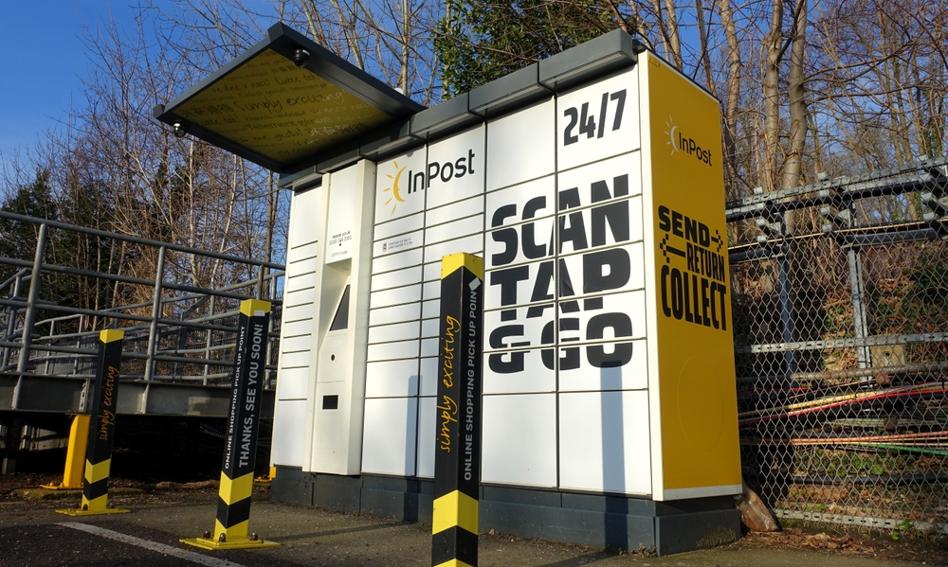
London is a market the size of the entire Poland for e-commerce. No wonder InPost plans to invest £600 million in the UK by 2030. Michael Rouse, head of the company's international investments, reveals the background of the rapid expansion, assesses the competition from the giant Royal Mail and openly admits why he prefers to focus on the Polish work ethos on the foreign market rather than on British peers.
– We fish where the fish are – emphasizes Michael Rouse, head of InPost's international investment department. What attracted the company to Great Britain was none other than the largest e-commerce market in Europe, because London itself can be easily compared to the whole of Poland. This does not mean, however, that everything is rosy – entering a new market always involves the need for appropriate adjustments. “Just like McDonald's,” Rouse compares.
– If we really want to build a business outside Poland, we must be present on the largest, important markets. This was our main driving force and motivation – says Michael Rouse, who met with Polish journalists in London.
Given our starting point, we have committed to investing over £600 million by 2030. If you look at InPost's operations in the UK two years ago, we had 120 employees here. At the end of December, there were already 9,000 of them. This is just an example of the scale of changes. This is partly driven by acquisitions and partly by organic growth. It's a combination of both factors, he adds.
Let us recall that InPost has already made two acquisitions in Great Britain: the traditional press distributor Menzies Distribution and the Yodel company, which has been significantly underinvested over the last decade. – We combined both of these assets with our existing investments in parcel lockers, mainly to create our own, comprehensive network (end-to-end), such as the one built in Poland. The idea was to connect logistics operations with a network of devices, explains Rouse. – Acquisitions accelerated our growth – within two years we went from zero market share to almost 8-9 percent. – he adds.
Farage like Brexit, or we'll live and see
– This is a long-term investment and this is the basis of our commitment to the British government – begins the head of InPost's international investment department diplomatically. – The model we need to build is clearly capital-intensive: we install parcel lockers and build logistics infrastructure. Personally, I see it this way: we are building the network of the future for e-commerce – he adds.
As he explains, Brexit is a perfect example because, despite initial promises, it increased regulations and although almost all companies initially recorded a decline, they quickly adapted. – You just have to find a solution – says Rouse. Hence the belief that regardless of the choice the British make, InPost will remain in the UK.
Royal Mail? Which Royal Mail?
– Royal Mail has its own challenges: they are heavily unionized, they are hampered by outdated legislation obliging them to handle traditional mail, and technology and data are not at the core of their business – he enumerates head of InPost's international investment department. Sound quite familiar?
However, it encourages them to promote out-of-home delivery. – Today we have the largest network of its kind in the UK, and it would take competitors 10 years to build it. Therefore, the more Royal Mail promotes parcel lockers, the more beneficial it will be for InPost. I strongly encourage them to do so, says Rouse.
A Polish company on the British market. “I choose Polish employees”
Among the greatest challenges awaiting a company that wants to conquer foreign markets, Michael Rouse diagnosed the three most significant pitfalls.
First: proper model export. As he argues, InPost wants to provide the British market with the same level of services to which Polish consumers are accustomed. On the other hand, it must be adapted to different needs and the example of the most famous fast food chains is given.
– McDonald's is everywhere, but in the US it is different than in Europe or Turkey. Local adaptation is essential. As a founder, you have to go there, live there, hire great people and personally discover this “recipe for success,” he explains.
The second issue is employment. – The great thing about this company is that despite international expansion, our Polish market continues to grow successfully. In other companies, it often happened that we exported talents because the home market was declining. Here we had to find a balance between exporting great experts from Poland (who understand our model) and finding competences and people with the appropriate cultural DNA on the local market – describes the manager InPost's international investment division. And mark it directly:
If today, when employing university students, I had to choose between Polish and British graduates (who are sometimes more demanding), I would be biased. I would choose Polish graduates because I know that I will gain someone hungry for success and determined.
Behind a dynamically developing company, there is also another problem with employment, with the so-called “twice in advance”. – I used to be looking for a person to manage a company worth 500 million pounds, today I need someone who can handle a company worth 2 billion pounds, but this person must first “go back” to managing a smaller company in order to properly guide its growth towards these levels – he adds.
The third challenge is based on cultural differences. – I believe that the Polish communication style is more direct and gets straight to the point, which as an Irish person I fully appreciate. There are fewer “nice words” in it. In English, the expression “that's interesting” often means “I don't like it.” I prefer it when someone just says they don't like it, concludes Rouse.
The conversation was made possible by the British Embassy in Warsaw. The aim of the meeting was to show the path of Polish companies to markets in the United Kingdom.
aw