The Strousberg affair: The scandal that was to leave Romania without a king. How the Romanian state was robbed under the eyes of Carol I


Only five years after his enthronement, Charles I, the ruler of the United Principalities, wanted to abdicate. The main reasons were related to both the anti-German trend in the Principality and the “scandal of the century”, one of the biggest robberies in the history of the Romanian state.
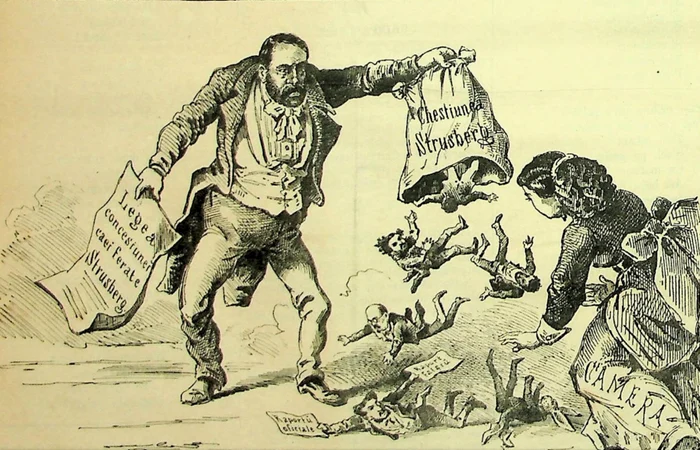
Cartoon regarding the Strousberg affair PHOTO National Archives of Romania
From the middle of the 19th century, the Romanian Principalities went through a series of fundamental transformations that decided the destiny of Romania today. It was an all-or-nothing period when intellectuals, politicians and patriotic boyars risked every card our country had in the game of European geopolitics, taking advantage of every comma and omission in treaties or every favorable moment (as was the Crimean War).
The double election of Cuza, its recognition, the extensive reform plan to modernize Romania with numerous political and social convulsions, the forced abdication of Cuza, the enthronement of Carol de Hohenzollern on the throne of the United Principalities, were the turning points that marked our existence as a nation until the seventh decade of the 19th century. To all these game moments of national survival, on the fine line of history, we can add the intention of Charles I of Hohenzollern to abdicate (on March 10, 1871), after only five years of reign. It would have been a real disaster, bringing the Principalities back to where they left off, i.e. in 1859, with an increased risk of dismemberment.
Much has been written and spoken about the reasons for Prince Carol's desire to abdicate, focusing especially on anti-German sentiments in the Principality, on loyalty to the Cuza of the peasantry, on the Balkanism of Romanian politics. All had their role and weight in making such a radical decision of the Prussian prince. However, nothing weighed more heavily than the accusations of Charles I's involvement in the “scandal of the century” or the “Strousberg Affair”, as it went down in history. This scandal, the only stain on the reign of Carol I, refers to the construction of the first railway network in Romania and the robbery practiced by a Prussian charlatan imposed on the Romanians, through preferential contracts and international pressure. It was one of the biggest stings given to the Romanian people, by a foreign businessman, favored by an international blackmail.
A country bathed in mud and a Prussian combination, with the consent of Charles I
Charles I came from a state in full economic, military and political development. Arriving in the territory of the Pesemne Principalities, he had the feeling that he had gone back in time. Especially because of the infrastructure. The principalities had a truly medieval transport network. Only one railway section, of small extent, operated between Bucharest and Giurgiu, a route that connected the capital with the large Danube ports. And this in the conditions in which Prussia, in 1860, had over 6000 kilometers of railway. In Moldova and Wallachia, the best roads were paved, a rarity by the way. Otherwise streets and dirt roads that became a nightmare after thawing or heavy rains. That is precisely why one of the priorities was the setting up of a modern infrastructure.
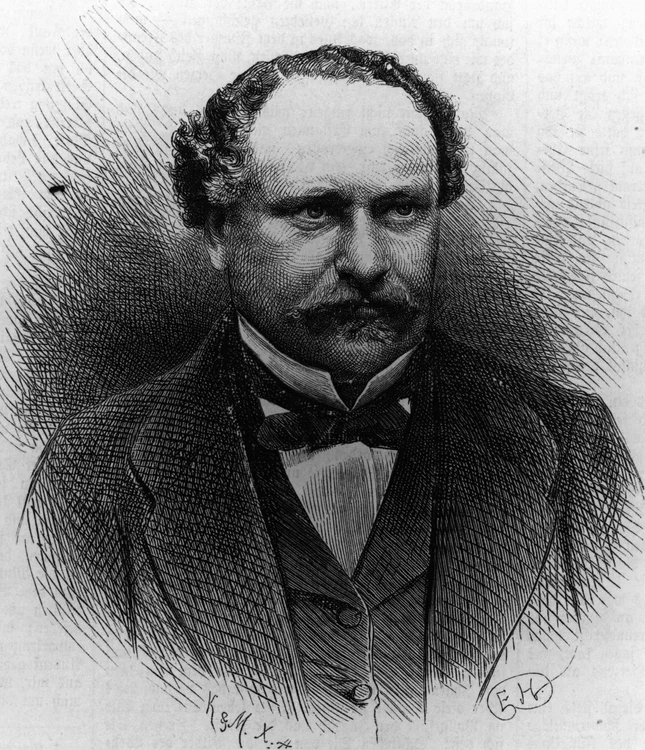
Bethel Henry Strousberg PHOTO profimedia
Both by means of the railway, which would have really united Moldova with Wallachia, but also by means of modern roads. Charles I, but also the decision-makers of that time put emphasis especially on the railway, the train being a very fashionable means of industrial and personal transport in Europe. Especially in the context where the use of the automobile was almost unknown. “Only through a railway line between Bucharest and Iași will Moldova really join Muntenia and any separatist tendency will disappear”, wrote Carol I in a letter addressed to his father, on January 13, 1868. For his part, Mihail Kogălniceanu specified that “iron roads will change the face of Romania”.
The government led by Nicolae Golescu, a radical liberal, ordered the organization of an international tender, for the appointment of an entrepreneur to build the first railway network on the territory of Romania. Several Austrian companies with experience in railway construction, a Spanish company, and the Prussian company Strousberg participated in the auction. Although the winner was the Austrian Offenheim trust, Charles I stepped in and imposed the Strousberg company on the commission. All at the express recommendation of his father Carol Anton de Hohenzolern.
Besides the fact that it was a company from his native country, the shareholders of this railway construction trust were prominent representatives of the Prussian nobility, including the Duke of Ujest. The imposition of this trust at auction was considered by the political opposition and anti-dynasty voices to be a family business at the expense of the Romanian state. As expected, the Strousberg company won the tender. Carol I, together with the members of the Government, decided to set up the railway network on the following sections: Roman – Mărăşeşti – Tecuci – Bârlad, Galati – Brăila – Buzău – Ploiesti – Bucharest, Bucharest – Pitesti – Slatina – Craiova – Turnu Severin – Vârciorova and optionally Buzău – Focşani – Mărăşeşti. Practically a network that connects the north to the south and then to the border with the Austro-Hungarian Empire.
The Romanian state looted like wildfire and exposed to international blackmail
The Strousberg company was run by a shady character. His name was Henry Strousberg, and he was a German industrialist of Jewish origin born in East Prussia. He migrated to England at the age of 12 where he made his first scam. More precisely, he ran away with the money of a real estate company and went to America. He was caught and punished. Later, he found his purpose in the United States, working including as a director of an insurance agency, but also as a journalist. It is certain that he made a fortune. In 1850 he returned to Germany and started to deal with the railway construction business.
Having contacts in the Prussian government, he managed to win contract after contract, building several sections of railway in Prussia. He actually became a sort of “king of the railways”. Cezar Bolliac “smelled” him from a distance, especially since he had discovered his past. “All these concessionaires are nothing but samsari”he stated in the newspaper “Trompeta Carpathilor”. From the beginning, the Strousberg contract was a big deal. The contract was drawn up in Berlin, and the execution of the works on the mentioned sections cost 270,000 gold lei per kilometer, i.e. 247,000,000 lei for the 914 kilometers to be executed. An exorbitant price. At the same time, the Strousberg company could issue bonds with 7.5% interest guaranteed by the Romanian state. Henry Strousberg had just struck.
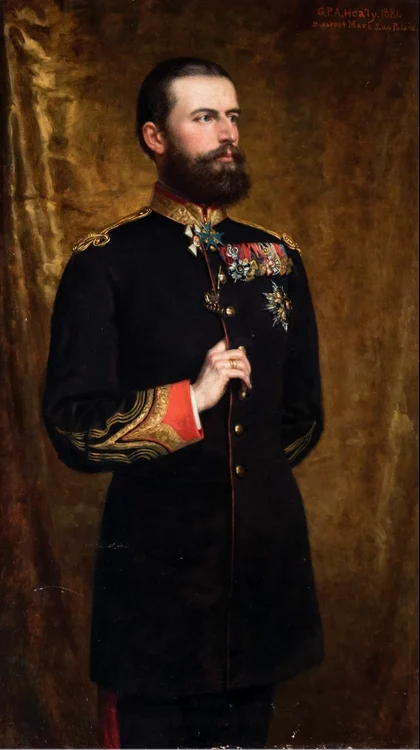
Prince Charles I in his youth
And that was not all. By contract, the company, after carrying out the works, could operate the railway for 90 years. At the same time, Carol I, also at the request of his father, appoints him a commissioner of the Romanian state to supervise the issuance of bonds by a certain Ambronn, a Prussian former chamberlain of the Hohenzollerns.
To top it off, Ambronn was good friends with Henry Strousberg. This Ambronn committed numerous illegalities and defrauded bond buyers generating a huge media and political scandal. Absolutely outrageous things began to emerge. “Public dissatisfaction is growing day by day; the world sees in this matter not just a bad contract, but a symptom of the weakness of the state”said Titu Maiorescu.
Actually, the Romanian state was being stolen from its face. The work was difficult and of poor quality. Strousberg took money, with Ambronn's help, on unfinished work. The Romanians paid 5 million lei for 19 kilometers that could only be found on paper. Not to mention forgeries in documents and poor quality work paid for luxury workmanship.
Under these conditions, Ambronn is summoned by the Government, as a commissioner-controller, not to pay for the 19 kilometers not completed. Understood with Strousberg, Ambronn expedites payment. Strousberg started blackmailing the Romanian officials, saying that if he didn't receive 4 million thalers, he would leave the railway works at a standstill.
On the other hand, the money stolen from the Romanians was divided by Ambronn among the Prussian shareholders. Ambronn was asked to resign, but he refused. A particularly harsh blackmail of Prussia followed. Chancellor Otto von Bismarck threatened to complain to the Sultan if the issue was not resolved in favor of the Prussians. Especially since they had bought bonds. The Strousberg concern goes bankrupt, and the railways in the Principality are left in shambles.
“That cannot be done Your Majesty!”
The Strousberg affair sparked a scandal of major proportions in the Principality. The anti-German current had intensified and more and more voices, especially from Bucharest and the mountain towns, demanded the proclamation of the Republic and the expulsion of Carol I from the throne. The situation was explosive. In August 1870, there were movements in Ploiești triggered by the hilarious diversion of the artillery officer Candiano Popescu. He convinced, with a fake telegram, more than 3000 people from Ploiești to take to the streets and demand the proclamation of the republic. “I inform you that Prince Carol I was deposed last night. A Regency was appointed headed by General Nicolae Golescu and a new government was established, with Ion C. Brătianu as the Ministry of War”he wrote in that fake.
The lie caught the crowd, but not Major Polizu or the captain of the border guards from Predeal who refused to join the “revolution”, and even dispersed the crowd.
Later, the publication of the plunder made by the Strousberg affair, and the humiliation of France in the war between Prussia and France of 1870-1871, inflamed spirits even more. Charles I was accused of involvement in the Strousberg story. In addition, there was a sympathy for France in the Principality. The climax took place on the occasion of the festivities dedicated to the birthday of the German Emperor Wilhelm I, organized at Sala Slătineanu in Bucharest, on March 9, 1871.
Anti-dynasty and pro-republican protests took place in the capital. “Since the beginning of the banquet, the demonstrators gather at the door of the hall. They are not numerous, although it seems that the people of the Capital are rather hostile to the ruler. The demonstrators shout republican slogans, throw stones at the windows, the police do not manage to disperse them, the government does not take any measures. The demonstration seems to have been prepared with the permission of the Police Prefect, Simion Mihăilescu. The army is needed finally intervene”writes Silvia Marton in “Republica de la Ploiești” and “The beginning of parliamentarism in Romania”.
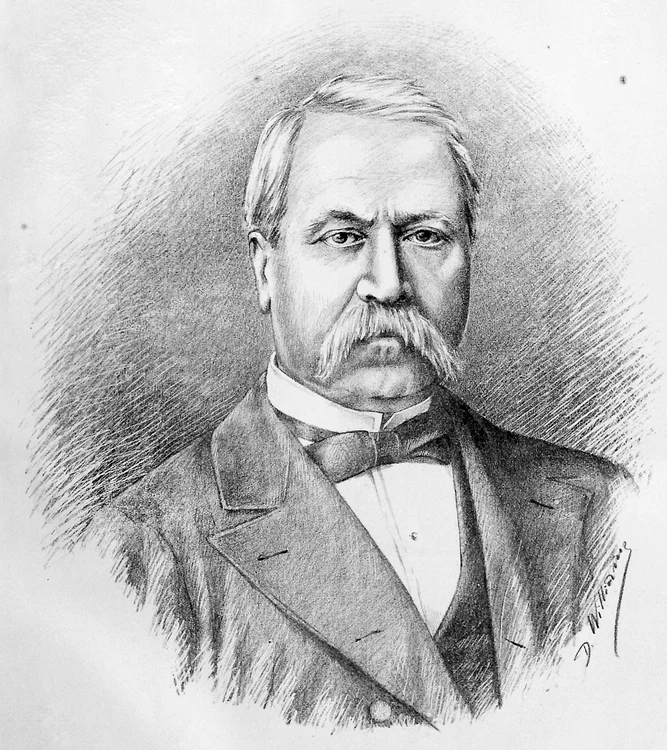
Lascar Catargiu
On March 10, 1871, Carol I demands the resignation of Prime Minister Ion Ghica and announces that he has decided to abdicate. He already had his bags packed. Lascăr Catargiu says directly to the German prince: “That is not possible, Your Majesty” and together with Nicolae Golescu I convince him to give up this decision.
“The two former lieutenants insisted on renouncing their abdication given the unfavorable external political circumstances for the Romanian state, barely established and lacking the independence so necessary for a more pronounced evolution in the concert of European civilization. Lascăr Catargiu, in particular, insisted with arguments, generated by this objective necessity”states Anastasie Iordache in her work “Golești Revolutionaries”.
In order to renounce the abdication, Carol I imposed two conditions: the formation of a government to vote on the budget and the resolution of the railway concession situation. Lascăr Catargiu consulted with deputies and established a conservative government. This government has brought the expected political stability. Despite the damage caused by the Strousberg affair, the reign of Carol I was a bet won by the Romanians.