The killing of Iran's supreme leader, Ayatollah Ali Khamenei, has created a moment of liberation for many oppressed Iranians, but offers no guarantee that Washington and Tel Aviv will be satisfied with what comes next, CNN reports.
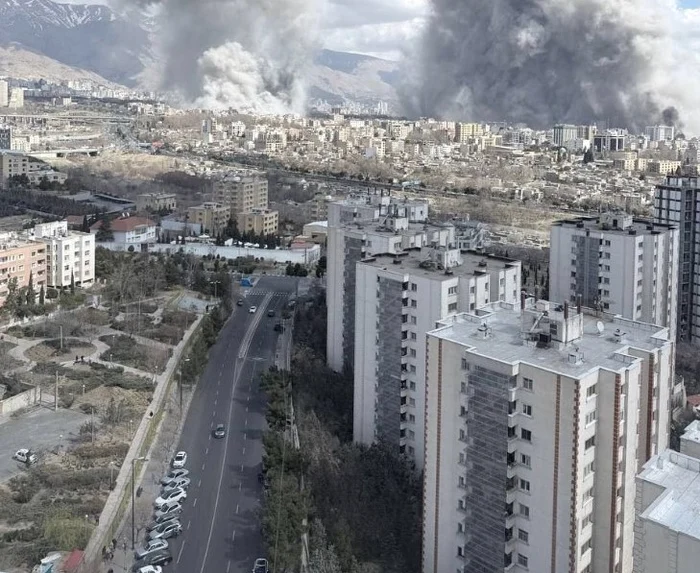
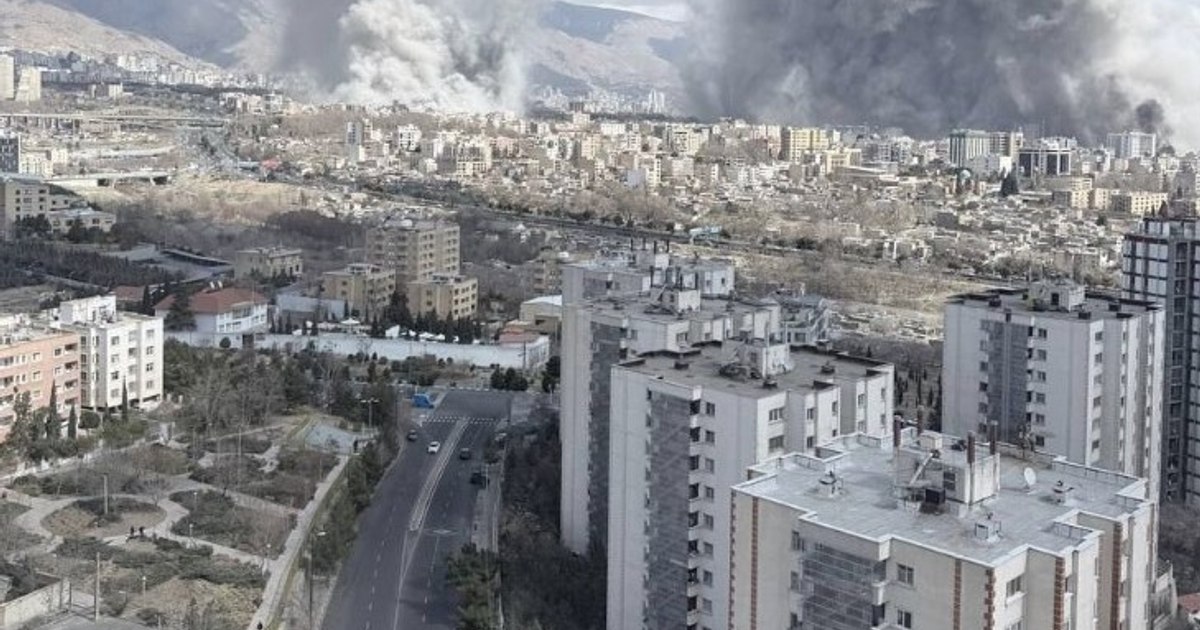
Tehran bombed/PHOTO:X
Khamenei's regime, marked by brutal repression and economic mismanagement, ended in one of the most violent episodes in the recent history of Iranian leadership. His removal triggered both celebrations in Tehran and 40 days of official mourning, but also uncertainty about the regime's future.
Israeli officials suggested the attack was rushed to take advantage of a window of opportunity during a meeting of senior leaders. US President Donald Trump appears to have followed a similar model to the one applied in Venezuela, indicating that he may have had a successor in mind to negotiate the future – just as, after the capture of Nicolás Maduro, he preferred deputy Delcy Rodriguez.
Iran is not as easily influenced as Venezuela
But Iran is not as easily swayed as Venezuela. For nearly 50 years, the theocracy has turned into an autocracy and kleptocracy, and a significant portion of the more than 90 million Iranians depend on the regime for their daily livelihood. In addition, a minority was involved in the suppression of dissent.
In contrast to Syria, whose security forces had been weakened after the 2024 civil war, Iranian forces have just refreshed their experience of brutality in suppressing protests in January.
The attack took out not only Khamenei, but also Defense Minister Aziz Nasirzadeh, Security Council chief Ali Shamkhani and Revolutionary Guards commander Mohammad Pakpour in just a few hours. This represents the removal of a newly reorganized security elite after June's 12-day war.
But history shows that airstrikes rarely lead to stable and favorable regime change. The hard line will try to fill the gap left, mostly to survive. In theory, there could be an attempt at consensus to present a facade of moderation, but this could be perceived as weakness by Tehran.
There is no clear opposition to take control
Reza Pahlavi, the heir to the Shah, cannot enter Tehran without the risk of an assassination attempt by the IRGC. Any solution will likely have to come from within the remnants of the regime.
But Khamenei's mistakes have made the US and Israel's mission easier: brutal repression and economic mismanagement have left Iran in obvious need of change, and the population is clamoring for more freedom and prosperity.
His posthumous response to the attacks angered neighbours, who have been hit by rocket and drone attacks, demonstrating once again how self-destructive the regime can be.
The major risk now is fracturing: if no faction gains control, fragmented violence and festivities could destabilize not just Iran but the entire region.
Trump can claim partial victories—hitting Iran's nuclear program, missiles, and ability to bully the U.S.—without committing to long-term engagement. The superior technology and firepower of the US and Israel provided a quick fix, but it does not solve the structural complexity that has made Iran a problem for the United States for over half a century.