Chaos in Iran. Netanyahu rubs his hands. Israel uses a fixed grip

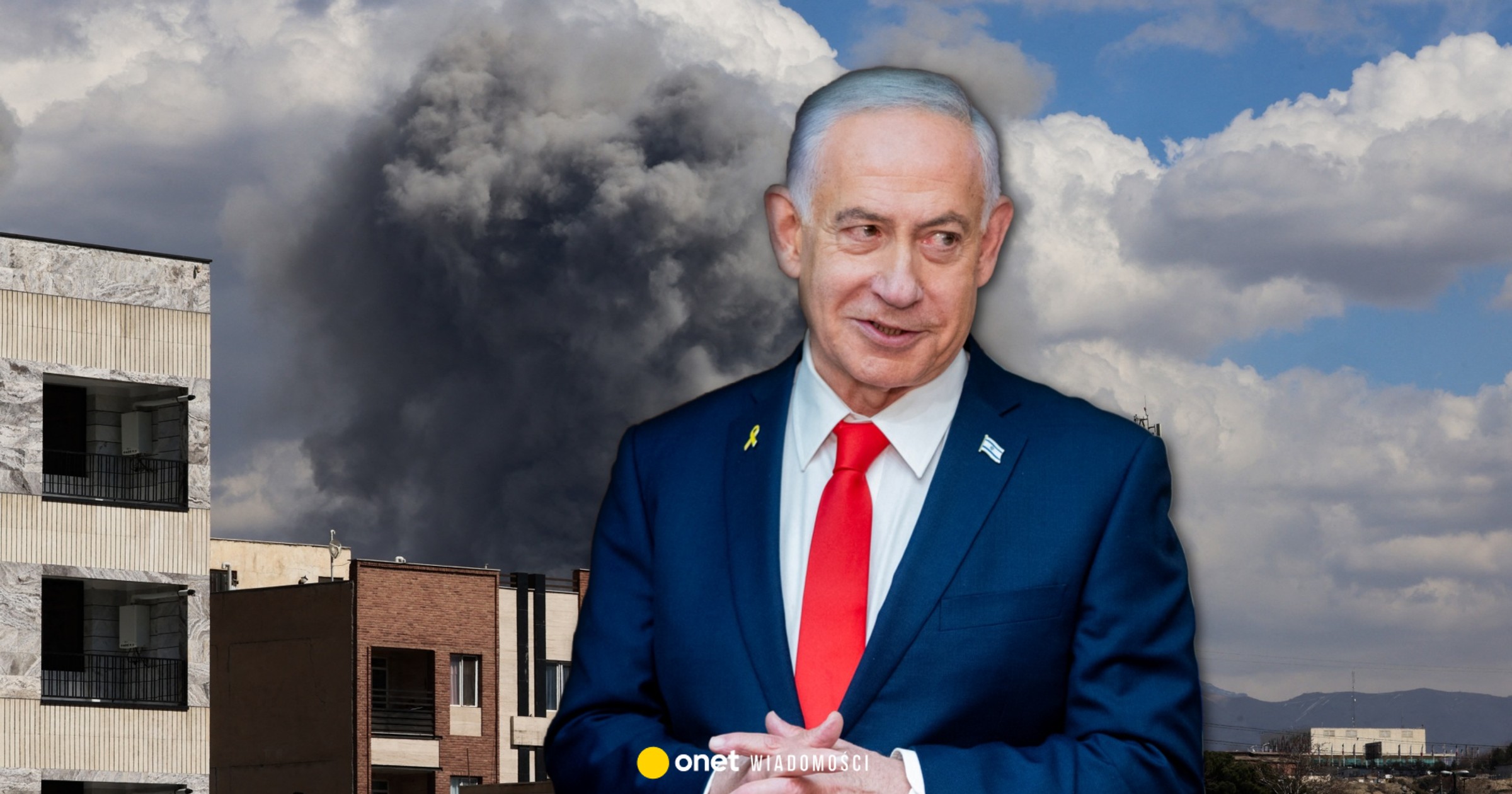
For years, Netanyahu has been the driving force behind military actions and sabotage against the nuclear program of the Islamic Republic of Iran and its government. Now that Khamenei is dead, the Israeli prime minister is close to realizing his greatest political ambition: neutralizing the Iranian threat.
The Israeli plan leaves much in the hands of the fate and courage of millions of Iranians. From Tabriz to Zahedan, the people of Iran are set to overthrow their regime's brutal security apparatus in massive street protests, with no clear idea of what kind of government could replace theocracy.
Netanyahu hopes to emerge victorious, even if the uprising he calls for plunges the country into violent riots. In an ideal world, a friendly regime would emerge in Tehran. However, Israel often follows realpolitik, recognizing that unrest may also serve its interests.
Typical Israeli strategy
The logic is clear. If countries are mired in internal political conflicts — or even civil war — they are unable to organize and turn against Israel.
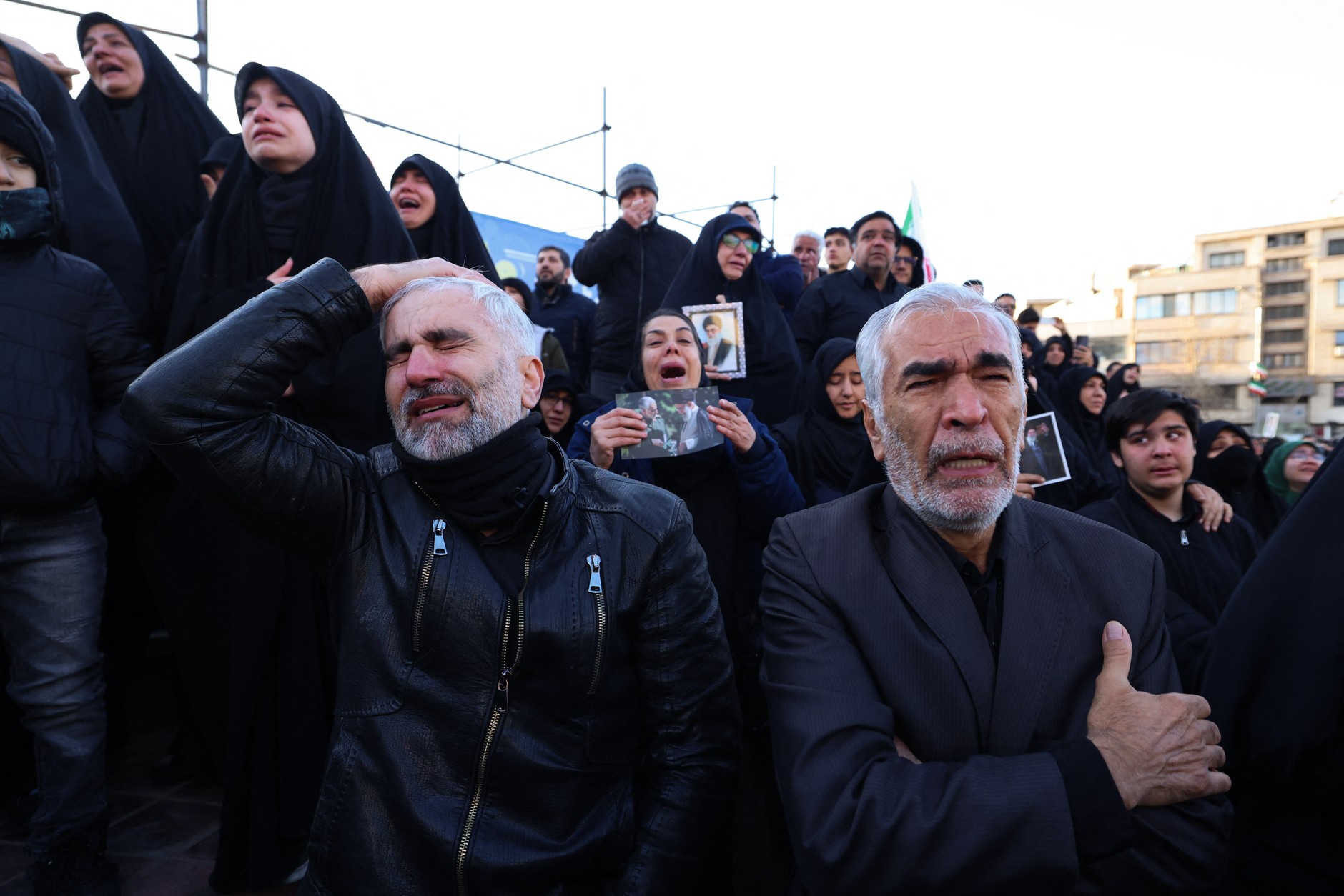
A group of Iranians mourn the death of their supreme leader, Tehran, March 1, 2026.Atta Kenare / AFP
It would be a mistake, therefore, to assume that Netanyahu's only desired goal is stabilization in Tehran. Instability can also work. If Iran is too weak to run uranium enrichment centrifuges and support Hezbollah in Lebanon and the Houthis in Yemen, that will also be a victory.
According to Netanyahu's foreign policy adviser, Ofir Falk, The goal of the war with Iran is simple: “win”. In an exchange of text messages with POLITICO, the expert adds that victory will come when “the threat from the Ayatollah's regime and its allies is eliminated.”
When asked what the Israeli government believes is happening inside the embattled regime, Falk replies almost nonchalantly: “We'll see what happens.”
American-Israeli mistake
Former Israeli Prime Minister Ehud Olmert tells POLITICO that what Netanyahu and Trump outlined was not a plan — just optimism. — Bibi [Netanjahu] he wanted war, and Trump wanted to do something special. However, I don't see any plan except hoping that the government will fall, he adds.
The strategy of destroying the enemy with overwhelming force and then hoping for a smooth transition to a benign regime achieves poor results. It is already clear that the situation in Iran will also be chaotic.
Before the 2003 invasion of Iraq, Gen. Colin Powell famously warned U.S. President George W. Bush: “If you overthrow the government, you overthrow the regime, guess who becomes the government and the regime and is responsible for the country? You. So if you destroy something, you will be responsible for it.”
This does not seem to appeal to Netanyahu and Trump, who believe that the Iranian nation now “owns” the country.
According to Israeli public television, Kan Netanyahu assured his cabinet ministers that Khamenei's death would shorten the military operation because it would encourage opponents of the regime to rise up. Few doubt the desire for change among most Iranians, but for the regime to fall, something would have to break in the security services.
Although Iran has lost many of its top leaders, it still manages to carry out retaliatory attacks in the Persian Gulf and the eastern Mediterranean. The Islamic Revolutionary Guard Corps has vowed revenge after promising to carry out the “most devastating offensive” in Iran's history.
Regime resilience
All of this suggests that the regime structure remains in place for now, even after Khamenei's death. — We were prepared for moments like this and we have plans for all scenarioseven for the time after the martyrdom of the honorable Imam Khamenei, said Mohammad Bagher Ghalibaf, speaker of the Iranian parliament. “You will see that once the leadership council is established, the power and integrity of the officials, the defense forces and the people will be beyond imagination,” he added in a video broadcast on state television.
The council will govern while the 88-member Assembly of Experts elects a new leader. This may happen soon.
But so far, the various organs of the Iranian state, many of which operated semi-autonomously under Khamenei and were not subject to micromanagement, still appear coherent and functional.
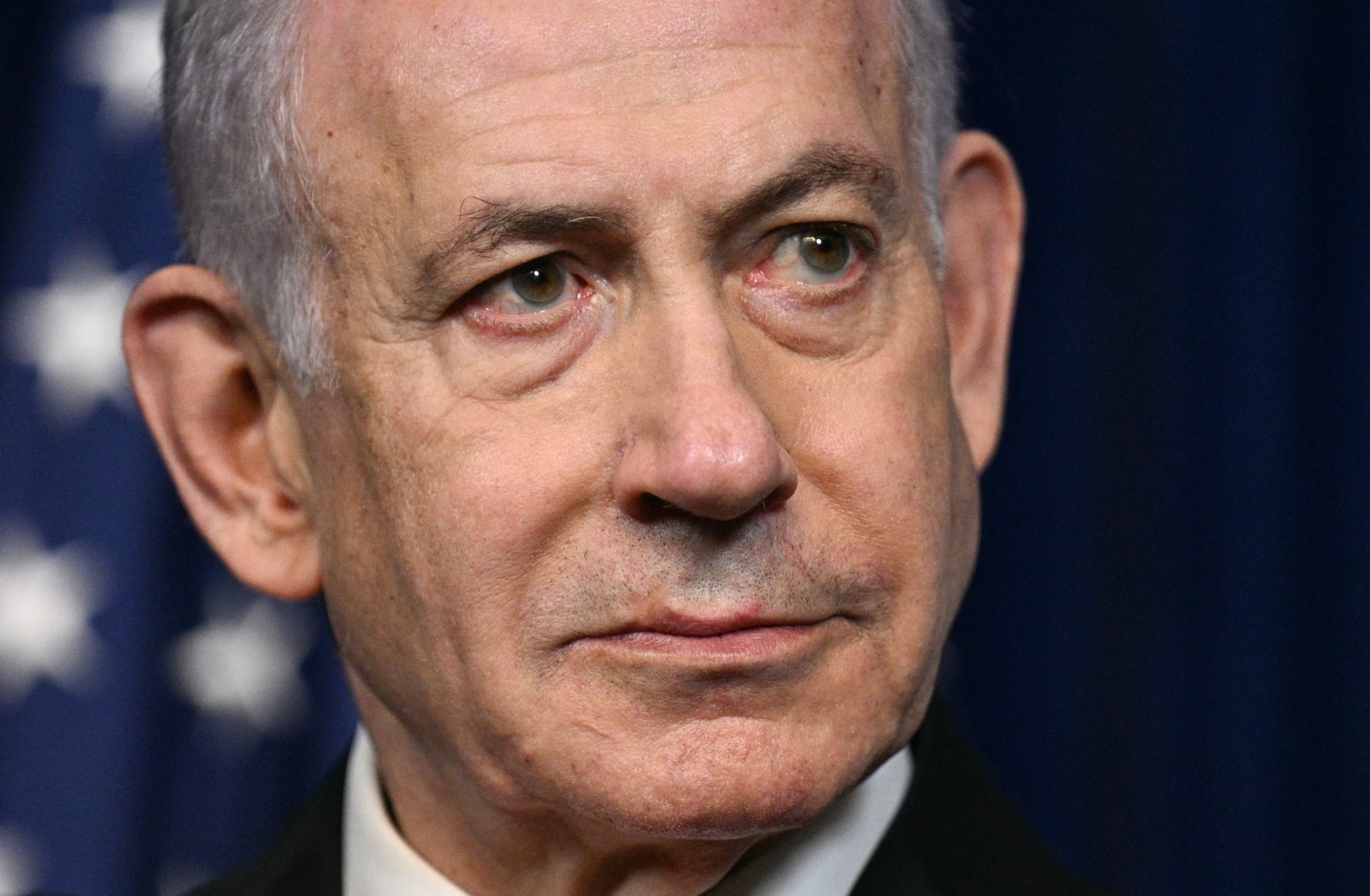
Israeli Prime Minister Binyamin Netanyahu, December 29, 2025JIM WATSON / AFP
The biggest threat
Former Prime Minister Olmert is also cautious about a potential collapse. “I will be surprised if Iran changes its character after this phase,” he says. — [Syryjski przywódca Baszszar] al-Assad killed more than half a million of his citizens and expelled millions who became refugees, and it took 10 years for his regime to fall. Iran has 90 million inhabitants. The regime will kill many, and even then it may not lose control – he adds. However, he admits that a US-Israel war could weaken Iran as a military power in the region, “and that in itself is not bad at all.”
An important question remains: can this be achieved without a united opposition?
— Can external military pressure realistically rely on an Iranian public that lacks coherent leadership, especially in the face of a regime that has operated under disciplined control for 47 years [Korpusu Strażników Rewolucji Islamskiej]? – asks Danny Citrinowicz, former head of the Iranian branch of Israeli defense intelligence and currently an employee of the Atlantic Council think tank.
— There is no united, organized oppositionwhich would be able to immediately take advantage of the chaos among the elites. Public reluctance is real and widespread, but fragmentation and repression limit its translation into policy, he adds. Khamenei left, but “predictions of regime collapse would likely be premature.”
— The greatest threat may be a prolonged campaign that will not bring radical internal changes in Iran and will not have a clearly defined ending mechanism, which will lead to an open conflict with no visible solution on the horizon, says Citrinowicz.
The situation is further complicated by potential regional and ethnic unrest among communities such as the Kurds and Baloch.
Former Israeli peace negotiator Daniel Levy says he fears military intervention will result chaos in the Middle East for many yearswhich will have unforeseen consequences and will be considered a “watershed moment in Israel's quest for domination in the region.”