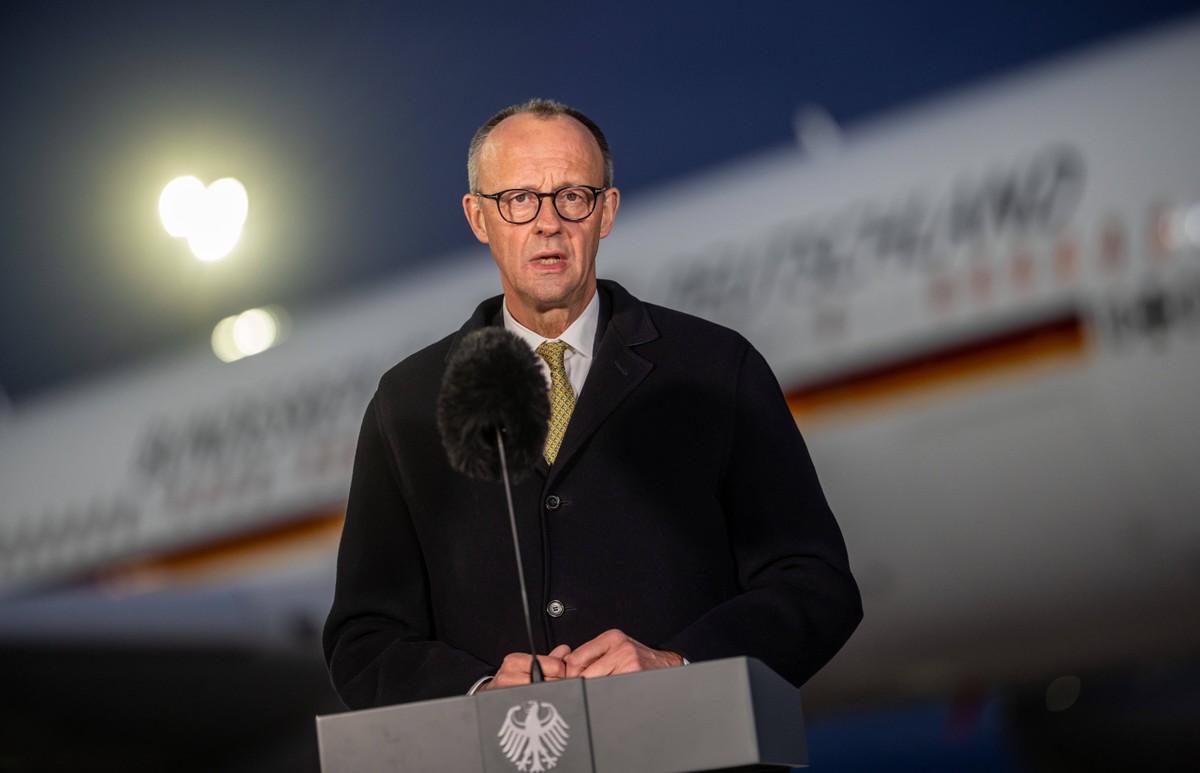
However, Merz, who is accompanied by a delegation of the heads of 30 major German companies, including automotive giants such as Volkswagen, BMW and Mercedes, stressed that Berlin must pursue a policy of “de-risking”. The idea is to reduce the risk of dependence on the Asian power. Merz called the possibility of completely cutting off economic ties with China a “mistake.”
Germany's economy, dependent on exports, is losing share in the Chinese market as it struggles with aggressive local competition in the electric car sector. In 2025, Germany's trade deficit with Beijing increased by over EUR 22 billion, reaching approximately EUR 89 billion. Berlin is also concerned about the security of supply chains, including access to rare earth metals.
Friedrich Merz is scheduled to meet the leader of China
Chinese state media are trying to allay Germany's concerns and are emphasizing economic symbiosis. The Global Times said in an editorial that slogans about “de-risking” complicate relations, but “the enthusiasm of German business speaks louder than political slogans.” In turn, the Xinhua agency argues that innovations developed in China bring tangible benefits to the headquarters in Germany.
Wednesday evening Chancellor Merz is scheduled to meet Chinese leader Xi Jinping — according to reports, he may also discuss China's role in ending Russia's war with Ukraine.
On Thursday, the last day of his visit to China, Merz will go to the technology hub in Hangzhou in the east of the country, where he will visit, among others, the plant of the Chinese humanoid robot manufacturer Unitree and the Siemens Energy facility.
According to experts, Merz's visit is part of a broader diplomatic trend, in which the leaders of Great Britain, Canada, France and South Korea have also visited China in recent months.