
Former teacher, parliamentarian and peasant leader, Niculae Ionescu-Galbeni, one of the emblematic figures of the anti-communist resistance in Romania, turns 100 today. His life was marked by political detention, constant surveillance and, after 1989, an important role in the reconstruction of the PNȚCD.
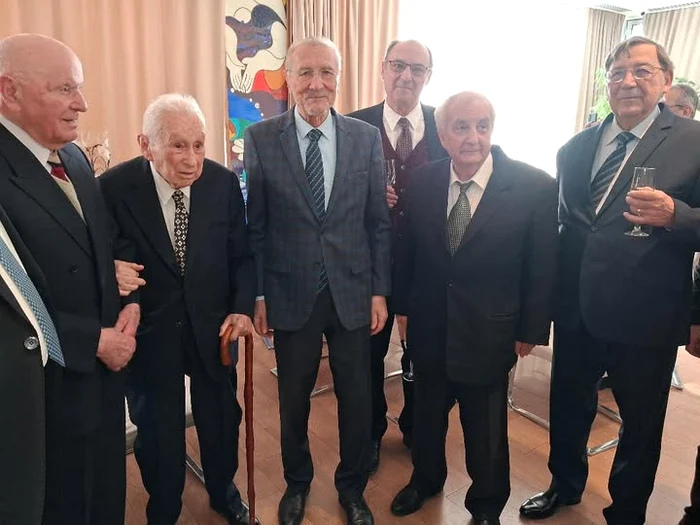
Niculae Ionescu-Galbeni, between Gavril Dejeu and Emil Constantinescu PHOTO: FB/ People of Coposu
Niculae Ionescu-Galbeni was born on February 24, 1926, in Bucharest, in a family of intellectuals. From an early age, he was attracted to political life and joined the youth organization of the National Peasant Party, being actively involved in anti-communist movements since his student days.
In 1945 and 1946, Ionescu-Galbeni participated in the demonstrations against the Soviet regime. After the arrest of the PNȚ leaders, in 1947, he was part of a clandestine group that spread manifestos against the political trial initiated by the communist authorities. The group, known as “trotlists”quickly came to the attention of the Security.
He was arrested and sentenced to five years in political prison. His detention meant passing through some of the toughest prisons of the communist regime, including Văcărești, Aiud, Pitesti and Târgu Ocna. During this period, he fell ill with tuberculosis, a disease that seriously affected his health.
Released in 1955, he remained under the strict supervision of the Security, but managed to continue his university studies and work in construction and research.
Secret Meetings and Political Resistance in the Years of Communism
In the 70s, in the full Ceaușescu regime, Niculae Ionescu-Galbeni continued his political activity clandestinely. Together with other national-peasant leaders, including Corneliu Coposu, he participated in secret meetings during which political documents were drawn up.
These activities did not go unnoticed by the authorities. Security constantly monitored the group, installing microphones in members' homes and applying intensive surveillance measures.
After 1989. A key role in the re-establishment of PNȚCD
After the Revolution of 1989, Niculae Ionescu-Galbeni was directly involved in the re-establishment of the National Peasant Party under the name of the Christian Democratic National Peasant Party. He was a close advisor to Corneliu Coposu and held the position of vice-president of the party, having an important role in shaping the Christian-democratic doctrine.
Between 1990 and 2000, he was a deputy in the Romanian Parliament and headed the SRI Activity Control Commission, one of the most sensitive parliamentary structures of the transition period.
In addition to political activity, Ionescu-Galbeni also published analytical works. In 2023, he released the volume PNȚCD viewed from the inside, 1997-2000, and his memoirs, entitled A life on the path of peasantry, are to be published later this year.
At the age of 100, Niculae Ionescu-Galbeni remains a symbol of political consistency and anti-communist resistance, a witness to some decisive moments in Romania's recent history.