Which Olympic sport is most closely related to the military? » The US, Italy and Germany are among the countries that encourage such a relationship


Article by Roxana Fleşeru – Published Thursday, February 19, 2026 6:24 p.m. / Updated Thursday, February 19, 2026 6:54 p.m.
Some of the athletes participating in the biathlon events have military ranks in the countries they represent.
Biathlon, which combines shooting and cross-country skiing, developed from Scandinavian military exercises. So it's no surprise that many of the biathletes competing at the Milan Cortina Olympic Winter Games have military or law enforcement careers that help them hone their skills, support them during competitions and provide them with employment when they retire from the sport.
Journalists from the Associated Press (AP) made an inventory of countries with such practices. First on the list is the USA, which has three rank-and-file athletes from the Vermont National Guard: Sergeant Deedra Irwin, Technical Experts Sean Doherty and Maxime Germain. Irwin and Doherty are also members of the US Army's “World Class Athlete” program.
Doherty is stationed at the Camp Ethan Allen Training Base in northern Vermont, home to the Army's 11,000-acre Mountain Warfare School, the 86th Mountain Infantry Brigade Combat Team and a field dedicated to biathlon training and rifle shooting, said Micah Nevard, director of the U.S. Army National Guard's biathlon program.
Doherty said he's been training there since he started playing the sport. “As my career in the sport progressed, I realized that the support and benefits offered by the National Guard would extend my career and provide me with resources and support independent of the national team, as well as support and opportunities after my sporting career was over.” he told the Associated Press.
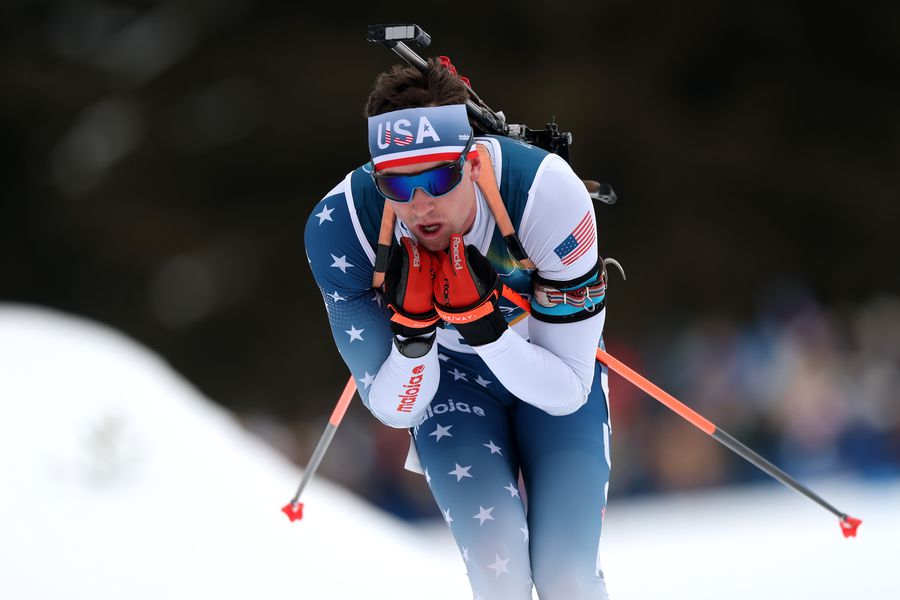
Sean Doherty in action PHOTO Guliver/GettyImages
He pointed out: “I would also add that the military provides a counterpoint to the narrow world of elite sport, taking you out of your comfort zone a bit. It's a powerful thing to know you have so much support behind you, support that goes beyond your sporting career and allows you to fully dedicate yourself to perform at your best.”
Doherty competed in the 20km individual, 10km sprint and 4×7.5km relay events where he placed 80th, 65th and 5th.
Links with the military and in Europe
But this connection is not only found in the United States of America. France's Lou Jeanmonnot, gold medalist in the 4x6km and medley relay events, and Éric Perrot, gold medalist in the 4×7.5km and medley relay events, both hold the rank of sergeant in their country's army.
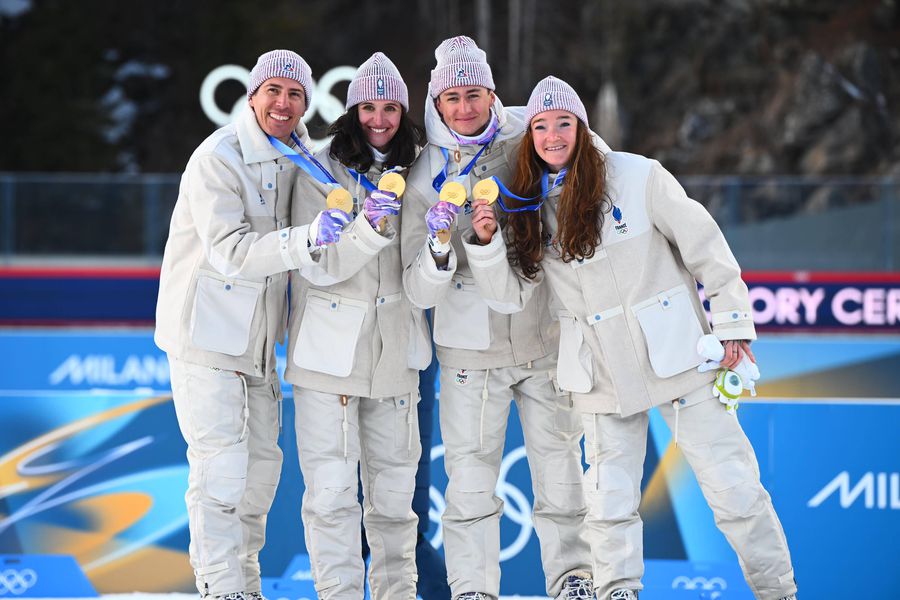
Quentin Fillon Maillet, Julia Simon, Éric Perrot, Lou Jeanmonnot on the highest step of the Olympic podium PHOTO Guliver/GettyImages
Lisa Vittozzi, who won Italy's first Olympic gold medal in the sport in the 10km pursuit, winning the pursuit on Sunday, is a member of the Italian army sports group Centro Sportivo Esercito. Italy supports its top athletes through prestigious military sports bodies.
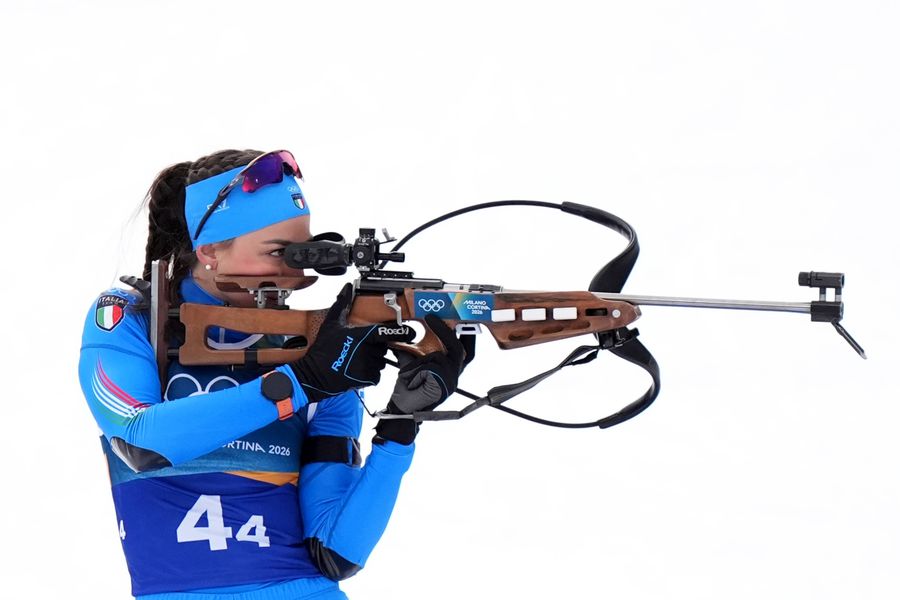
Lisa Vittozzi on the range PHOTO Guliver GettyImages
In Germany, being a biathlete opens the door to work in the police or military after retirement, said the head coach of the German biathlon team, Tobias Reiter.
In the beginning, German biathletes have two hours of training in the morning and two hours in the afternoon, Reiter said. In between training, they spend time in the classroom learning to be soldiers or officers at bases near the cities of Ruhpolding or Oberhof, the two German Biathlon World Cup venues. When the athlete retires from competition, he will have a job for life, he said.
German biathlete Philipp Nawrath works for the Bavarian state police as a police sergeant. Retired German Olympians Erik Lesser and Arnd Peiffer followed the program and now have secure careers.
Peiffer trained to become a federal police officer and then a full-time World Cup biathlete. He had a successful career — he was an Olympic gold medalist, world champion and World Cup medalist — before retiring in 2021. He is now a federal officer helping young athletes pursue their own careers, he told the AP.
“I think it's a great support. You can't become an athlete at 20. You don't get prize money and you're dependent on your parents. So actually I think it's a good system because young athletes, who don't have parents with mlast money, they can do sports if they are good. I knew that if I got sick or injured, I would always have a job. I have insurance”he said.
The Nordic countries do not follow the pattern
Military ties are not as strong in the Nordic countries.
The origins of biathlon can be traced back to military exercises in Scandinavia. The sport was named military patrol at the first edition of the Winter Olympics in Chamonix in 1924.
But the connection to the military is not as strong these days in Norway and Sweden, two of the leading nations in the sport, whose athletes are mostly civilians.
Siegfried Mazet, head coach of the Norwegian team, said that Norway has no programs to prepare biathletes for military service after they retire.
Many Norwegians who stopped competing, such as Tiril Eckhoff and Johannes Thingnes Bø, became television commentators.
Finnish head coach Erik Torneus-Kulstad said that in Finland some biathletes will serve in the military, but this is not mandatory or common.