The film story of the “incredibly stupid”. How a 20-year-old kid managed to become a real 007 agent in the hell of Vietnam

An American sailor risked his life in the hell of war prisons in Vietnam in the 70s to save his comrades. For two years he played the role of an idiot, managing to fool an entire system and even the smartest Vietnamese commanders. His incredible story has been filmed.
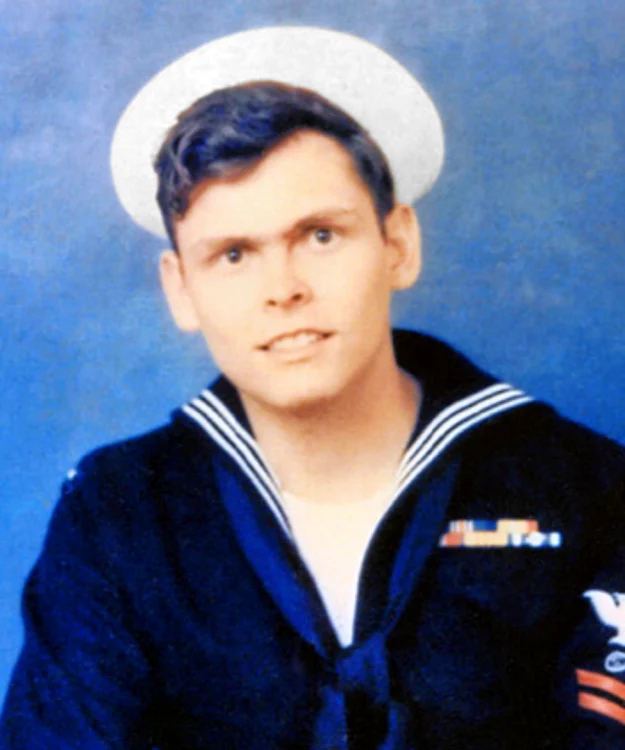
Douglas Hegdahl PHOTO wikipedia
The Vietnam War fought between 1955 and 1975 was one of the most controversial and traumatic conflicts of the 20th century. It was one of those conflicts that marked the Cold War period, a dull struggle for power and expanding spheres of influence between the US and the USSR. The confrontation between communist North Vietnam, supported by the Soviet Union and China, and South Vietnam, supported mainly by the United States, quickly turned into a war of attrition fought in the jungle, with deadly guerrilla tactics and massive bombing. The conflict ended in 1975 with the fall of Saigon and the reunification of the country under communist rule, one of the harshest and most stinging defeats for the United States in the 20th century.
Beyond the geopolitical implications, the war had a profound impact on all who participated, with massive social implications especially in the United States. The American military, as well as the Vietnamese, faced extreme conditions: a hostile climate, difficult terrain, constant ambushes and a hard-to-define front line. Many veterans returned home with severe psychological trauma, known today as post-traumatic stress disorder, but also a total sense of inadequacy and a sense of purposelessness. The feeling of moral confusion, the loss of comrades and the lack of adequate social support upon returning to the country aggravated their suffering. Particularly in the United States, divided public opinion has left many veterans feeling rejected or misunderstood.
The situation of prisoners of war was also dramatic. Many captured soldiers were subjected to prolonged detention in harsh conditions, interrogations and, in some cases, torture. North Vietnamese prisons became symbols of suffering, and the repatriation of prisoners after the 1973 peace accords brought to light stories of resistance, solidarity and survival, but also deep trauma.
One of these incredible stories, taken as if from an adventure novel by Alexandre Dumas or Karl May, was that of a young American soldier who achieved the impossible in the hell of Vietnam. Douglas Brent Hegdahl, a child of only 20 years, thrown into the ocean from an American ship after an accident on the deck, was captured by Vietnamese militias, endured beatings, torture and detention in one of the harshest prison camps in the Vietnamese jungle. However, despite being just a recruit with no specialized training, Douglas managed to transform into a real Agent 007 in the middle of enemy lines. He managed to save the lives of hundreds of prisoners and at the same time put sticks in the wheels of the Vietnamese.
The Norwegian kid from South Dakota
The story of Douglas Hegdahl begins in the small town of Clark in the American state of South Dakota. He was born on September 3, 1946 and was the child of a family of Norwegian immigrants. As he would later confess, his parents were Lutherans and very faithful people. At the same time, Douglas enjoyed a typical American childhood. He was part of the scout teams, worked on the farm but also at the family hotel, together with his two brothers. He was very good at swimming, becoming a highly regarded athlete during high school. He was known as a joking, playful kid who was always on edge.
He didn't really kill himself, however, with the school. He attended high school in his hometown, which he finished only at the age of 19. Without wasting time on school, Douglas enlisted in the army. And this in the conditions in which the Vietnam War was in full swing and Douglas was the perfect candidate. His mother convinced him to join the Marines before he could be drafted, believing it was safer than enlisting in the infantry, which bore the brunt of the fighting in the Vietnamese jungle. Enlistment was followed by standard recruit training at the military base in San Diego. He also attended an advanced military school course and attained the rank of apprentice seaman, being sent to Dixie Station for embarkation. Hegdahl was sent to serve on the USS Canberra, an American battleship operating in the Gulf of Tonkin. Douglas had no experience of the place, but what will happen next is beyond the imagination.
A mysterious accident and the beginning of the Norwegian adventure in the jungles of Vietnam
On April 6, 1967, Hegdahl was walking on the deck of the USS Canberra. The American ship's guns were firing fire after fire on the Vietnamese coast at designated points to weaken Vietcong resistance. In the early hours of the morning, the young apprentice sailor arrives near the guns. At one point he wakes up directly in the water. No one knows how it got there. Supposedly it was an accident. A cannon produced an explosion, and its blast threw the young Norwegian directly into the water. “I can't tell you how I fell off the ship. All I know is that I went up on deck. It was dark and draughty, and the next thing I remember I was in the water“, Douglas specified later.
Hegdahl was, however, a good swimmer. He swam and floated for hours before some Vietnamese fishermen spotted him and rescued him. Later, fearing reprisals, they handed him over to the North Vietnamese militias. Initially he was brutally interrogated, beaten and tortured. After 48 hours of torture they took him to Hoa Lo, the toughest prison camp in the Vietnamese jungle. This prison was dedicated to American soldiers, including the one who will run for the US presidency, John McCain, being imprisoned there.
American prisoners mockingly called this place of pain and torture the “Hanoi Hilton,” referring to the famous hotel chain. Initially, the Vietnamese communists considered Douglas a lying American spy. “North Vietnamese investigators initially thought Doug Hegdahl was a spy who had concocted a dubious story about falling off a ship in the Gulf of Tonkin”stated Marc Leepson in “The Unlikely War Hero: A Vietnam War POW's Story of Courage and Resilience in the Hanoi Hilton”.
However, the Vietnamese soon became convinced that he was a mere soldier who had no knowledge of US Marine operations.
On the other hand, after he did not answer the call, the Americans on the USS Canberra reported him missing. After two days he was upgraded to “missing in mission”.
“The incredibly stupid one” and a top saboteur at the Hanoi Hilton
Being very intelligent and adaptable, Douglas realized that if he played the role of the imbecile he would escape torture, punishment, and most of all, he could not be taken seriously. With incredible talent, Douglas played the role of an individual with very low intelligence, almost on the verge of retardation. When asked to write statements detailing his mission for the United States, he agreed, but pretended not to be able to read or write.
He pretended so well that he had become very believable even to the most intelligent Vietnamese officers. They assigned someone to teach Hegdahl to read. But Hegdahl seemed incapable of learning to read and write, so the Vietnamese didn't bother. They actually considered him retarded. He came to be known as “The Incredibly Stupid One” and was allowed to roam freely around the camp. He was effectively ignored, being considered harmless, unable to understand or reproduce what was happening there.
It was what Hegdahl wanted. Maybe someone else in his place would have taken advantage of these advantages to see his prisoner in peace, without beatings, torture, schedule, total release.
He even received food from the Vietnamese guards who were amused by his clumsiness and apparent stupidity. Douglas took this advantage to help his comrades. He preferred to risk his life to sabotage the Vietnamese prison and at the same time to gather as much strategic information as possible. The 20-year-old had turned into a veritable saboteur and spy. Playing the stupid card, Douglas began to study every corner of the prison and reach all the prisoners. To find out their names, where they came from and especially in which unit they had served.
“Somehow he found a way to survive and he did it against all odds, succeeding against the wildest odds”said Leepson, himself a veteran of the Vietnam War, for “The Independent”.
During his first year as a prisoner, Douglas sabotaged many Vietcong trucks. He was simply putting mud in their tanks. Plus other acts of sabotage, subtle and quick, for which he could have lost his life at any time. “I was so angry at what was going on there that it became a personal war,” specified after the war Hegdahl.
“Old MacDonald Had a Farm”
The problem was that many of these prisoners were locked in cells that he could not directly reach. With the help of his cellmate, Joseph Crecca, an officer in the US Air Force, Douglas developed a system to learn information, from cell to cell, and also to memorize it. Basically it was a song whose first five notes were sent by morse code, by knocking on the cell wall.
This is how information was gathered. Hegdahl later used the children's song “Old MacDonald had a farm” to record the data. They were constantly repeated, with certain masked lines containing codes and data. According to his superior officer and cellmate, Lieutenant Commander Richard A. Stratton, Hegdahl convinced the Vietnamese that he needed new glasses and memorized the route from the prison to the city of Hanoi, where he was taken to buy the glasses. All to be able to later tell the exact location of the prison. During his two years in captivity Hegdahl actually memorized the names and personal details of no fewer than 256 American prisoners.
Later, on August 5, 1969, the Vietnamese decided, in a propaganda way, to release three prisoners of war. Along with Marine Lt. Robert Frishman and Air Force Capt. Wesley Rumble, Hegdahl was also selected. Once in the United States, Douglas was able to provide vital information about the prisoners at the Hanoi Hilton camp, the inhumane conditions and the torture practiced there.
The disclosure of the names, the inhumane treatment and the exact location of the camp helped the Americans to turn to international bodies to put pressure on North Vietnam. Hegdahl was sent to the Paris Peace Conference talks by Ross Perot in December 1970 and confronted the North Vietnamese with first-hand information about the mistreatment of prisoners. As a result of international pressure and fear of economic and military repression, the North Vietnamese changed the classification of prisoners and radically improved the conditions of detention. Later, most were released. After returning to the United States, Hegdahl used his experience as an instructor at the US Navy's Survival, Endurance and Escape School at NAS North Island, San Diego. He left the US Navy as a Petty Officer Second Class.