This is how “NATO 3.0” is created. Trump is pushing for a “reset” of the alliance. “The situation may escalate quickly”


Under pressure from Washington, NATO would limit “out-of-area activities” that go beyond the alliance's core defense and deterrence missions. These efforts reflect the White House's desire to treat NATO as a purely Euro-Atlantic defense pact.
The new details emerged after Pentagon deputy chief Elbridge Colby recently outlined the administration's position on what he called “NATO 3.0.” The US campaign is generating negative reactions from some allies.
The United States under Donald Trump is pressuring NATO to limit many of its foreign activities, including ended a key alliance mission in Iraq and reduced partnerships on crisis management and values-based initiatives.
In recent months, the United States has also lobbied to scale back NATO's peacekeeping operation in Kosovo and to prevent Ukraine and Indo-Pacific allies from formally participating in the alliance's annual summit in Ankara in July.
The U.S. efforts could lead to a rapid reduction in NATO activities in former war zones and the exclusion of capitals, including Kiev and Canberra, from formal talks this summer.
The White House declined to comment on NATO's partnership programs and global operations.
Giving up on the alliance's foreign initiatives “is not the right approach,” said one of four diplomats interviewed by POLITICO. “Partnerships are critical to deterrence and defense.”
Since returning to the White House last year, Trump has scaled back U.S. involvement abroad, withdrew some NATO troops and personnel from Europe and handed over some of the alliance's top command positions to Europeans, seeking to focus his foreign policy on “core national security issues.”
Withdrawal from Iraq
NATO is conducting an advisory mission aimed at strengthening Iraqi security institutions, such as the police, and stopping the return of Islamic State. The operation was launched during Trump's first term in 2018 and has been expanded multiple times since 2021 at Baghdad's request.
The first diplomat quoted above and the second diplomat told POLITICO that Washington had asked allies to end the mission in September.
Separately, the United States also intends to withdraw approximately 2,500 troops from Iraq as part of the 2024 agreement with the Iraqi government. A US administration representative told POLITICO that this is part of Trump's “commitment to end endless wars,” while emphasizing that the move is being made in “close cooperation” with Baghdad.
The U.S. proposal also meets with resistance within the alliance. — This is not the right time to withdraw from Iraq… government [w Bagdadzie] wants us to stay there, says the first diplomat in an interview with POLITICO.
The second diplomat said “most” allies agree that the mission in Iraq should be scaled back, but over the longer term, while maintaining a smaller operation.
Withdrawal from Kosovo
The UN-approved international peacekeeping mission, which began in 1999 after the Yugoslav Wars, currently includes approximately 4,500 troops.
Engjellushe Morina, a senior research fellow at the European Council on Foreign Relations think tank, said the mission remained “essential” to regional security. A NATO withdrawal could embolden Serb separatists in northern Kosovo, which would have a domino effect and could prompt Serb action in Bosnia's Republika Srpska.
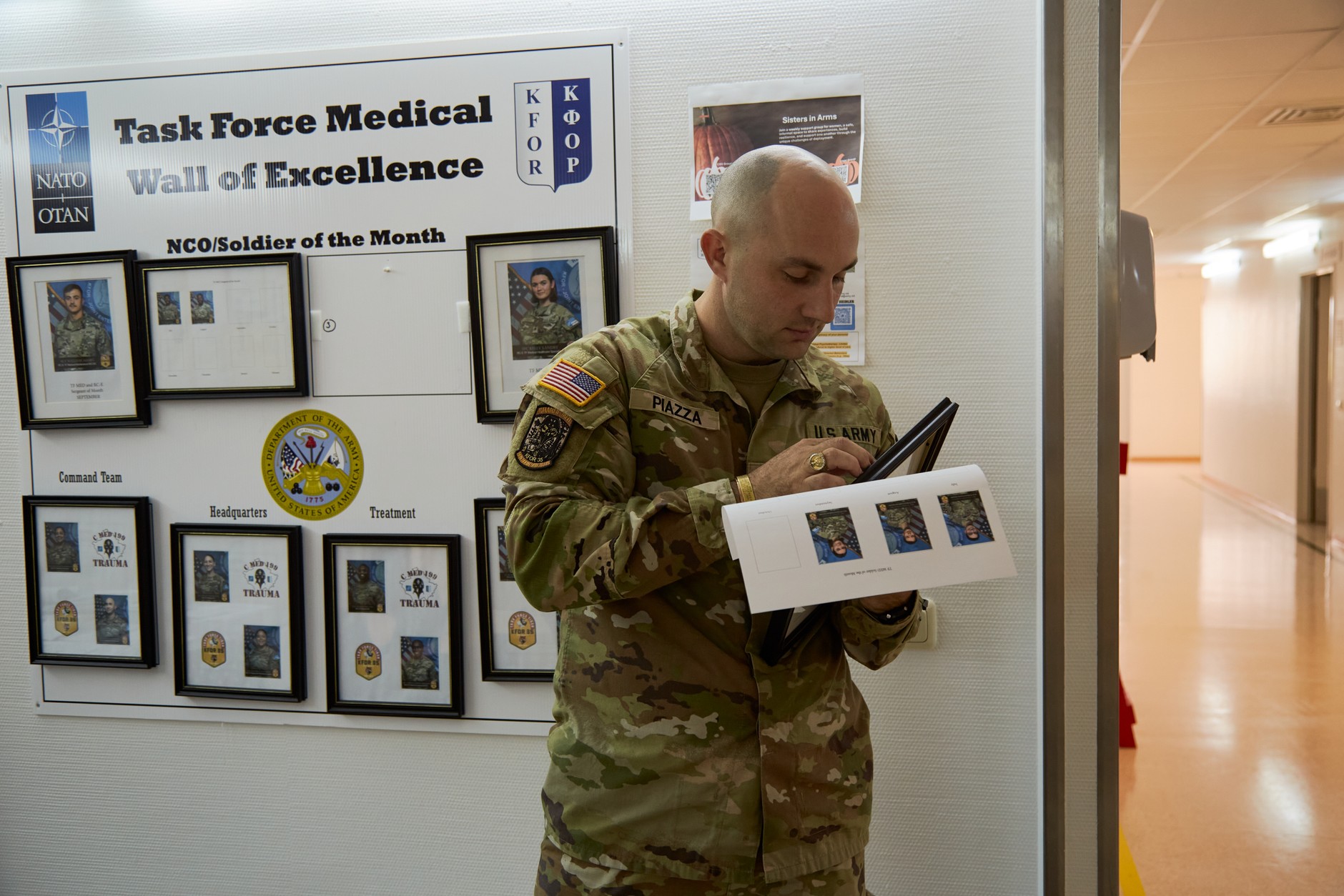
An American soldier at the Camp Bondsteel base in Kosovo (illustrative photo)Pierre Crom / Contributor / Getty Images
In an interview with POLITICO, a NATO official said that “there is no timetable for the NATO mission in Iraq… or for the KFOR mission,” adding: “These missions are implemented as needed, are subject to periodic review and are adapted to changing circumstances.”
No decision has been made to end any of these operations at this time. All 32 member states must approve the start and end of a mission, which typically involves competition and pressure campaigns from multiple allies, not just the United States.
No additional partnerships
The diplomats added that these countries could still be invited to side events, a request partly justified by the need to limit the number of meetings during the summit.
Keeping NATO partner countries on the sidelines of the summit “would send a signal that perhaps there is more focus on core NATO issues,” said Oana Lungescu, a former NATO spokeswoman and senior research fellow at the Royal United Services Institute, a London-based think tank.
A NATO representative said the alliance “will inform partners about the participation in the summit in due course.”
Meanwhile, NATO staff also proposed eliminating a public forum from this year's meeting, a side event that brings together national leaders, defense experts and government officials in various panel discussions that typically increase the visibility of the annual summit.
— NATO has decided not to organize a public forum this year, but will organize a NATO defense industry forum on the sidelines of the Ankara summit, a NATO representative told POLITICO.
NATO officials told capitals the move was aimed at cutting costs due to a lack of funds. However, the first and second diplomats said they believed it could also be indirectly due to pressure from the United States, given Washington's broad campaign to limit funding for international organizations.
Lungescu said the forum's resignation was consistent with the “downgrading of the public diplomacy department” under the leadership of NATO chief Mark Rutte, who has sought to slim down and restructure the department since taking office at the end of 2024.
But at a time when the alliance is struggling to convince the public of the merits of its actions and increased defense spending, it is “very counterproductive,” a third diplomat told POLITICO.
“NATO must report what is happening — and what it intends to do,” he said.