Death on the highest mountain in Austria. Mountaineer's partner will be held liable for 'negligence'

2026-02-19 12:00
publication
2026-02-19 12:00
Kestin G died of hypothermia during a mountain expedition to Grossglockner. Her boyfriend and companion was charged with manslaughter by negligence. This process will also have a wide impact in the high-altitude environment, returning to the immortal question: is it possible to leave an exhausted partner during a snowstorm?
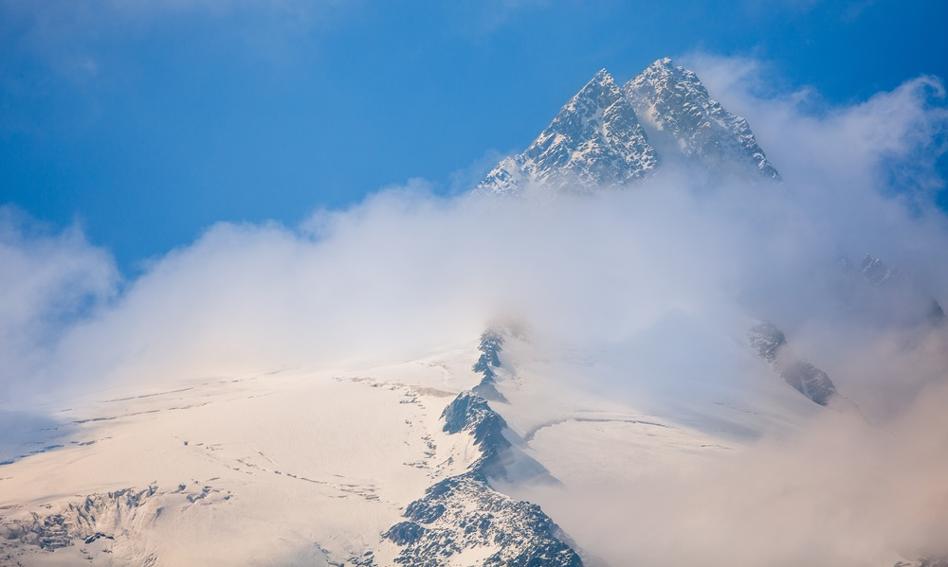
The tragedy has happened on the highest mountain in Austria – Glossglockner (height: 3798 m above sea level). A 33-year-old woman froze to death on its slopes. According to prosecutors, her partner and boyfriend are to blame as a more experienced mountaineer, he was a “responsible guide on an expedition that he himself had planned” and did not turn back or call for help in time.
Identified by Austrian media as Thomas P., he denies the allegations, and his lawyer, Kurt Jelinek, described the woman's death as a “tragic accident” on the BBC.
What exactly do investigators accuse him of? First of all, the fact that he took his girlfriend on such a demanding route, even though she had never before participated in an Alpine expedition of such length, degree of difficulty and height, and despite difficult winter conditions. However, her social media profiles suggest that she was an avid mountain climber. Her relatives told German media that she loved night hikes in the mountains.
The prosecutor's office enumerates this list of further errors:
- set off two hours too late;
- they did not take camping (or other emergency equipment) with them;
- he allowed his girlfriend to use soft snowboard boots, which are not suitable for high-mountain expeditions in diverse terrain.
Shocking behind the scenes of a night expedition to Grossglockner
But that wasn't the end. After reaching the top, according to the prosecution, the man should have turned back when it was still possible. There was a strong wind with a speed of up to 74 km/h. This meant that the temperature went from -8 degrees Celsius to a felt temperature of -20. But he didn't do it. According to the defense, none of them were exhausted, so they continued climbing. Additionally, they were to reach a point called Frühstücksplatz, a place where there was no turning back before the summit.
According to the prosecutor's office, the couple found themselves trapped around 8:50 p.m. Investigators claim that the man did not attempt to contact the police or send a rescue signal, even though two hours later a police helicopter was flying over the scene of the incident.
However, the defense argues that at that time they were both in good condition and – due to the proximity of the summit – they did not consider the situation to require the intervention of the services.
He left her in a snowstorm and went for help?
Kurt Jelinek's report shows that The woman's collapse occurred suddenly and was a “complete surprise” to him“When Kerstin began to lose strength, it was no longer possible to return. Although the man contacted the mountain police at 00:35, the course of this conversation remains controversial – the defense claims that he asked for support, while the services suggest that he could have downplayed the situation and then stopped answering the phone.
The drama took place just 40 meters below the Grossglockner peak. Around 2:00 a.m. Jelinek decided to leave his exhausted partner to look for help via the summit traverse – his lonely descent was recorded by webcams.
However, the prosecutor's office brings serious charges:
- the man did not secure the woman with a rescue blanket;
- he waited until 3:30 a.m. to call the rescuers again.
Due to the storm, the helicopter could not take off, and Kerstin G. died of hypothermia on the mountainside.
If found guilty, Thomas P. faces up to three years in prison.
A verdict that will shock the climbing community
At stake is the question of when personal judgment and risk-taking become a matter of criminal liability. If the mountaineer is found guilty, it could mean a “paradigm shift in mountain sports,” according to Austrian newspaper Der Standard. A conviction carries the risk of far-reaching consequences for the entire high-mountain environment, as in the future it may constitute the basis for holding climbers responsible for the fate of their companions.
Everest is already passé. Climbing K2 costs a fortune and the chances of reaching the summit are slim. “It's a game of Russian roulette”
Mount Everest is the undisputed king of the Himalayas, with queues lining up to see it. However, he fell victim to his popularity. Those who don't want to stand in an hour-long queue to the summit move to the most deadly mountain. The permit to climb K2 alone costs an average of 48,000. zloty. This includes the costs of travel, hiring guides and Sherpas.
ed. aw