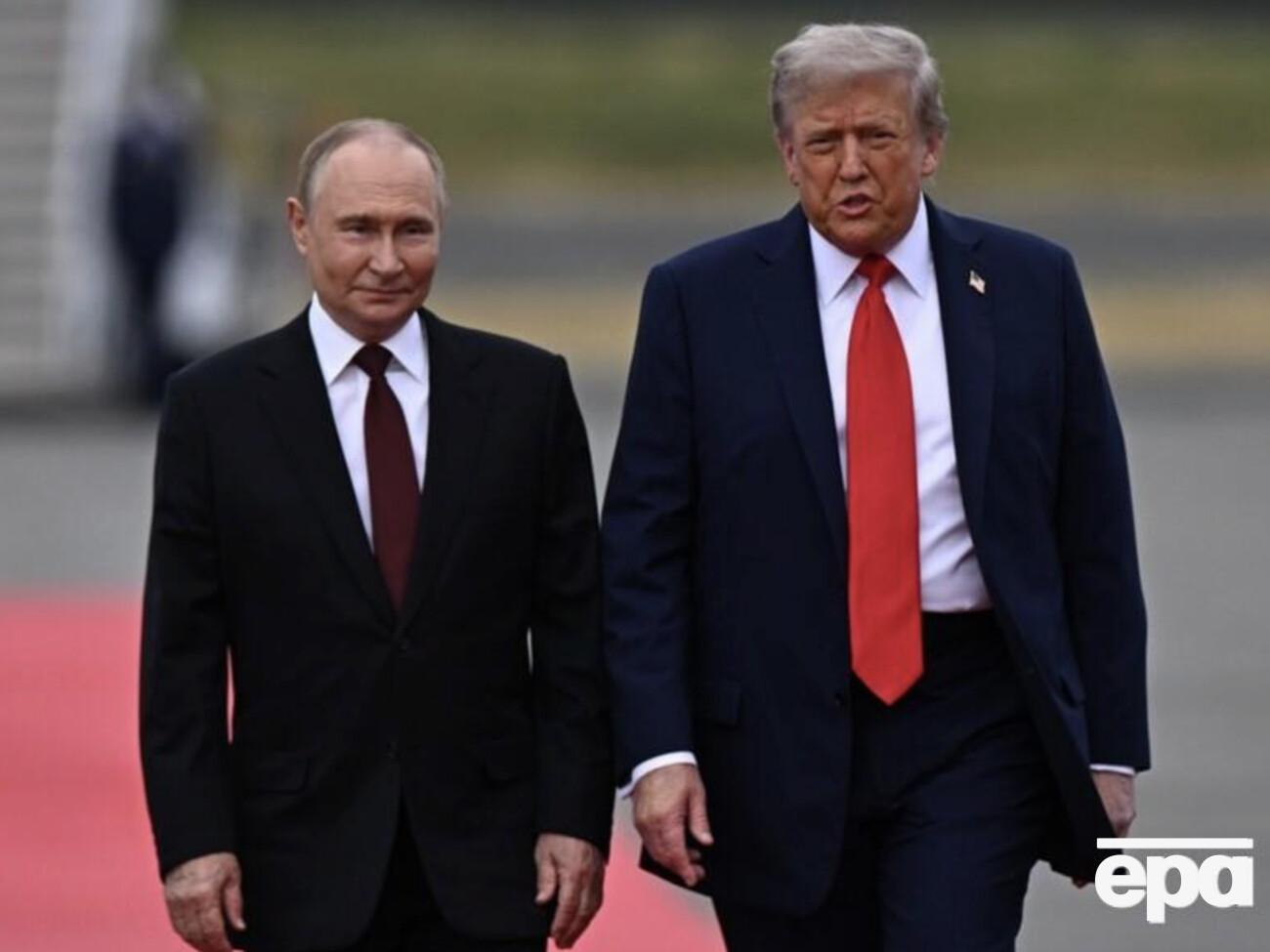
As the publication notes, since April last year, Putin’s special envoy Kirill Dmitriev has met with Trump’s special envoy Steve Witkoff at least nine times.
The Security Council document describes Russia as a “storehouse of Arctic and northern resources” that “dozens of sovereign and private funds from the United States and other currently unfriendly countries” will rush to exploit. “Everyone will make a lot of money,” the text says.
Also, as the media notes, “Presidents Putin and Trump could potentially receive Nobel Prizes.”
The Economist reports that individuals close to the Trump family were in talks to acquire stakes in Russian energy assets. US officials have proposed agreements on Arctic oil and gas, rare earth mines, a nuclear powered data center and a Bering Strait tunnel.
Trump’s people are most interested in participating in “megaprojects” related to the extraction of oil and other minerals in Western Siberia and the Russian Arctic, the media writes.
Experts believe that despite the lucrative offers, American business is unlikely to get rich in Russia, even if the sanctions imposed on it are lifted, due to high taxes, corrupt courts and the capture of the niche by firms from Asia and Turkey after the withdrawal of Western companies.
The Economist calculated and came to the conclusion that American business will be able to receive only $340 billion a year from the agreement with the Russian Federation, moreover, income, not profit. Moreover, it is unlikely that this will continue for decades.
At the same time, The Economist points out that those close to the White House can secure favorable agreements for themselves, such as seats on boards of directors. The media adds that any president who cares about the interests of the United States would take a very close look at the $12 trillion proposal and “pass by.”
While Putin is in power, the potential for a “new Eldorado” in Russia is small, says The Economist.
Context
On February 7, Ukrainian President Vladimir Zelensky said that intelligence showed him the so-called Dmitriev package worth $12 trillion, which the Russian Federation presented to the United States. Zelensky pointed out that there are different signals in the media and not only that this package may also include issues related to Ukraine, in particular, its security and sovereignty.
Commenting on this information, Ukrainian Foreign Minister Andriy Sibiga, in an interview with Reuters on February 6, stressed that Kyiv will not support any agreements on Ukraine concluded without its participation.