17 February 11:48
Krasnoyarsk and Irkutsk researchers have found out what the hunter-gatherers who lived on the banks of the Angara and Lake Baikal 8.5–5 thousand years ago ate. The results were published in the Siberian Federal University journal on biology.
Related materials
The main source of information was ceramic dishes – universal containers of ancient people where they prepared and stored food. Over thousands of years, a thin organic film has formed on the inner walls of the pots, preserving traces of the contents.
Analysis of fatty acids in food crusts showed that fats from terrestrial ruminants predominated in all vessels. Judging by the isotopic composition and archaeological data, most likely it was the meat of roe deer and deer – the main prey of local hunters. In addition, acids characteristic of vegetable oils and freshwater fish were found in the pots. Moreover, the diet of the ancient inhabitants of the Baikal region differed from the Angarsk one – in the first case, there was noticeably more fish and plants on the menu.
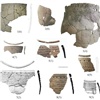

A discovery for scientists was the discovery of fatty acids characteristic of vegetable and beeswax. This may indicate the local population's use of waste products from wild bees.
As Denis Rogozin, leading researcher at the Institute of Biophysics SB RAS, explained, such finds in Neolithic pottery are not uncommon in Europe, the Middle East and North Africa. But there are no honey bees in Siberia. However, bees of the Andrena genus are widespread here, which also make honey and wax. They could have lived in these areas thousands of years ago, and people collected their products. While this is only an assumption, additional studies on a larger number of samples are needed to verify it.
Newslab now in MAX. News is also published in OK | VK | Zen | Telegram
Related links: