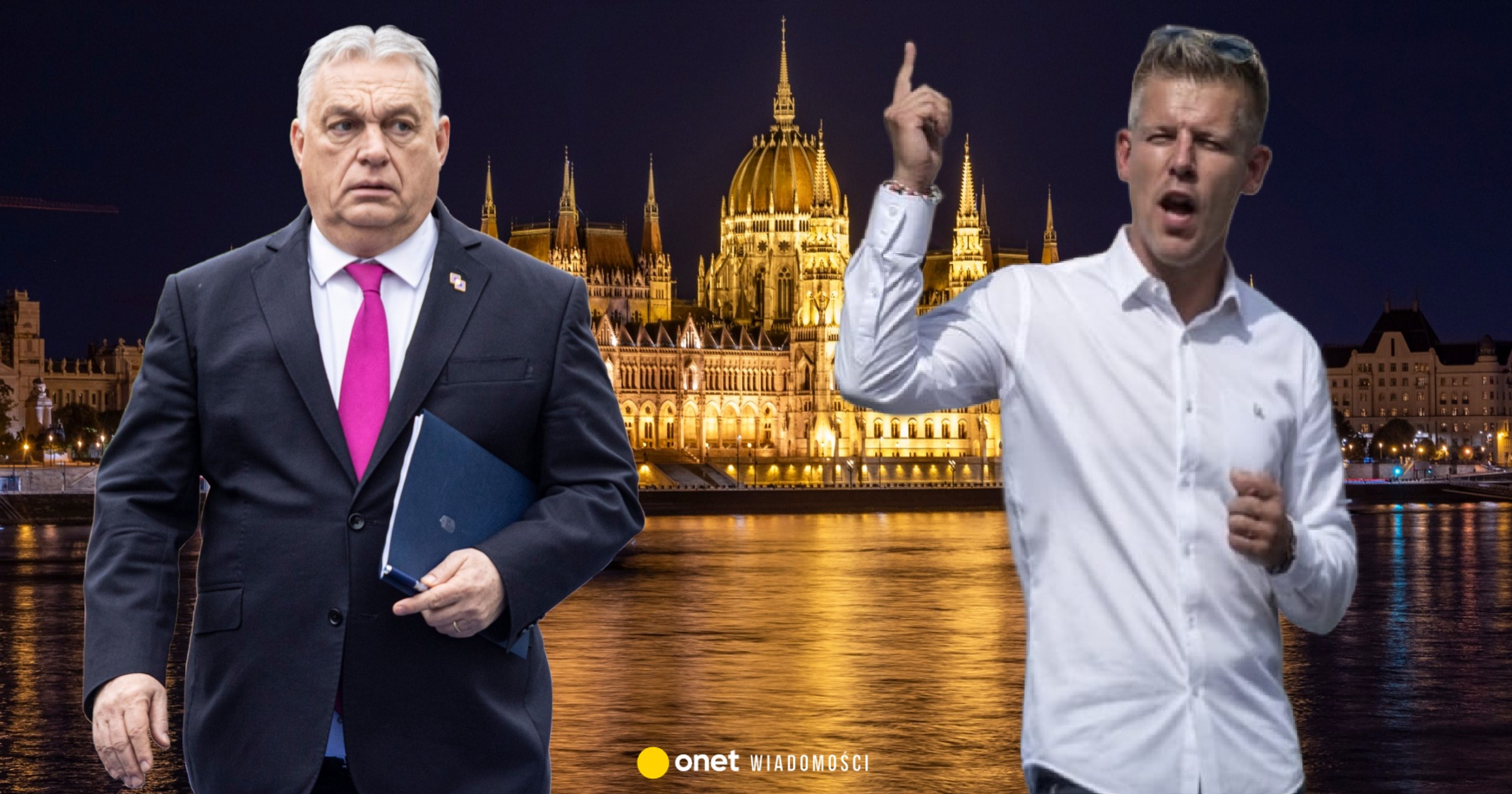
TISHA, the party led by Orban's rival Peter Magyar, is well ahead of Orban's Fidesz in the polls. The study was conducted at the end of January this year. shows that the opposition formation has 49 percent. voters' support, while the prime minister's party has 39 percent.
The elections that will take place on April 12 are inevitably approaching. The ruthless election campaign focuses mainly on Russia's war in Ukraine. The Hungarian prime minister largely turned the election into a test of public support for an early peace deal to end it. The European Union is also under fire, and US President Donald Trump is considered the savior of the West.
Orban's power is weakening because inflation and economic stagnation are hitting Hungarians' wallets. For the first time since 2010, changes at the highest level in Budapest are not just a pipe dream. However, experts and analysts are already wondering what will happen if Peter Magyar wins the elections.
Orban has largely turned this election into a test of public support for an early peace agreement to end the war in Ukraine and, by extension, U.S. diplomatic efforts to do so.
The article continues below the video
Orban promises to remain consistent in his opposition to financing or arming Ukraine and that he will resist pressure from the European Commission (EC) to move Hungary closer to the pro-Ukrainian mainstream, writes Molly O'Neill, an expert on Central Europe, Russia and Eurasia, in an article for Responsible Statecraft.
On the other hand, Magyar, who only entered politics in early 2024 but quickly gained popularity, turned to Europe.
Zuzana Veg, a Hungarian researcher at Ecfr.eu, recalls that on April 12, 2003, on the same day as the key parliamentary elections are currently scheduled, Hungarians voted to join the EU. Magyar perfectly understands the power of symbolism and has already presented the elections as a referendum on Hungary's future. His message is simple: it is time to return to Europe again.
Two completely different campaigns
Orban has stepped up his anti-Ukrainian rhetoric, emphasizing his international influence, including his close relationship with Trump, who expressed his “absolute support” for him before the election, as well as the important role he plays amongright-wing populist Eurosceptics in Europe. Moreover, Orban accuses Magyar of representing Ukraine's interests and likely drawing Hungary into a devastating war.
But Magyar himself focuses on social and economic dissatisfactionas well as Hungary's distancing from the EU mainstream under Orban's rule. Over the weekend, he published a 240-page election manifesto, promising action to combat the cost of living crisis and improve relations with the EU, Kiev and Poland.
The leader of TISZA is trying to repair relations with the EC and plans negotiations to unlock approximately EUR 18 billion [niemal 76 mld zł według obecnego kursu walut] suspended for Budapest due to violations of EU rules and standards during Orban's government. However, according to O'Neill, the European Commission will likely expect Magyar, as prime minister, to support its position towards Ukraine and Russiaalthough he has not yet publicly offered such concessions.
Orban's rival promised root out corruption, strengthen the independence of the judiciary and revitalize independent media. However, according to O'Neill, if he wins, he will have to face powerful opponents in state institutions, where the leadership will remain in the hands of Fidesz loyalists.
What are the goals of TISZA?
The foreign policy vision proposed by TISHA is radical compared to the status quo of recent years, Veg writes. Instead of confrontation, TISHA proposes cooperation to the West.
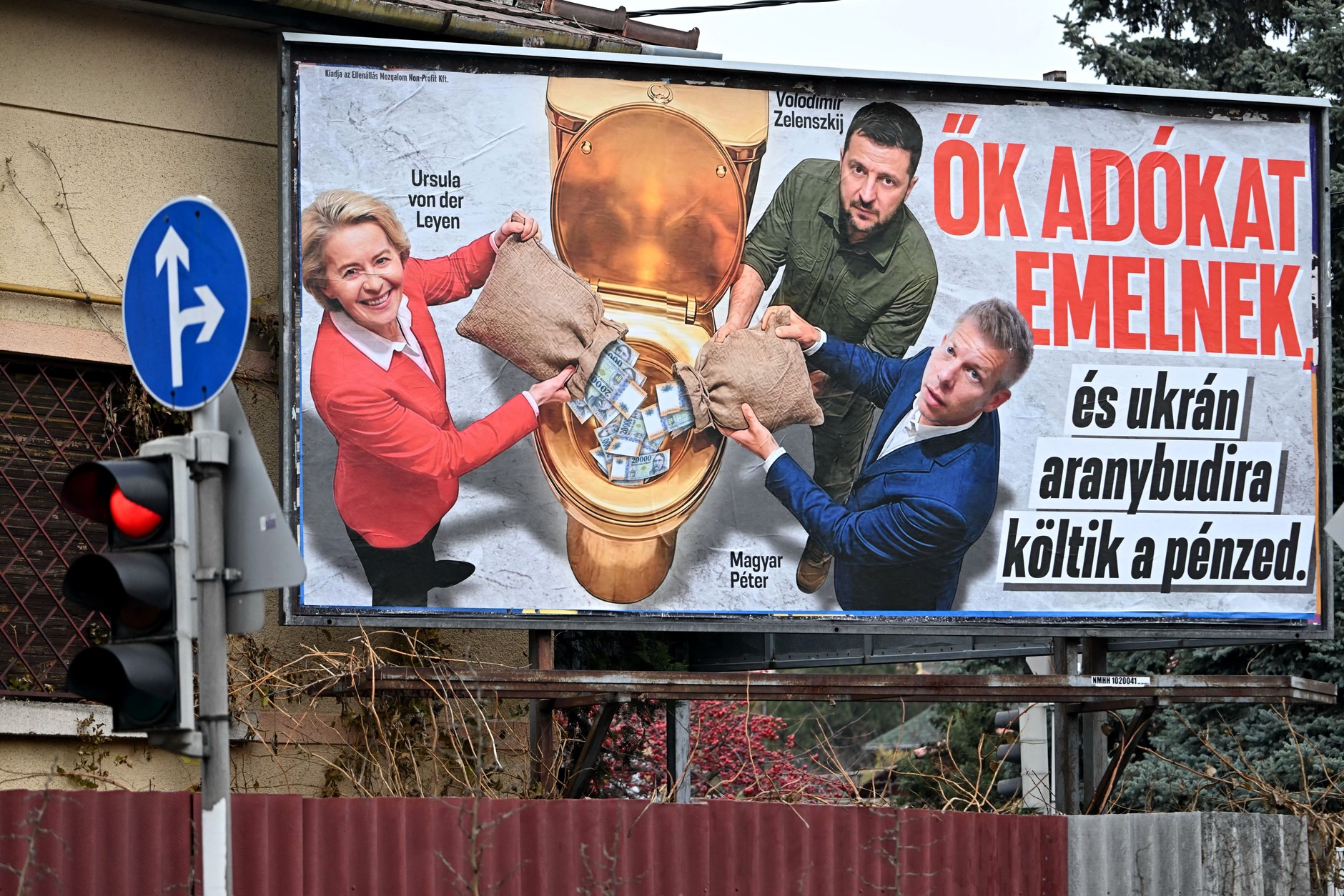
Billboard with images of European Commission President Ursula von der Leyen, Ukrainian President Volodymyr Zelensky and leader Tisz, with the caption: “They raise taxes and spend your money on a Ukrainian golden toilet”, which was reportedly paid for by the National Resistance Movement, supporting Viktor Orban and Fidesz, December 11, 2025.Attila KISBENEDEK / AFP / AFP
Under Orban's government, Hungary's position domestically and internationally has changed radically. Once predictable, foreign policy is now rife with conflict, especially with Russia and China. TISHA offers to restore trust and re-anchor the country to its alliances, while strengthening its sovereignty.
The main goal of TISZA's foreign policy is to restore Hungary's position as a credible EU member. This would involve rebuilding trust among allies and ending the government's role as a factor distorting the decision-making process in the EU.
Regarding Kiev, Magyar's manifesto does not call for financing or arming Ukraine, but promises to improve relations with that country and restore relations with Poland. He also opposes Ukraine's accelerated accession to the EU.
According to Veg, migration, one of the most sensitive topics in Hungarian politics, will probably remain an area where TISHA will be most opposed to Brussels. The party signaled it would maintain a strong stance on border protection, but would likely seek to return to negotiations. TISZA plans to position Hungary as a global actor, not just an eastern one.
Regarding the Orban government's close ties to the Kremlin, dependence on Russian energy and the opacity of important bilateral agreements, TISHA intends to question the influence of non-allies on the situation in the country, renegotiate disputed agreements – with Russia and other countries – and diversify energy sources and routes.
A long road to repairing relations with the EU
Orbán's defeat would not automatically mean an improvement in relations with Brussels, as European Policy Center political analyst Erik Morris and Levente Kocsis, chief data analyst at Eulitix, point out in an article for Epc.eu.
EU leaders should not assume that a government led by Magyar would represent a complete break with Orban-era policies.
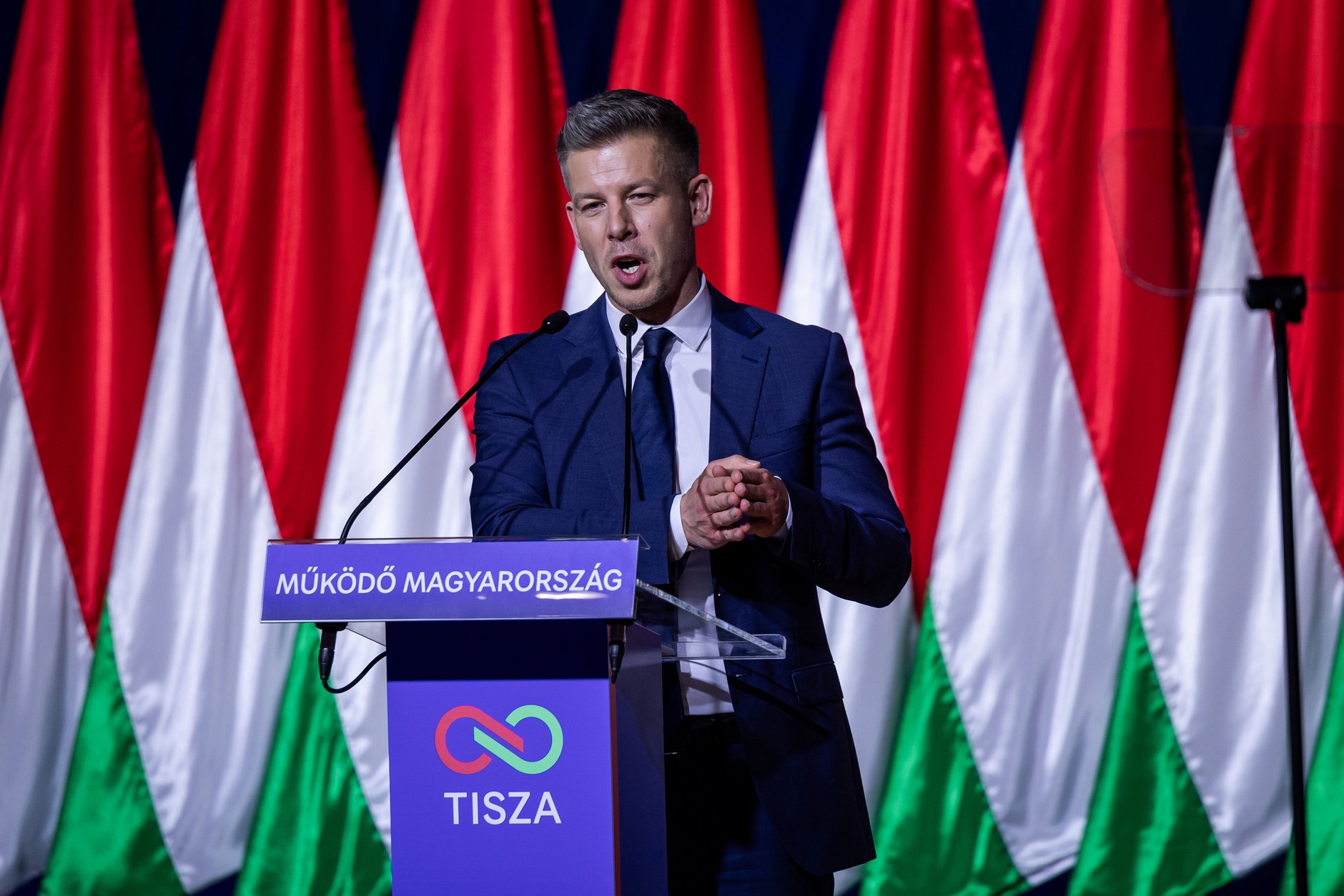
Peter Magyar officially started his campaign in Budapest on February 15 this year.Janos Kummer/Getty Images
As for Ukraine, TISZA's manifesto is strikingly unclear, beyond its opposition to the country's accelerated accession to the EU. Hungary has repeatedly stated that it will not change Hungary's current policy of not providing aid, the authors claim.
Orban's defeat would have a symbolic meaning, but would not automatically resolve the tensions between Hungary and Brussels. Analysts concluded that expectations should therefore be cautious.
I’m Ashley Davis as an editor, I’m committed to upholding the highest standards of integrity and accuracy in every piece we publish. My work is driven by curiosity, a passion for truth, and a belief that journalism plays a crucial role in shaping public discourse. I strive to tell stories that not only inform but also inspire action and conversation.