“Little Marco”, Trump's diplomat. The US secretary of state has gone from presidential rival to loyal lieutenant amid a foreign policy offensive


Before leaving for the Munich Security Conference this weekend, Marco Rubio was asked what European officials wanted to hear from him. “Honestly, they want to know where we're going,” said the secretary of state and, at the same time, Donald Trump's national security adviser. “We live in a new era in geopolitics,” he added. “And this will require all of us to re-examine what our role will be,” the head of American diplomacy pointed out, according to News.ro.
Last year, barely reinstated in the White House, Trump sent Vice President JD Vance to the meeting in Germany. America's closest allies were shocked when the US vice president accused European societies of suppressing free speech and presented the “threat from within” as the biggest challenge facing the continent, which is going through its worst armed conflict since World War II.
Rubio adopted, as many anticipated, a less combative tone. “He's very good at presenting and appeasing,” Jeremy Shapiro, director of research at the European Council on Foreign Relations, told the Financial Times.
However, this may not be enough for US allies, who are facing a series of aggressive foreign policy measures.
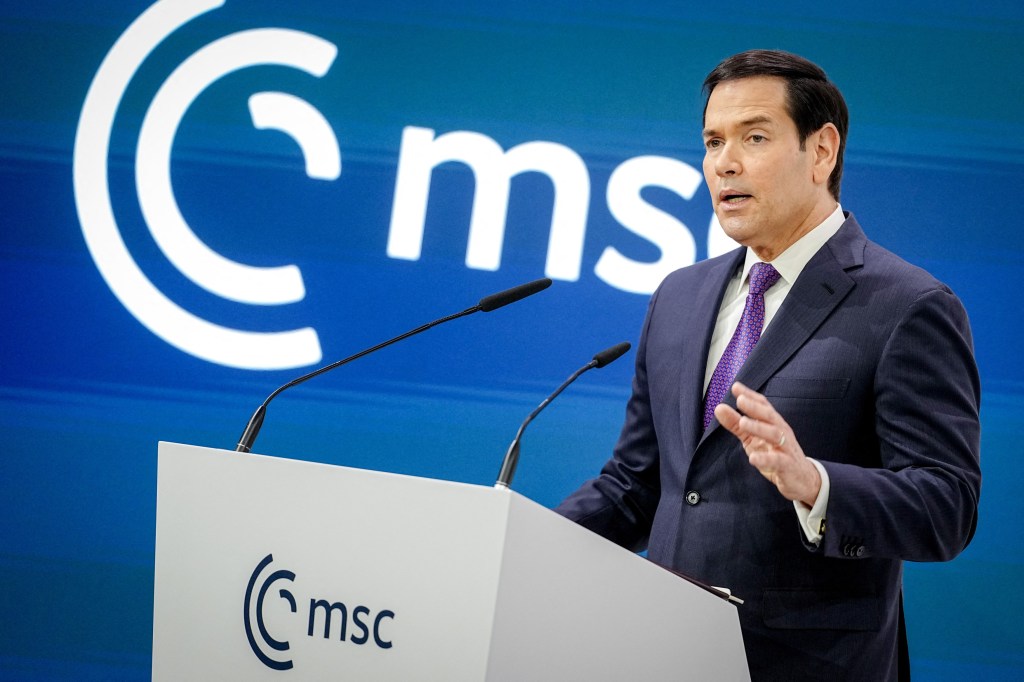 VIDEO Marco Rubio, historic speech in Munich: “The USA will always be a child of Europe”, but uncontrolled migration is not minor, it threatens our existence
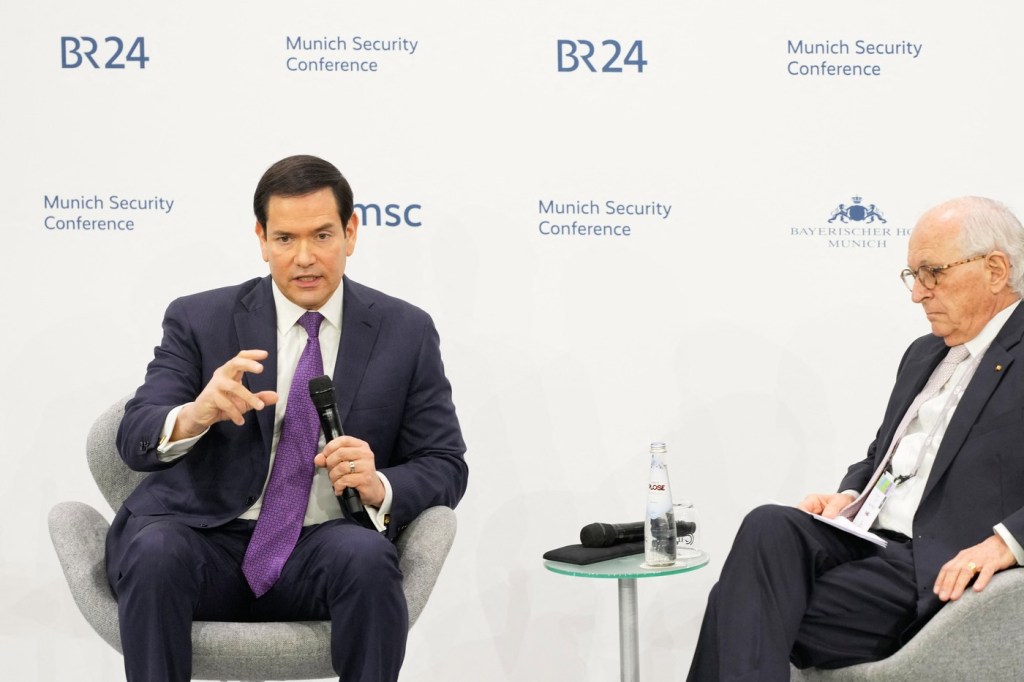 Rubio's speech did not reassure all European leaders regarding the Trump administration. “It's a poisoned gift” / “It was MAGA, but without any perspective”
Rubio's appearance in Munich follows the worst transatlantic crisis in decades, after Trump last month threatened to impose tariffs on several European countries that dared oppose his plans to seize control of Greenland, the semi-autonomous Arctic island with Danish sovereignty. Although Trump ultimately abandoned this measure, the damage was already done.
At the same time, allies in the Middle East are worried about his increasingly intense threats against Iran, in the context of continuing precarious negotiations with Tehran.
In South America, Rubio was the figurehead for Trump's controversial decision to arrest Venezuelan President Nicolas Maduro in a daring nighttime raid last month.
Throughout these events, Rubio constantly appeared alongside Trump to amplify and justify his choices, consolidating his metamorphosis from a critic and rival in 2016 – mockingly nicknamed “Little Marco” by Trump – to one of the president's most loyal lieutenants, writes the Financial Times.
“Elected Republican officials in the Trump era have two options: They can adapt to the new leader of their party or they can resign,” says Whit Ayres, a sociologist who worked for Rubio during the 2016 campaign. “Rubio adapted and it worked out very well for him,” Ayres explained.
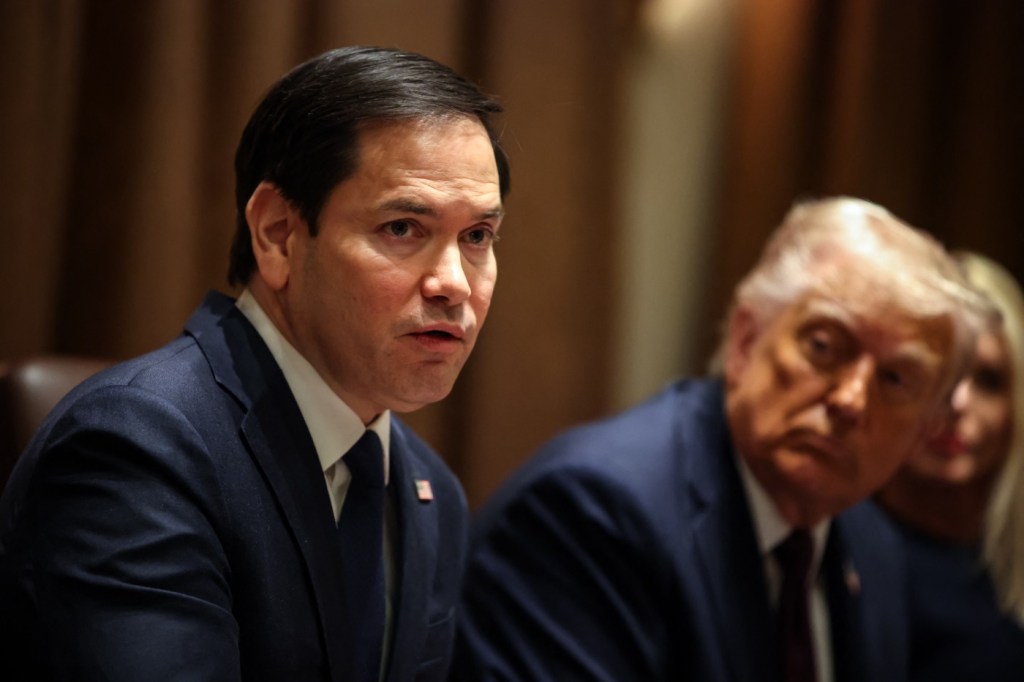
Who is Marco Rubio?
Born in Miami in 1971, Marco Antonio Rubio is the son of Cuban immigrants who left the island in 1956. “My father was a bartender. My mother was a cashier, a maid and a store clerk at K-Mart,” he said at the 2012 Republican Convention.
“He is a staunch anti-communist and a staunch pro-American,” says Carlos Gimenez, a Republican congressman who has known him for two decades.
Rubio studied political science at the University of Florida and law at the University of Miami. In 1998 he married Jeanette Dousdebes, a Miami Dolphins cheerleader, and they have four children. “He is a very religious man… their faith brings them many benefits,” says Gimenez.
His political career began as a West Miami city commissioner, before serving in the Florida legislature. Then, in 2010, he rode the Tea Party wave to the US Senate, where he was elected to respond on behalf of Republicans to Barack Obama's 2013 State of the Union address. His speech was widely criticized after he had to awkwardly reach for a bottle of water. “God has a funny way of reminding us that we're human,” he joked the next morning.
During their 2016 rivalry, Trump frequently mockingly brought up the water bottle story, while Rubio called Trump a “crook.” But while Rubio's bid for the White House ultimately failed, his ambitions did not fail.
How he became a Trump loyalist
During the first Trump administration, Rubio increasingly embraced the president's populism, particularly on tariffs and immigration. But even so, many US allies breathed a sigh of relief when Trump appointed Rubio as secretary of state for his second term. They were reassured by his bipartisan reputation and staunch supporter of NATO and human rights.
Above all, though, Rubio has proven to be a loyalist. As Trump slashed foreign aid and pressured Ukraine to reach a deal with Russia, Rubio took to the media to support him, sparking anger and confusion among those who saw it as a betrayal of his own positions. “Senator Rubio would not have condoned what Secretary Rubio is doing,” said Thomas Melia, former deputy director of the Democratic Senate Foreign Relations Committee.
Trump's preference for sending his friend Steve Witkoff and his son-in-law Jared Kushner to negotiate some of the world's worst crises has fueled speculation that Rubio is being sidelined. But in May, he was promoted to adviser for national security, in addition to the position of secretary of state. This means long hours spent in the White House, close to Trump's ear.
Rival for Vance?
That inevitably led to speculation that Rubio could be a challenger to Vance in the 2028 presidential election. One former aide said there was still “a long way to go.” And added: “I think Trump is going to have a tough say in picking the nominee. I think a lot of Trump supporters and aides are rallying around Vance, but, you know, Trump himself is pointing to both of them.”
Previous tensions are clearly a thing of the past. “People can develop personal relationships,” says a State Department official, noting that Trump is “joking” with him.
For his part, Rubio regularly offers the public admiration expected of cabinet members. “Donald J. Trump is a person who does not limit himself to what others say is possible or impossible,” he told the Davos audience.
Fluent in Spanish, Rubio is a particularly “eloquent” defender of Trump's policies, according to Ayres, who adds that he also “doesn't lose his temper easily.”
At the White House, Rubio is close to chief of staff Susie Wiles, a colleague from Florida. “Marco's in-depth knowledge is undeniable, but it's his quick wit and humor that make him so admired,” she says.
After Munich, Rubio will head to Slovakia and then to Hungary, countries more aligned with Trump than traditional European allies. “It's a lot to appreciate the way Hungary is approaching things and is willing to solve problems… in a way that other partners can't at the moment,” said one official, adding that Western Europe's “perception” of Russia as “an existential threat to them… makes it very difficult to reach a diplomatic conclusion” in Ukraine.
But Ayres remains confident that even if Rubio supports Trump's moves to subvert US diplomacy, he will not lead America to rebel superpower status. “Marco always believed that the world is a better and safer place when America plays a prominent role, and I think he still does,” he says. “He was never an isolationist, he was never a supporter of the idea of ”withdrawing from the world”, assures the expert.