Russia's war is evolving towards fighting with cheaper and cheaper weapons. The danger for Ukraine and Europe

Data collected by the Ukrainian military during four years of war shows a worrying trend: Russia is replacing tanks with drones, while new armored vehicles are being sent to NATO borders, according to an analysis published by Euromaidan Press, based on statistical data from the Ukrainian General Staff.
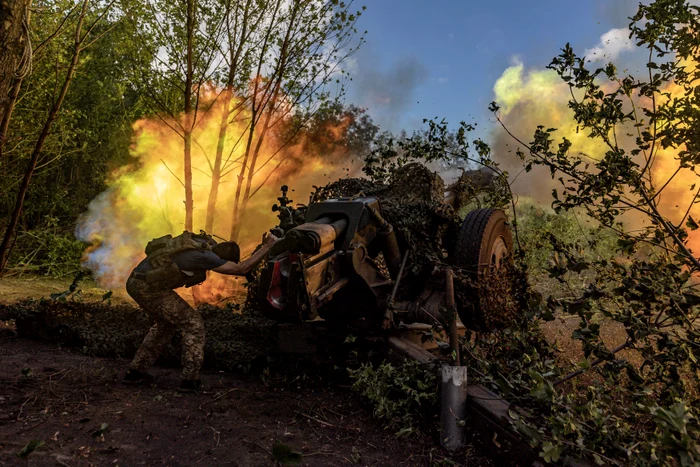
PHOTO PROFIMEDIA
The way Russia fights is changing, reflecting a strategic shift: from a war of maneuver supported by massive firepower to a war of attrition supported by drones and glide bombs; from expensive heavy weapons to cheap advanced technology; from soldiers to robotics; from precision strikes to indiscriminate destruction,
The conclusion is an uncomfortable one for Europe: Russia's ability to sustain the war is improving, while the extent of the devastation in Ukraine is increasing.
In the first three years of the full-scale war, Russian casualties increased year by year: 106,000 in 2022, 253,000 in 2023, 430,000 in 2024. In 2025, the total number of casualties fell to 418,000, and projections for 2026 indicate a further drop to around 360,000.
Russia has adapted tactics from massive attacks to infiltration in smaller groups, reducing casualty rates while increasing the speed of advance – occupying 31-34% more territory in 2025 compared to 2024, according to ISW and DeepState.
In the early years of the war, about three Russian soldiers were wounded for every soldier killed. This report collapsed. The Ukrainian “I want to live” initiative reported a 2025 Russian casualty ratio of 1:1.3 – presumably after FPV drone attacks create 15-20 km kill zones complicating medical evacuation. Russian command frequently refuses to recover wounded under drone threat and fails to rehabilitate survivors.
The Ukrainian armed forces, on the other hand, maintain a casualty ratio of one to five: for every 100 dead, about 500 are wounded. In the Pokrovsk sector, the ratio appears to be one to six in favor of Ukraine.
Although the overall casualty rate in Russia is declining, irreversible losses have never been greater.
ISW assessed on February 6 that Russia's military command plans to deploy limited strategic reserves for a summer 2026 offensive in southern or eastern Ukraine, but likely does not have sufficient reserves to prepare for or achieve offensive objectives. Russia struggled to make up for its losses and had to deploy operational reserves to support the ongoing fighting.
Tanks: Losses exceed entire NATO inventory
In the first three years of the full-scale war, Russia lost 9,655 main battle tanks. For comparison, the 32 NATO member states have a total of about 11,500 main battle tanks. Europe (excluding Russia and Ukraine) has only about 6,450, of which 55% are Turkish and Greek. Of this total, approximately 3,300 are considered obsolete.
In 2025, Russia lost another 1,813 main tanks bringing the total losses to the level of the entire NATO arsenal. It is on track to lose another 1,600 in 2026.
Drone strike zones are 15-20 km deep, making mechanized attacks almost suicidal. Russia still deploys tanks when Ukraine's drone defenses are degraded, but otherwise their battlefield presence is greatly diminished.
New production reached a cumulative total of about 500-530 T-90M tanks as of February 2022, with current annual production of about 300 tanks, according to a Wall Street Journal article citing Western intelligence services. Uralvagonzavod aims to increase production of T-90 tanks by 80% by 2028.
These new main battle tanks are not going to Ukraine. They are apparently deployed in the Leningrad Military District – the reorganized command structure facing NATO's Baltic and Nordic members. Russia is building new barracks, upgrading arsenals and improving railway lines around the city of Petrozavodsk in preparation for a possible future war with NATO.
“God of War”, under sustained attack
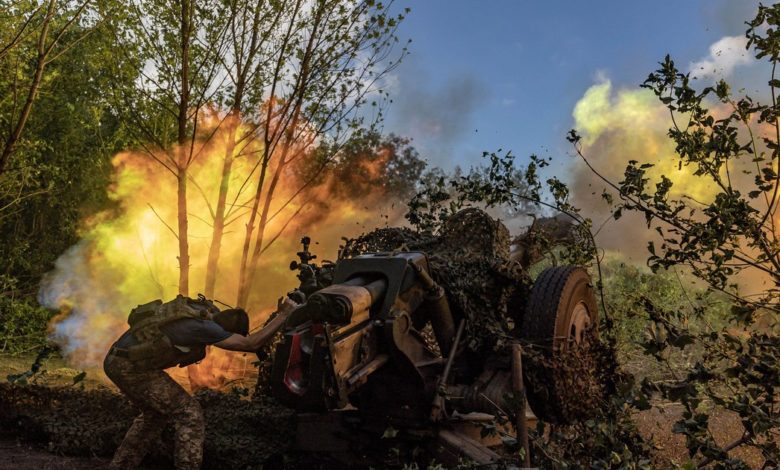
Artillery is fundamental to Russian military doctrine. “Russian forces maneuver to fire, Western forces fire to maneuver,” RUSI summed it up. Russia's artillery remains the core of its offensive capability.
Ukraine actively hunted it. According to the General Staff, Russia lost about 35,600 artillery pieces between 2022 and 2025. It is expected to lose another 13,000 in 2026. Combined with drone attacks on ammunition depots, Ukraine has reduced Russian fire from a peak of 40,000-60,000 shells per day in the fall of 2022 to 23,000 in the spring of 2025.
Airpower: Irrelevant up close, devastating at range
The Russian Air Force has failed to establish air supremacy over Ukraine and has not operated combat aircraft over Ukrainian-controlled territory since spring 2022. Ukraine has integrated F-16, Mirage 2000-5F early warning aircraft, Patriot, SAMP/T, NASAMS, IRIS-T and Saab 340 systems. It could receive 150 Gripen fighters and 100 fighter jets Bursts in the coming years. Ukrainian long-range attacks forced Russian fighter jets to move more than 300 km from the front.
Russia lost 434 aircraft and 347 helicopters, including strategic bombers, A-50 early warning aircraft and Il-22M airborne command posts.
But Russian air power has found a new role. Since 2023, the use of guided glide bombs (KAB) has increased from dozens of launches per day to over 200 launches per day.
In 2024, Russia launched about 40,000 cruise bombs. In 2025, approximately 48,500. If current trends continue, in 2026 it could reach 68,500. The range increased from 60-80 km to 95-150+ km for the jet variants, allowing the aircraft to launch attacks outside many Ukrainian air defense zones. Russian defense intelligence is working on modifications to reach a range of 400 km.
Drones: the center of gravity of war
Ukraine dominates the drone war on the front lines, but Russia may win the deeper battle — and this imbalance carries existential risks.
Ukrainian FPV drones and bombers have a range of several kilometers to about 20 km, keeping the front stable. But Russia's elite Rubicon units attack airfields, trucks and trains up to 200 km behind the lines.
The problem is structural: Ukraine's shortage of infantry forces drone units to plug defensive gaps instead of deep attacks, creating a vicious cycle.
In terms of long-range attack drones, Russia launched nearly five times as many drones in 2025 compared to 2024 (54,500 vs. 11,200). Based on the first two months of 2026, the figure could reach a staggering 102,000 this year
With the help of FPV drones, Russian forces are stepping up their frontline air interdiction (BAI) campaigns, focusing on degrading Ukrainian logistics rather than direct combat.
These precede ground offensives, targeting roads, railways and bridges at a depth of 25-100+ km. This pattern suggests that Russia is systematically creating the conditions for a multi-axis advance by degrading Ukrainian logistics and defensive drone coverage.
Currently, drones account for about 60% of Ukraine's total frontline firepower. Artillery represents 40%. Russia's figures are probably similar.
What can happen next
Russia has modified its drones for increased lethality: thermobaric warheads, cluster munitions, larger payloads and even air-to-air missiles, creating the capability of “escort aircraft” against Ukrainian interceptors.
Having lost access to Starlink, Russia's ability to attack mobile targets in the rear area will suffer a temporary setback before the next evolutionary step. The use and range of glider guided bombs will increase. More and more Ukrainian cities will be victims of indiscriminate bombing.
Ukraine faces increasing exposure to long-, medium-, and short-range drone attacks. Attack zones will expand. The combat air ban will penetrate even deeper into Ukraine's rear, complicating troop rotation, medical evacuation, supply, and long-range attacks.
Russia is depleting its strategic reserves and newly built armor is being deployed outside Ukraine – in preparation for a possible future confrontation with Europe.
All these developments outline an existential threat for Ukraine, especially in the conditions where air defense is insufficient.
“The US remains reluctant to provide urgently needed air defenses. Civilian casualties have increased by 31% under Trump's presidency. Washington continues its efforts to restore relations with Russia at the expense of European security.
Under these conditions, Europe has two options: to count on a Ukrainian victory to restore peace and stability, or to continue the current strategy until Ukraine can no longer be saved – and face the very real probability of a war on its own territory”, writes euromaidan press.