2026-02-15 06:00
publication
2026-02-15 06:00
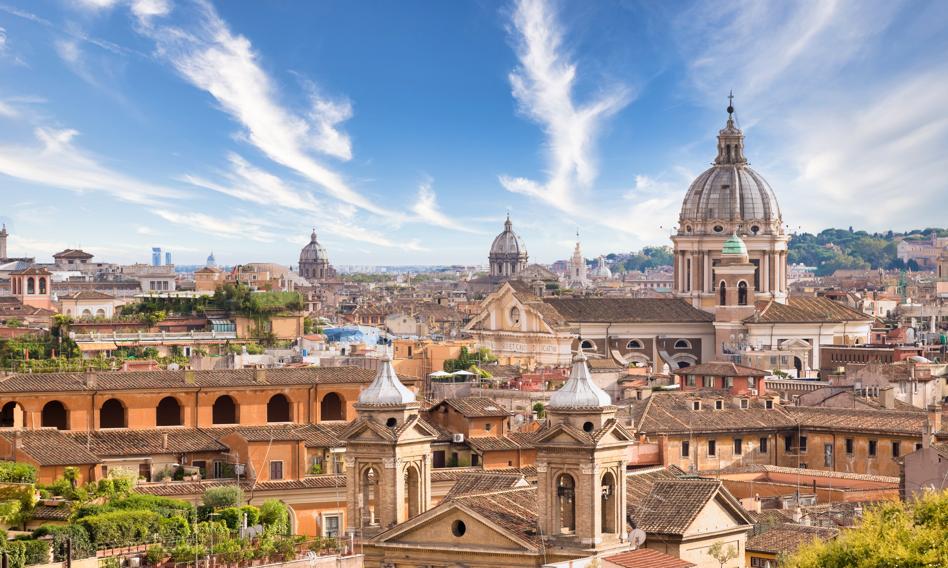
Rome, associated with baroque splendor and ancient basilicas, is entering a new phase of sacred development. The Diocese of Rome, together with the Italian Episcopal Conference (CEI), inaugurated the “New Churches Program”, under which 5 churches will be built. However, the main building material is not to be concrete or brick, but wood.
Although the center of the Eternal City is rich in temples, the situation on its outskirts is completely different. The new program targets suburban areas, which often struggle with social exclusion and architectural chaos. New facilities will be built in five locations:
- western zone: Parishes of St. Bridget of Sweden and Saint. Jan Nepomucen;
- southern zone: Sant'Anselmo alla Cecchignola;
- eastern zone: Sant'Anna a Morena;
- coast (Ostia): St. Vincent de Paul.
Interestingly, the key idea is the multifunctionality of new facilities. These are to be not only places of prayer, but also centers of local activity, integrating residents where there is a lack of public spaces.
Wood instead of marble
The biggest surprise, however, is the choice of technology. Instead of heavy brick structures, Rome relies on wood from renewable sources and prefabricated elements. This decision is justified by, among others:
- ecology and economy – lower carbon footprint and lower operating costs;
- speed – prefabrication allows for the rapid construction of buildings compared to traditional methods;
- safety – wooden structures are highly resistant to seismic shocks, which is a priority in Italy.
Despite its modern form, the Church does not give up on beauty. Not only engineers, but also artists are involved in the design process so that the buildings become new icons of local architecture.
As noted by “Rzeczpospolita”, the “New Churches Program” was divided into several phases. The first phase, lasting from January 20 to February 20, 2026, is the stage of collecting proposals from architects, artists, constructors and all other interested people, which will end with the selection of the winning concept. In the second phase, its authors will sign a contract for the implementation of the project, which will be supervised by companies specializing in wooden structures.
The project budget is EUR 100 million. More than half of the funds come from the otto per mille fund (it is financed by 0.8% of the tax that citizens can voluntarily donate to a chosen religious association, not only Catholic ones). The rest of the amount will be covered directly by the Diocese of Rome.
Church tax like in Germany? 8 percent on the religious community
8 percent salary tax could go directly to the account of the Church or a registered religious community. This is the assumption of a citizens' petition modeled on the German church tax, which was sent to the ministries.
Interestingly, Rome currently has over 900 churches, which makes it one of the most religiously saturated cities in the world. However, the dynamic growth of the metropolis meant that in the new bedroom districts, for years, the faithful had to use makeshift chapels in garages or rented premises.
Prepared by JM