INTERVIEW. The Romanian film that in the first week sold 200,000 tickets: “Much of the language in the film is borrowed from jokes specific to live on TikTok”


Just a week after its theatrical release, Golden Boyz has already become a box office phenomenon, with nearly 200,000 tickets sold and packed theaters across the country. In an interview for the HotNews audience, Vlad Drăgulin, one of the film's main actors, explains what the recipe for success is.
“City Boys: Golden Boyz” is the continuation of one of the most popular comedy brands of recent years and brings to the big screen, almost a decade away, the humor, characters and energy with which they won over the audience since the first appearances in the TV series.
The synopsis of the feature film promises that the characters Roby Roberto, Malone, Gina Felea, Dorian, Daniela and Renatta will this time be caught up in a “crazy plan that turns their world upside down”. The “city boys” must decide if success means money, fame… or the courage to stay authentic. Directed by Mihai Bendeac, the film preserves the self-deprecating humor, but takes it in a new cinematic direction, more recognizably Romanian and more anchored in the present.
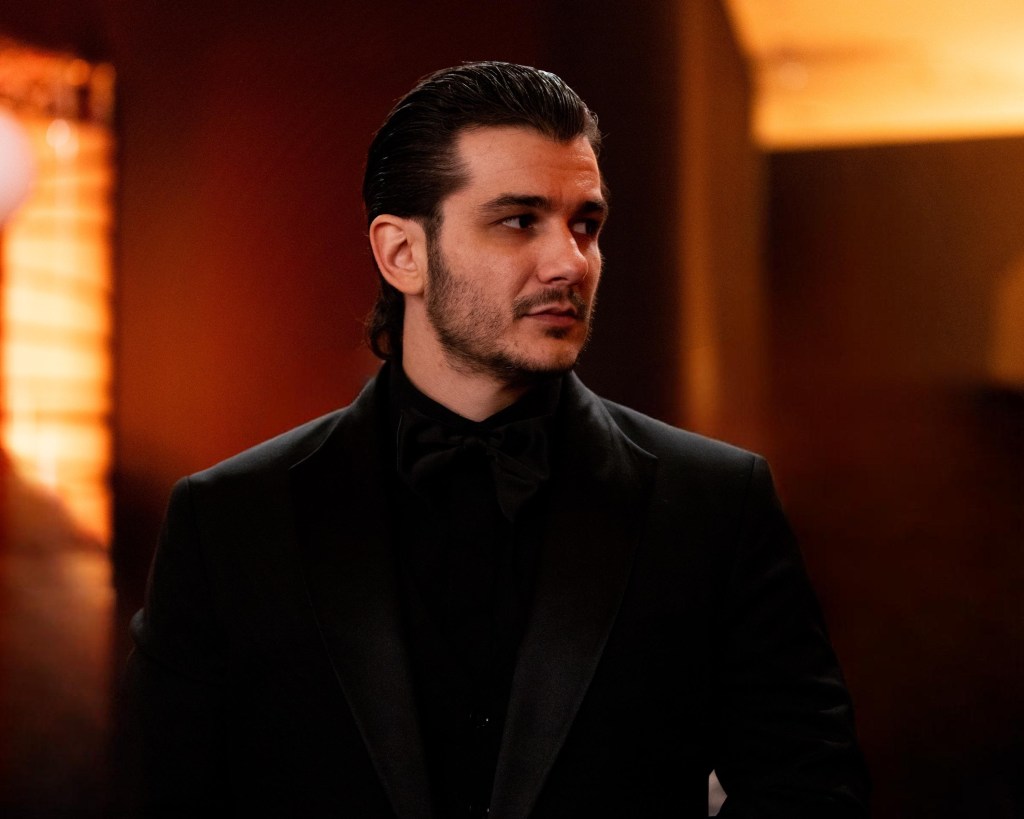
Vlad Dragulin, one of the main actors of the film, who plays Malone, is an essential part of this recipe for success. Drăgulin talks, in an interview for the HotNews audience, about the pressure of expectations, about the scenes of filming and how he built his character for the big screen.
“I practiced the character alone at home”
– After almost a decade since the end of the series, how was the reunion with Malone? What did you feel the first time you stepped into the shoes of a character who left his mark on Romanian pop culture?
– Vlad Drăgulin: I don't think there was a break between me and Malone; I admit that I practiced the character before, alone, at home. But if I had to answer the question, it was like when you see a friend again after 8 years and it seems like only a day has passed.
– Malone has always been one of the most recognizable characters in the “City Boys” universe. What do you think made it endure so well over time, in the language and memory of the public?
– I think Malone was so loved because he is the “victim” of the group and the target of jokes, and that made the audience empathize with him even more. It matters a lot that despite being the ultimate idiot archetype, he still has a candor and a good soul. Deep down, he's not a bad man.
– How has Malone changed from the series? Is he more mature, more vulnerable, or just more aware of his choices?
– Malone has remained unchanged and yet is every time surprising with his idiocy. Every time it proves that it can be even worse than before. So, as a technicality, much of his language in the film is borrowed from jokes specific to TikTok live. I wanted to accentuate his depersonalization a bit, I wanted him to have nothing of his in the language apart from the famous “let Bianca die in prison!”
– What does the cinema, the big screen, add to this universe? As an actor, did you feel a distinct difference in the pace and intensity of the film versus the series?
– I, as an actor, do not relate differently when it comes to film or a TV production. It's the same job. But the cinema brings people together, which gives an extra nuance to our film, turns it into an event, a reunion, because all the people who come to the cinema have one thing in common: the connection they have not lost with these characters.
“If you open TikTok, there are real people who far surpass the grossness and callousness of our characters”
– You said in the past that the characters in “City Boys” work because they are the mirror of a Romanian reality. What does “Golden Boyz” say about the generation that grew up with this series and has now reached a certain maturity?
– He says it's a generation with humor, a generation with a sense of observation. I realized that the more time has passed, the more valuable and necessary this mirror is. If you open TikTok, there are real people who far surpass the grossness and callousness of our characters.
– The film talks a lot about status, success and image. What does it mean, from your point of view, to “make it” today as an actor, but also as a person?
– To me, succeeding as a human means staying balanced. Balance means being content and grateful for what I have and who I am, not wanting anything that someone else has. Succeeding as a human also has social value; i'd like to think people don't squint when they hear they have to date me.
From a professional point of view, however, I don't have a specific recipe. I don't know what it means to succeed as an actor, our paths are extremely complicated and an actor's career also depends on a bit of luck. Succeeding as an actor can mean being surrounded not only by talented colleagues, the director to love and protect you, but also by an audience that can't wait to see you.
– Is there a scene or moment in the film that surprised you as an actor? A point where Malone will push you out of your comfort zone?
– I didn't leave my comfort zone, but I never expected to share a rocking chair with Florin Salam.
– How do you think the film will be received by those who are only now discovering the characters, Generation Z, for example?
– “Golden Boyz” starts in a world that long-time fans are already familiar with, but the energy and dynamic of the characters doesn't belong to a generation. Gen Z is much more attentive to authenticity. If something is fake, he feels it immediately. But if he's honest, he adopts him. And I think that's exactly what the film has: the authenticity of the characters. And laughter has no age. If an entire room laughs at the same joke, it doesn't matter what year you were born.
– Looking back, what did “City Boys” mean to your career? Do you think your career would have looked different without Malone?
– Without this character, I don't think I would have had the same connection with the audience. “City Boys” was not only a successful project. It was the moment when I understood that a character can transcend the screen and become part of people's culture.
– If you were to take Malone out of the movie and put him in the real Bucharest of 2026, where do you think he would be now and what would he be doing?
– He would have an educational podcast on how to take the BAC without studying anything.
– How do you see the positioning of this film in the context of recent Romanian comedy, which is enjoying increasing success from year to year?
– I think we are in a pioneering stage. People need to laugh together. I think our film comes at a good time, I think it can raise the bar. The positioning of our film is a little different, because it starts from an already loved universe, built over time and with a long horizon of expectation. It's not just a new comedy, it's a reunion. And that brings an extra emotional charge.
I think the recent success of Romanian comedies shows that the public is looking for local, recognizable stories with characters they can relate to. And our film goes exactly in that direction.
– Does box-office success or long-term cultural impact matter more to an actor?
– I think the box office is very important for the industry. It keeps the film alive, it keeps the teams moving, it makes the next project possible. I know how to make characters, I don't profit. When I make a role, I don't think about numbers. I don't think about earnings. I think about whether the character is true, whether it has coherence, whether it can stay in people's minds. I have always started from the idea that if the work is qualitative, the money will come. Maybe not right away, but they will come. Long-term cultural impact is, to me, a sign that you've made something that has stood the test of time, which is rare.
And if years from now someone is still quoting you a line or talking about a character, then you've won something more important than a good weekend at the box office.
– Do you think that “City Boys” could only exist in a Romanian context or does it have universal themes? Could it work just as well for an audience outside of Romania?
– I think that the universe is very Romanian in details, but the themes are universal. “City boys” has local specificity – language, rhythm, social context. But essentially, it talks about things that exist everywhere. The theme of friendship is universal. A group of friends who dream together, who make mistakes together and who stay together – that's not about geography. And the get-rich-quick, get-rich-quick, short-cut idea is just as universal. The desire to succeed quickly, without waiting, is a global temptation. I think audiences outside of Romania might not understand all the local nuances, but they would understand the energy, relationships and ambition of the characters.