Germans, accused of taking too many sick leave days and thus slowing economic growth: “Stop being so lazy!”, the chancellor tells them


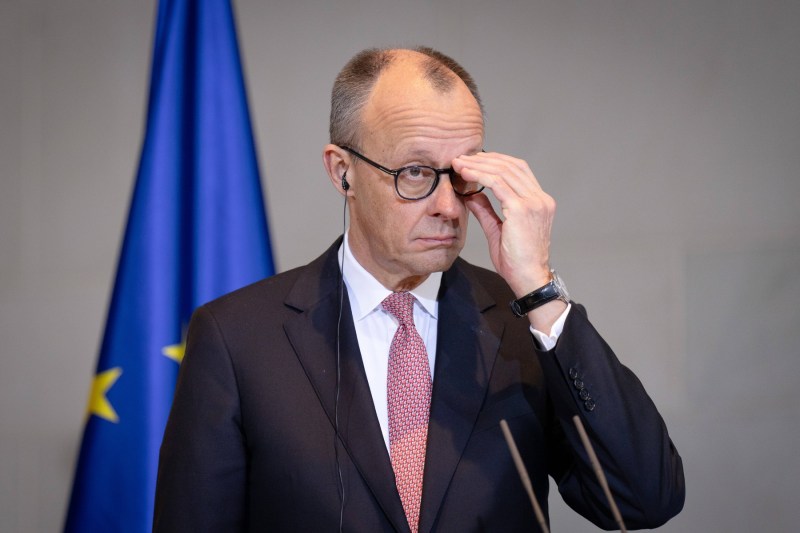
Chancellor Friedrich Merz at a press conference in Berlin on January 28, 2026. PHOTO: ESDES.Pictures, Bernd Elmenthaler / imago stock and people / Profimedia
Germans don't work enough hours and take too many sick leave days, which is holding back economic growth, German Chancellor Friedrich Merz claims. His message, in short: Don't be so lazy!.
It is not the most appropriate political message in a year with regional elections, especially in a country where tradition praises diligence and hard work as a moral imperative, writes POLITICO.
Merz's call for citizens to work harder comes as the country struggles to revive Germany's stagnant economy and promotes policies to increase competitiveness by addressing a shortage of skilled labor.
However, it also comes at a politically sensitive time, ahead of a series of regional elections seen as crucial tests as his own Conservative party grapples with the rise of the far right.
This did not stop the chancellor from adopting an almost reproachful tone towards Germans for not working harder and harder.
“The overall productivity of our national economy is not high enough,” Merz said, pointing to part-time work as a problem. “To put it even more bluntly: work-life balance, along with the four-day work week, are not enough to sustain our country's current level of prosperity into the future. So we need to work harder.”
He also claimed that German workers take nearly three weeks of sick leave a year, well above the EU average.
Germany ranks almost last in the EU in terms of the average number of hours worked per week
According to recent data collected by the country's statistics office, Germans rank close to last in the EU, third from the bottom, in terms of average weekly working hours.
A major reason for this is that the proportion of German workers choosing part-time work has reached historic highs. Merz's party recently proposed a measure to increase the total number of hours worked, abolishing the right to part-time work unless the worker has a special reason, such as childcare obligations or continuing education.
The proposal – titled “No legal right to part-time work” – angered many Germans and many German women who work part-time felt that the initiative was aimed at them.
The political damage to his conservatives seems significant. Two-thirds of Germans oppose this proposal, according to an ARD-DeutschlandTrend poll.
Even more significant for Merz is the conservatives' loss of points on their key issue: the economy. Only 31% of Germans surveyed said they trusted the chancellor. This figure is still higher than other parties, but it is 6 percentage points lower than last year, the lowest ever score for the Conservatives.
Greece, given as a model
Topping the list of the longest working hours in the EU is Greece, a country that German conservatives saw as lazy during the European debt crisis a decade ago.
Merz now presents Greece as a model, even though productivity in Germany remains much higher.
During a visit by Greek Prime Minister Kyriakos Mitsotakis to Berlin last year, Merz praised Athens for liberalizing the labor market, which allowed for a six-hour work week. “I recommend to everyone in Germany who thinks it's terrible and absurd to work 40 hours a week … to take a look at Greece,” Merz said. “We can certainly learn something from Greece in this regard.”
Unemployment at the highest level in the last 12 years
In fact, the most acute problem is probably the growing shortage of jobs in the industrial sector, which has long fueled the country's export-based economy. Germany's unemployment rate is approaching 4%, and the number of unemployed has exceeded 3 million, reaching its highest level in 12 years.