A small crowd gathered under the gaze of the Angel de la Independencia, a golden angel sculpture honoring Mexico's freedom fighters. Less than a hundred meters away there is a building that housed the US Embassy a few weeks ago; it has now been moved outside the city center.
Demonstrators wave flags of Cuba, Mexico and Colombia. Some protest participants are wearing tracksuits or T-shirts in Venezuela's national colors. In front of the high barricades surrounding the former embassy building, they are protesting against US attempts to force the Cuban regime to surrender after the arrest of Venezuelan President Nicolas Maduro.
The US president is increasing pressure on countries supplying oil to Cuba and threatening high tariffs. A few days ago, Mexican President Claudia Sheinbaum announced that for now, no tanker of the state oil company Pemex will sail to Havana. This is a significant step – not least because Mexico has been the most important supplier recently.
– says Carolina Tetelboin, a retired scientist, who is watching the demonstration. She considers herself a leftist presidentfor a clever strategist.
Tetelboin left Chile as a young woman in the mid-1970s, shortly after dictator Augusto Pinochet came to power. She compares then-overthrown president Salvador Allende with Sheinbaum. This socialist took a very confrontational position towards the United States. It backfired on him. The case of Sheinbaum is completely different.
— He knows he has to tread carefully and carefully with Trump and doesn't want to risk conflict. At the same time, she doesn't let him impose his will, he says.
Between cooperation and distance
Sheinbaum did talk about an independent decision to suspend oil supplies. However, given the moment in which it was made, it is perceived as another step in a series of concessions to Washington. However, the US president does not get everything he wants. Sheinbaum strongly rejects his demands for American military intervention against drug cartels in Mexico, as well as proposals for the participation of American special forces in the destruction of drug laboratories.
This is difficult for a 63-year-old a maneuver between cooperation and clear distancingaimed at protecting national interests and sovereignty. So far, she seems to be succeeding — with broad support across the country.
In his second term, US President Trump has significantly toughened his tone towards Latin America and made US claims to influence in the region more open than ever before. Mexico plays a key role in this: as a trading partner, an important country for migration and a starting point for the cartel threat. Cartels smuggle drugs into the United States that cause the death of thousands of Americans each year, primarily fentanyl.
To send a clear message, Sheinbaum recently brought to the attention of the U.S. government that since she took office in October 2024, the amount of fentanyl seized by Americans at the Mexican border has dropped by approximately half. Drugs are already being seized in Mexico — although experts don't attribute this solely to the country's president.
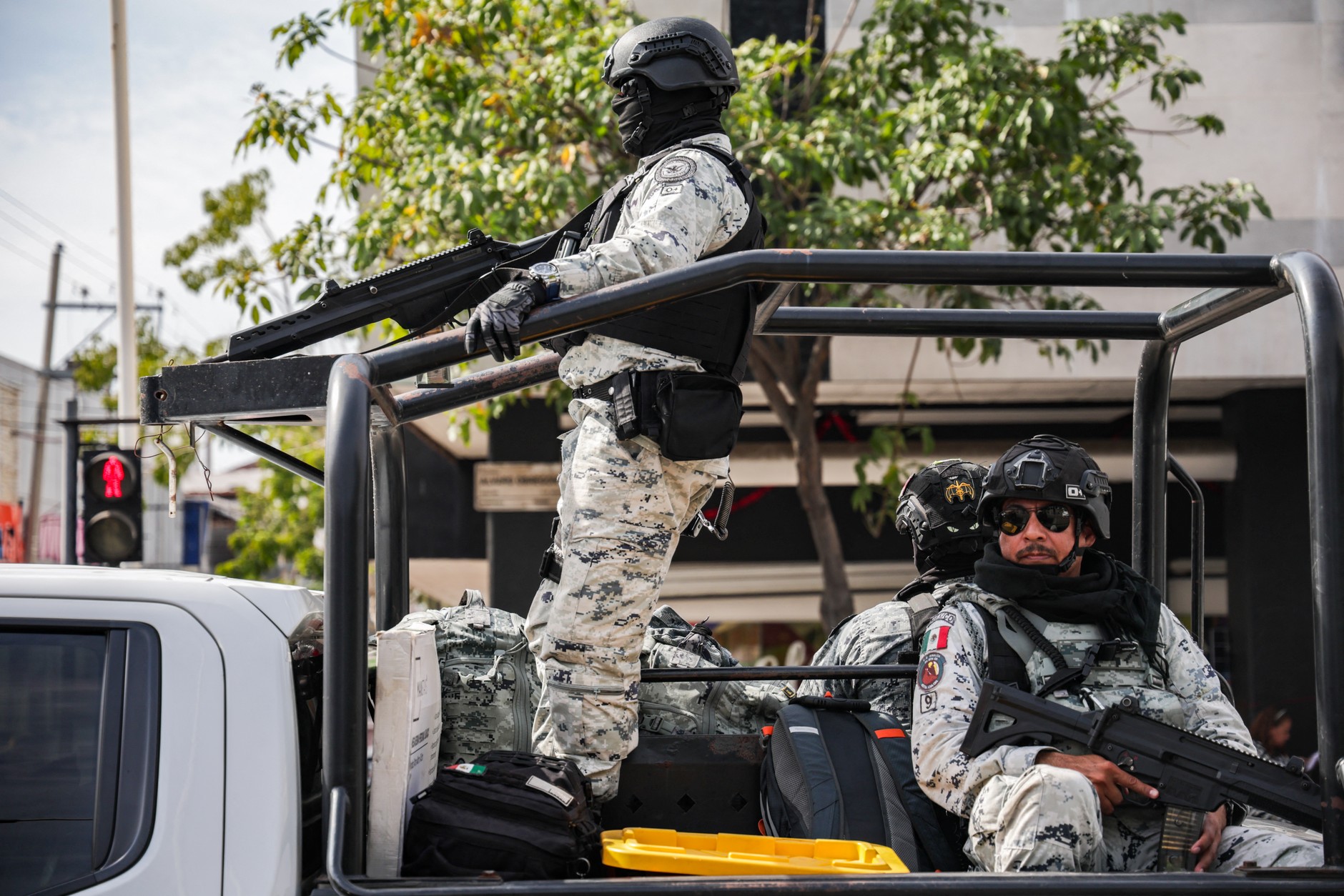
Mexican National Guard officers patrol the streets of Culiacan, Sinaloa, Mexico, on Jan. 30, 2026. Sheinbaum has sent a total of 1,600 additional troops to the state amid escalating violenceJESUS VERDUGO / AFP / AFP
After Trump threatened to impose tariffs in February, Sheinbaum agreed with the US president to strengthen border security and sent an additional 10,000. National Guard and army soldiers to the northern border. Additionally, Mexico sent several planes carrying cartel members, including some high-ranking ones, to the U.S. last year and then imposed high tariffs on Chinese products — in line with the U.S. goal of limiting Beijing's influence in the region.
“Cooperation yes, subordination no”
While Mexico succumbs to pressure from Washington in many areas, Sheinbaum draws the red line in the case of Trump's threats regarding military intervention in Mexican territory.
Mexico is a free and sovereign country: cooperation yes, subordination and military intervention no
– she emphasized.
It also rejects joint operations with US special forces.
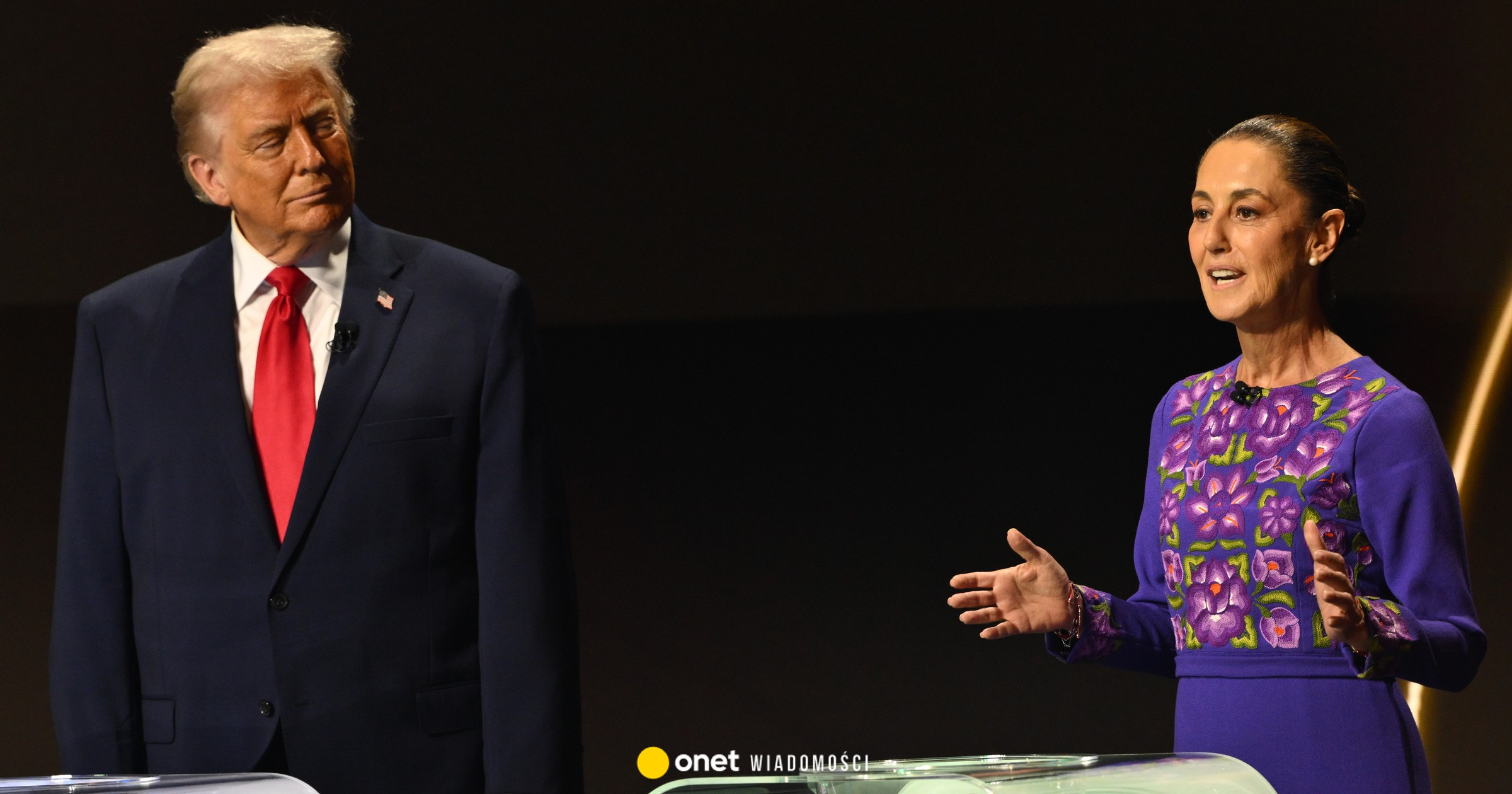
Nevertheless, the Mexican president is the only one of Trump's political opponents against whom he refrains from insulting her. On the contrary: In phone calls and interviews, he called Sheinbaum, among other things, “a very intelligent leader” and a “wonderful woman.”
These flattering terms probably have little to do with the charisma of the president, who was sometimes called the “ice lady” due to her cool and composed demeanor. Yet it is this character trait of Sheinbaum, a Ph.D., who seems to be responsible for the unusually respectful relationship between the two heads of state.
The article continues below the video
— He can find the right tone in conversations with Trumpthanks to which it effectively avoids conflicts, notes Ricardo Zuniga, a former American diplomat and expert on relations between Latin America and the United States. According to the political scientist, Sheinbaum understands Trump's negotiating style like no other head of state.
Her conversations are very direct and transactional. It is this way of resolving conflicts that appeals to Trump
– he adds.
She cites countering tariff threats as an example: Sheinbaum announced retaliatory measures that would affect important sectors of the American economy, but at the same time she emphasized partnership with the US by increasing tariffs on China. In this way, it preserved peaceful relations with Trump and Mexican sovereignty.
This is noteworthy, especially since for the US president Mexico is still the “great evil” in the region.
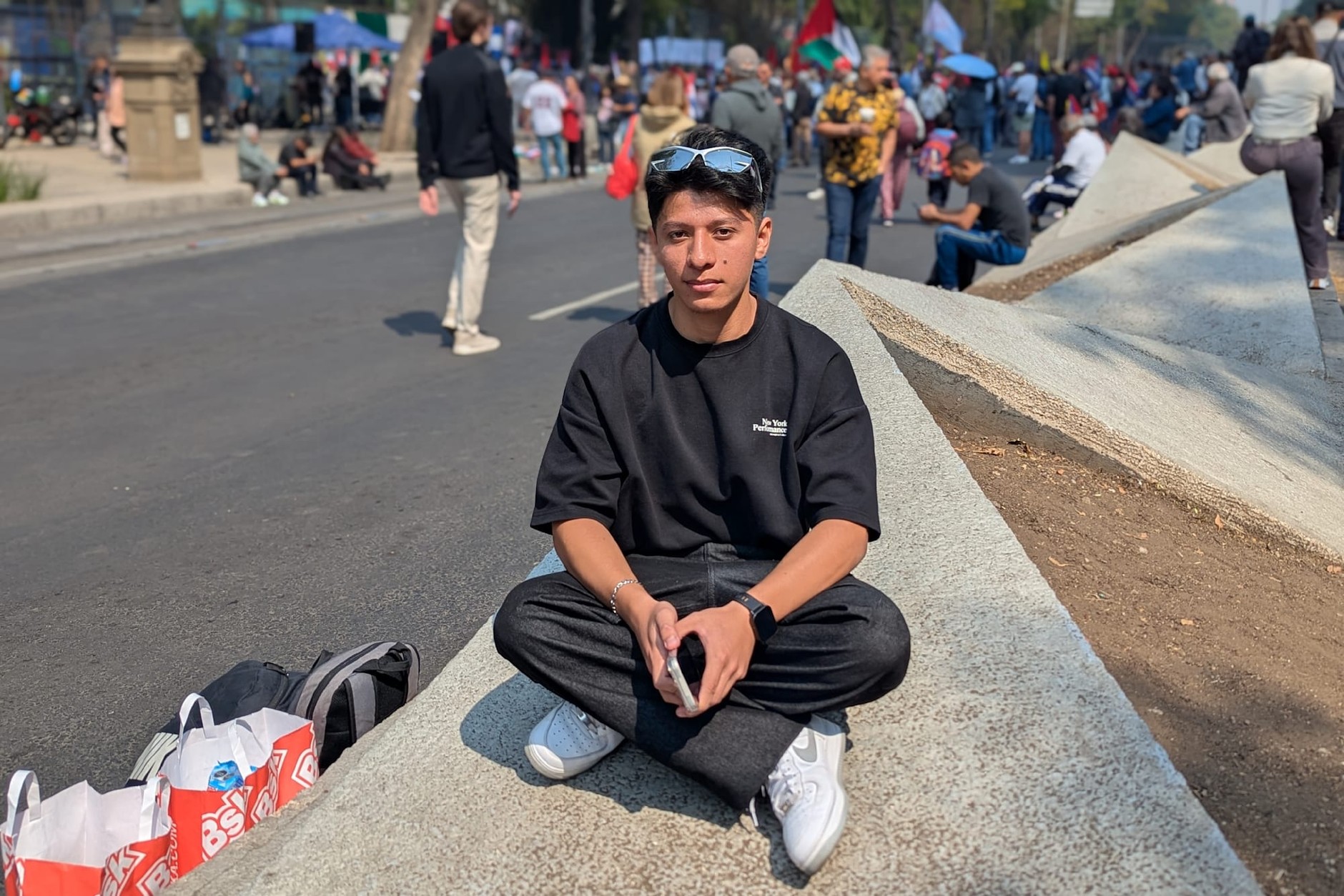
Near the protests outside the US Embassy, Victor Martinez sits in the sun and takes a selfie. Next to the 20-year-old are several bags with the logo of a European fashion chain. He says he came here by accident after shopping.
He believes Sheinbaum's relationship with Trump is stable, but it's not enough. The government must take much stronger action against cartels. — Until this happens, Trump will have reason to make threats, he believes. This worries him. After the US military intervention in Venezuela has the feeling that “anything is possible.”
Victor MartínezDie Welt
Many observers, including Zuniga, expect that despite Sheinbaum's efforts, Trump will carry out his threat sooner or later and there will be military intervention against the cartels. However, the expert believes that the decision may be delayed until the US midterm elections in November.
He also points to the shooting down of suspected drug smugglers' boats in the Pacific, which is unpopular with the American public, especially since the media reported that civilians were killed in at least one case.
— This government's use of force arouses great skepticism among voters. “I think ultimately it has a much bigger impact than any international response,” Zuniga notes. He doesn't think U.S. citizens would support another ground operation in Mexico or elsewhere in Latin America.
I’m Ashley Davis as an editor, I’m committed to upholding the highest standards of integrity and accuracy in every piece we publish. My work is driven by curiosity, a passion for truth, and a belief that journalism plays a crucial role in shaping public discourse. I strive to tell stories that not only inform but also inspire action and conversation.