Putin's oil fortress is cracking. Russian oil is losing support that saved the budget for years. The Kremlin's financial nightmare begins [ANALIZA]


In 2025, Indian refineries accounted for almost half of Russian supplies transported by sea (not counting approximately 1 million 200 thousand barrels per day exported via pipelines on land – to China and via the Druzhba pipeline to Hungary and Slovakia). If last year, on average, approximately 3 million 600 thousand barrels of raw material per day (and at the peak up to 4 million – according to data from S&P Global Commodities at Sea), Indian customers bought approx. 1 million 700 thousand. barrels, and in mid-2025 even up to 2 million barrels per day.
Russian oil is losing its last resort. As India leaves, the financial foundation of the war begins to crack.
Last week, the oil sector – and therefore budget revenues – suffered another blow: Washington and New Delhi announced a trade agreement under which the US reduces tariffs on goods from India. Although Russian oil was not explicitly mentioned, Trump threatened India with increased tariffs if its refineries resumed purchases of Russian crude. Importantly – in the words of the American president – India could be penalized even if it purchased oil not directly but through third countries.
The oil game for Europe
Such actions not only affect Russia's income, but also open the European market to American energy resources. After the EU embargo, Russian oil reaches the EU indirectly – through India, in the form of petroleum products. For example, the Jamnagar refinery – one of the largest recipients of Russian oil – sends 28 percent. of its fuel exports to European ports, and recently as much as 43 percent she bought raw materials from Russia.
According to Reuters sources in the oil trading industry, the largest Indian refineries have already refused to accept Russian tankers in March and April – and will most likely not return to purchases of Siberian raw material later either. As a result, exports to India may drop to 500-600 thousand. barrels per day – down to three or four times lower than last year's highs. A more optimistic forecast by JP Morgan assumes that India will maintain purchases at the level of 800,000. — 1 million barrels per day.
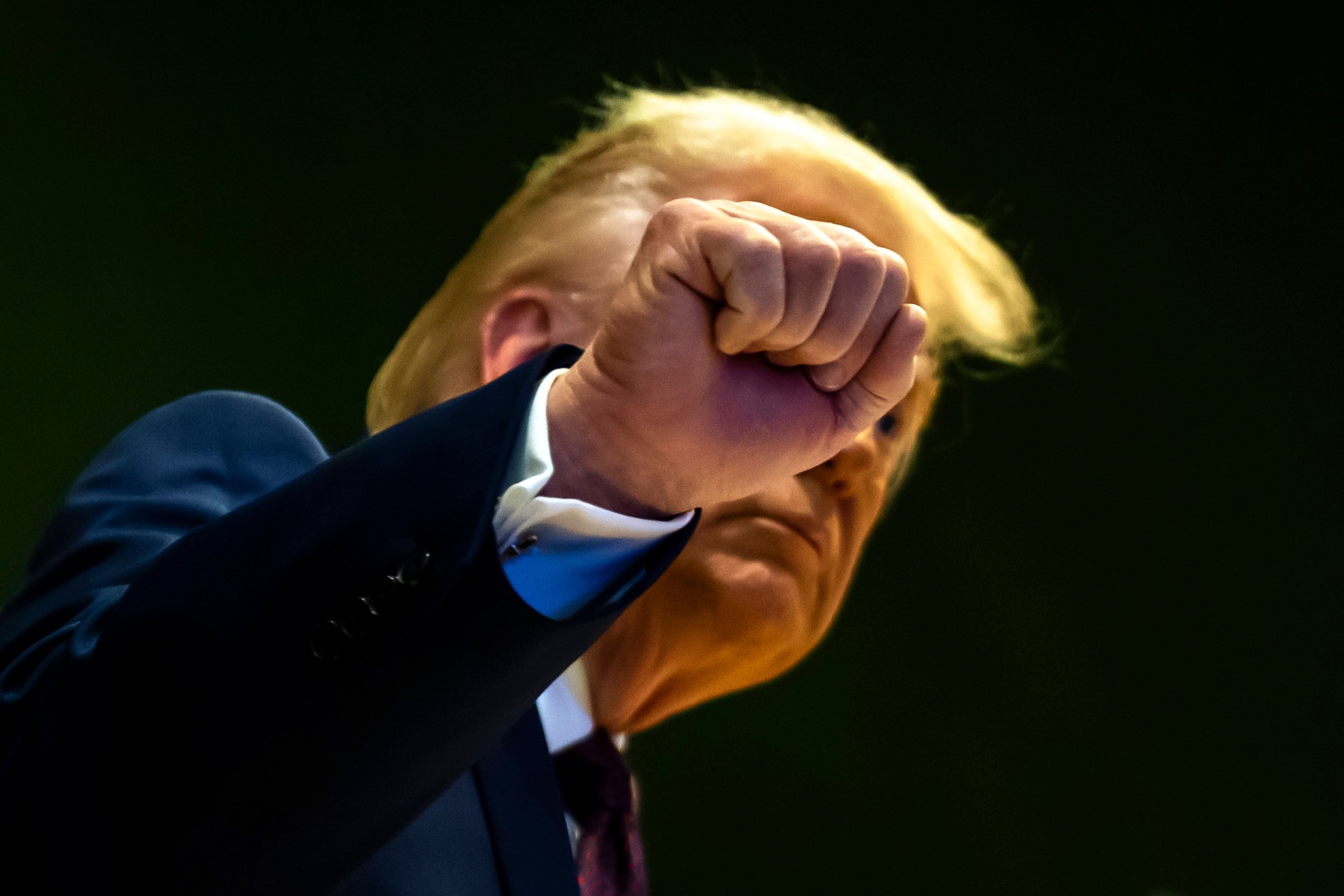
US President Donald Trump during the World Economic Forum in Davos, Switzerland, January 22, 2026.EPA/LAURENT GILLIERON / PAP
However, if equally severe restrictions are introduced against Russia – and at the same time Trump and Putin do not reach any political and economic agreement – the model of Russian oil trade may undergo a profound transformation.
Russian oil is not disappearing. She changes route
Some supplies will remain even with strict bans. According to one trader, relations between Moscow and New Delhi are so close that exceptions can be expected – imports will not drop to zero, but will only decrease. Sergei Vakulenko from the Berlin Carnegie Center thinks similarly – India is probably not ready to completely “zero” purchases, as it did in the case of Iran.
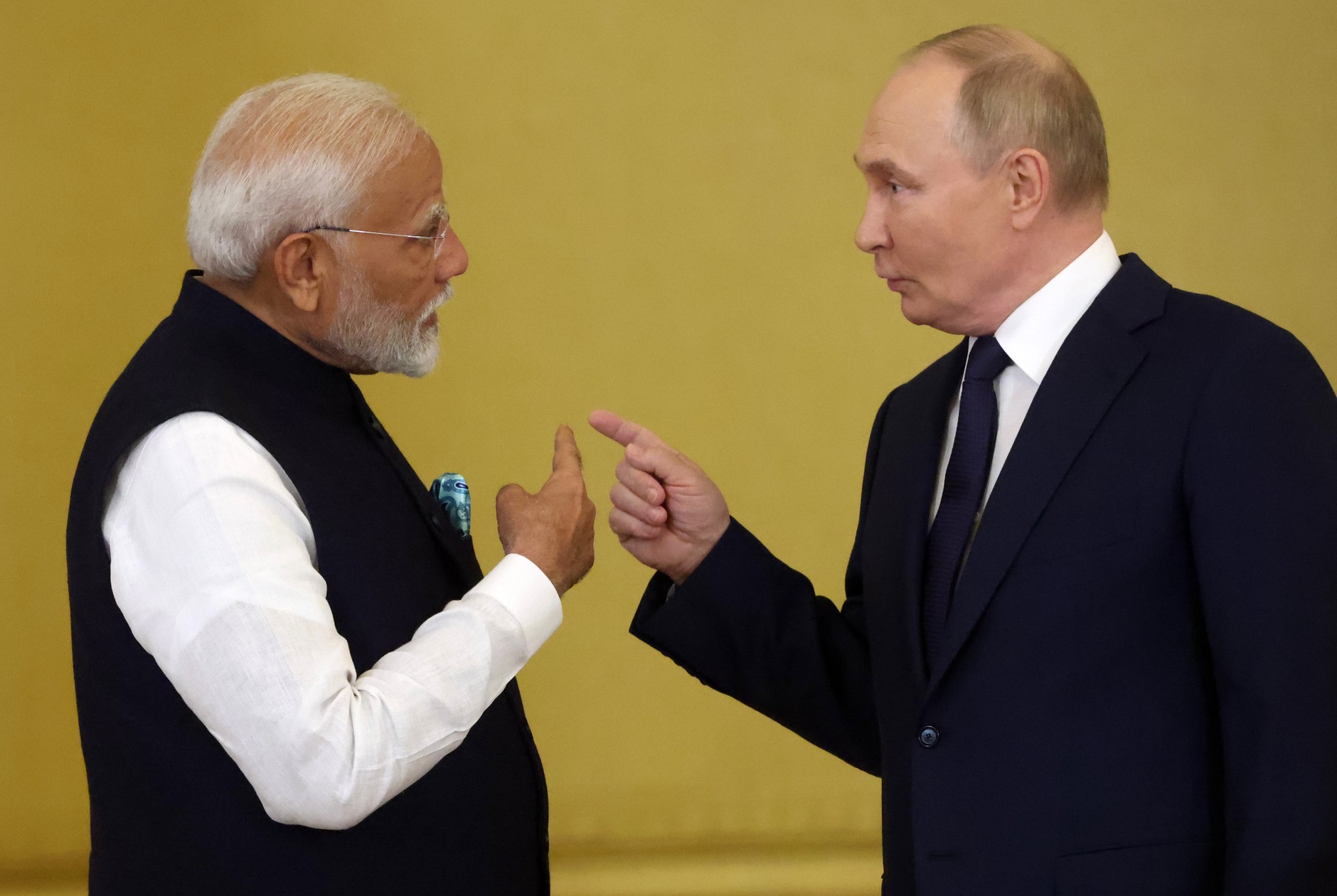
Russian President Vladimir Putin with Indian Prime Minister Narendra Modi in Moscow, July 9, 2024.Contributor / Contributor / Getty Images
First, India may argue that not all Russian exporters are subject to full sanctions. Secondly, some crude oil may be “rebranded” in other ports – e.g. in Malaysia or Singapore. Moreover, the latter port, according to data from S&P Global Commodities at Sea, increased its purchases of Russian oil by as much as 2.5 times in January – to a record 500,000. barrels. Singapore has never bought such quantities before, so the market suspects that its name appears in documents to hide its real recipients.
Some supplies may simply “dilute” into global oil flows – through mixing raw materials, alternative intermediaries and more complex transport routes. This doesn't mean that all of the lost volume will return to India, but some of it may still end up there – just in a less obvious way.
The remaining quantities may be sold to other customers – including Indonesia, Syria and, above all, China, both directly and indirectly. Beijing has extensive experience in trading raw materials subject to sanctions and extensive logistics capabilities – it has large oil storage facilities and is constantly increasing stocks in floating storage facilities.
China won't absorb everything
But there are limitations here too: demand is not infinite, there are processing limits and strategic calculations by Beijing. China may be a buffer — but not bottomless. India has played such a role in recent years, allowing Russia to balance exports and mitigate the effects of sanctions. Now they are no longer a “safety valve”, which makes Russian exports much more susceptible to external pressure and increases logistics costs.
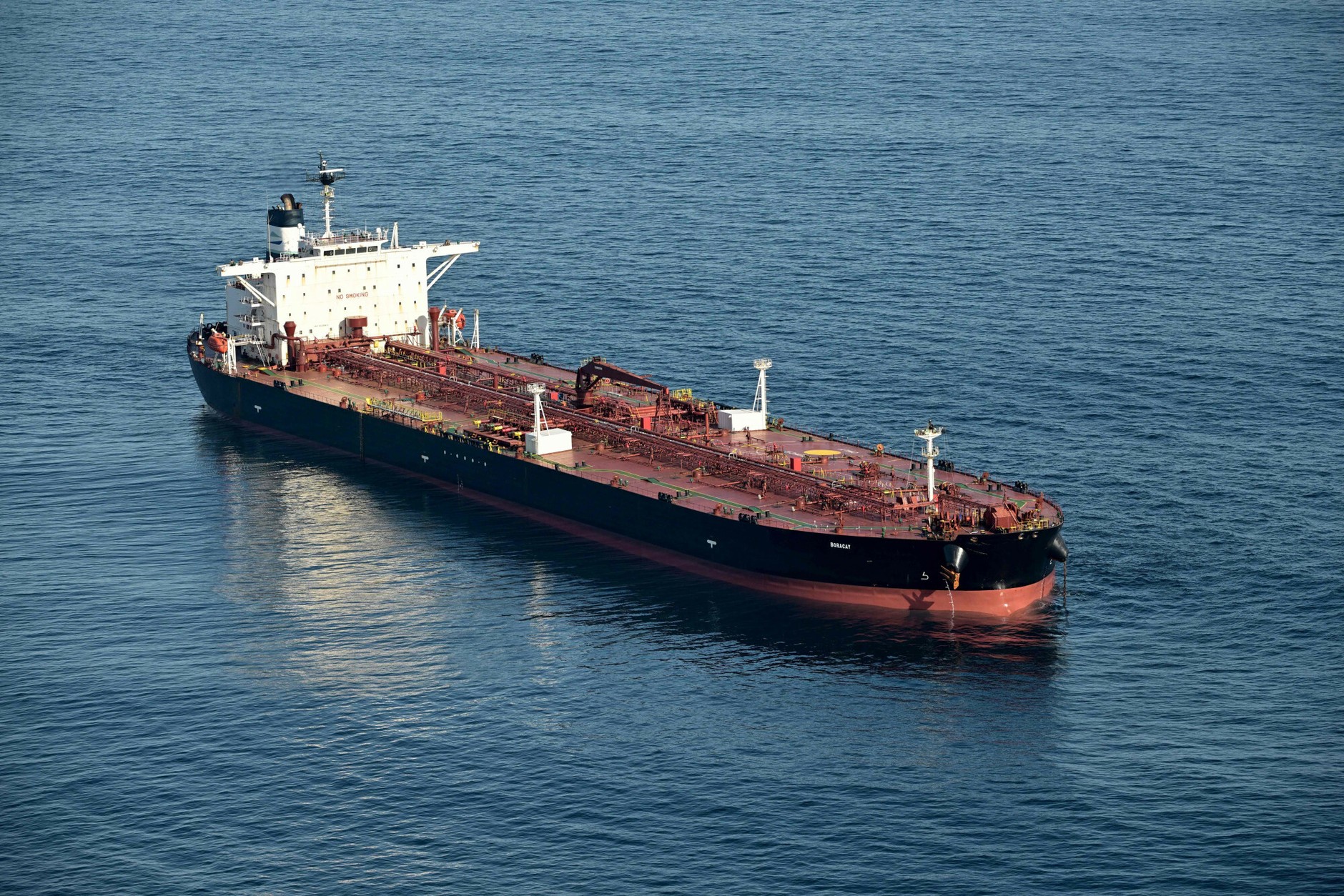
Tanker of the Russian “shadow fleet” (stock photo)Damien Meyer / East News
In December and January, Russian oil was sold in ports for $35-40. (approx. PLN 140 – 160) per barrel, while world prices were USD 60 – 70. (approx. PLN 240 – 280). They have recently increased – and currently the price for the Urals species is approximately USD 45. (approx. PLN 180). But it could be even worse: If China takes over the volumes rejected by India, it will buy them “as cheaply as possible.” If Indian refiners halt purchases almost completely for several months, prices could fall “to obscenely low levels,” market sources say.
How to fill a billionth hole?
According to earlier calculations by Novaya Gazeta, the budget gap may reach 2-3 trillion rubles (approx. PLN 85-130 billion) – and this is even before the decline in imports in India. The final scale depends on the ruble exchange rate and oil prices. Although they are currently rising, most economists consider this to be temporary – in 2026 they predict the price of Brent at the level of $60-62. (approx. PLN 240 – 250) per barrel.
To fill the multi-trillion-dollar hole, Russian authorities have several simple — and disadvantageous — options:
At the current rate of decline in income, the liquid part of the fund may not be sufficient even for a year. Higher taxes will fuel inflation and increase the risk of recession, and more debt will burden the budget in the future. The Ministry of Finance could still try to weaken the ruble – but the central bank will probably oppose this because devaluation means higher inflation.
All this will not end the war — but it will deepen the problems of the Russian economy. This year we will probably have to forget about growth, especially such as in 2023–2024. And Russian society will have to get used to falling incomes and living standards.