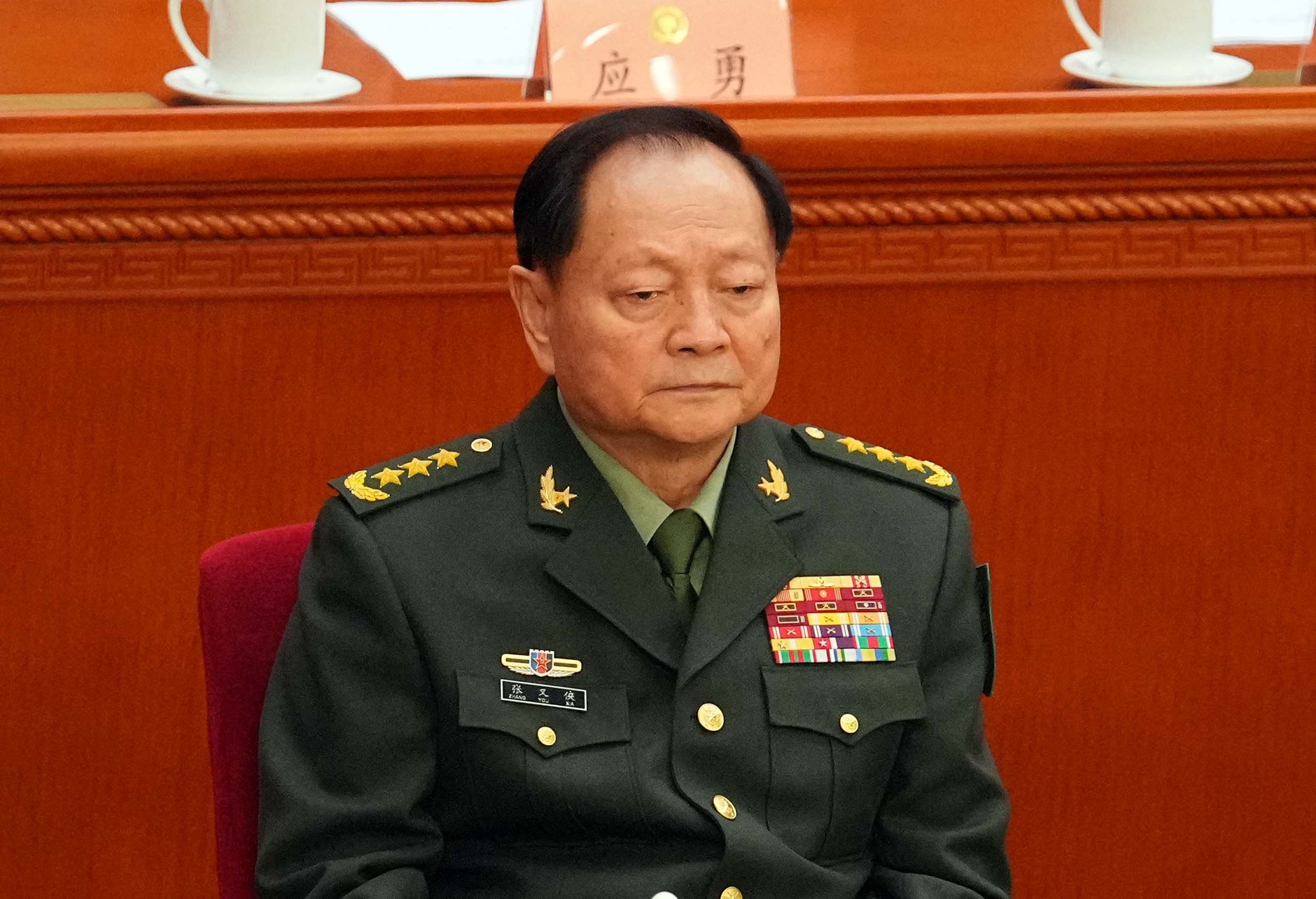
At the end of January, an investigation was announced into General Zhang Youxia, vice chairman of the Central Military Commission – the highest-ranking officer accused of “serious violations of discipline.” For many years, Zhang oversaw key elements of the modernization of China's armed forces. As deputy head of the State Administration of Science, Technology and Defense Industry, he was responsible, among others, for: for the control and evaluation of military programs, as well as for the financial matters of this institution. On Tuesday, Chinese media reported that prosecutors had indicted him.
Zhang's removal was the next stage in a series of dismissals dating back to 2023. At that time, General Li Yuchao of the Missile Forces lost his position, in 2024 the Minister of Defense Li Shangfu was dismissed, and in 2025 – the second vice-chairman of the Central Military Commission He Weidong and the head of the Department of Political Work Miao Hua.
According to analysts, Xi could consider Zhang and Liu as a factor hindering the implementation of his agenda of modernizing the armed forces. According to previous communications, the chairman of the Communist Party of China instructed the army chiefs to be ready for a possible operation against Taiwan by 2027. Some China researchers indicated that Zhang questioned the feasibility of this deadline, arguing that the army needed more time to prepare, and his position would become more and more openly opposed over time.
— We must strike a decisive blow against the so-called separatist Taiwan's independence forces and firmly resist the interference of external forces to guarantee peace and stability in the region, meanwhile thunders Wang Huning, who is the fourth person in the hierarchy of the Communist Party of China.
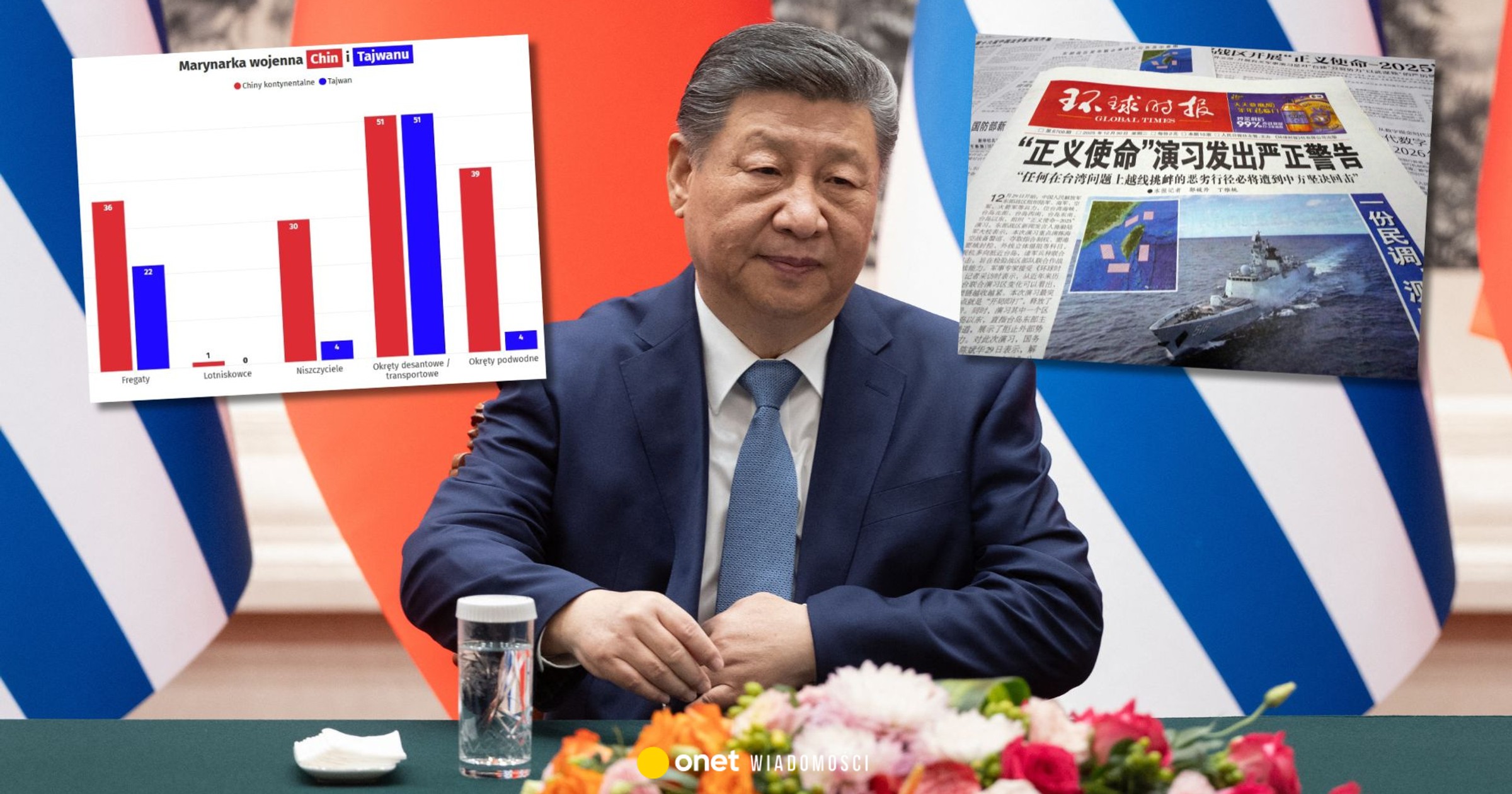
On the one hand, we have the world's second largest military power, inhabited by well over a billion people, and on the other, we have an island with 23 million inhabitants. The difference in scale is huge.
The Chinese People's Liberation Army is a colossus today. It has the largest army in the world in terms of the number of soldiers, is dynamically expanding its navy and air force, and its missile arsenal is one of the most modern in the world. Beijing is investing in aircraft carriers, hypersonic weapons, space and cyber capabilities, and its defense industry is producing equipment at a rapid pace.
Taiwan looks modest in comparison. Its armed forces are many times smaller, they do not have aircraft carriers or strategic missile forces with a global range.
Taiwan is well aware that it would have no chance in a clash with China. He's playing for something else. He wants to make the cost of a potential war unacceptably high for Beijing.
For Beijing, the decision to attack the island is not so obvious. China would have to conduct a sea-air landing across approximately 130 km of the strait. Meanwhile, the island is a natural fortress: mountainous, highly urbanized, with a limited number of beaches suitable for landing.
The human factor is also important. The Chinese army, although huge, lacks one important thing. Experience gained in battle. The concerns of the Chinese leadership are further reinforced by the disappointing performance of the much more experienced Russian forces in the war against Ukraine. Meanwhile, a possible amphibious operation against Taiwan would be a much more complicated undertaking than Russia's land offensive in Ukraine.
Taiwan is arming itself
Taiwan is showing Beijing step by step that it will not give up its skin so easily. In December 2025, the United States announced the largest arms sales package in history to Taiwan, worth approximately $11.1 billion. The package includes eight different elements, including: modern HIMARS rocket artillery systems, M109A7 self-propelled howitzers, Javelin and TOW anti-tank missiles, drones as well as parts and additional equipment, including spare parts for helicopters and Harpoon missiles.
China, of course, strongly opposed this decision, considering the arms sale a violation of the “one China” principle and warning that it would lead to an escalation of tensions around the Taiwan Strait.
Chinese show of strength
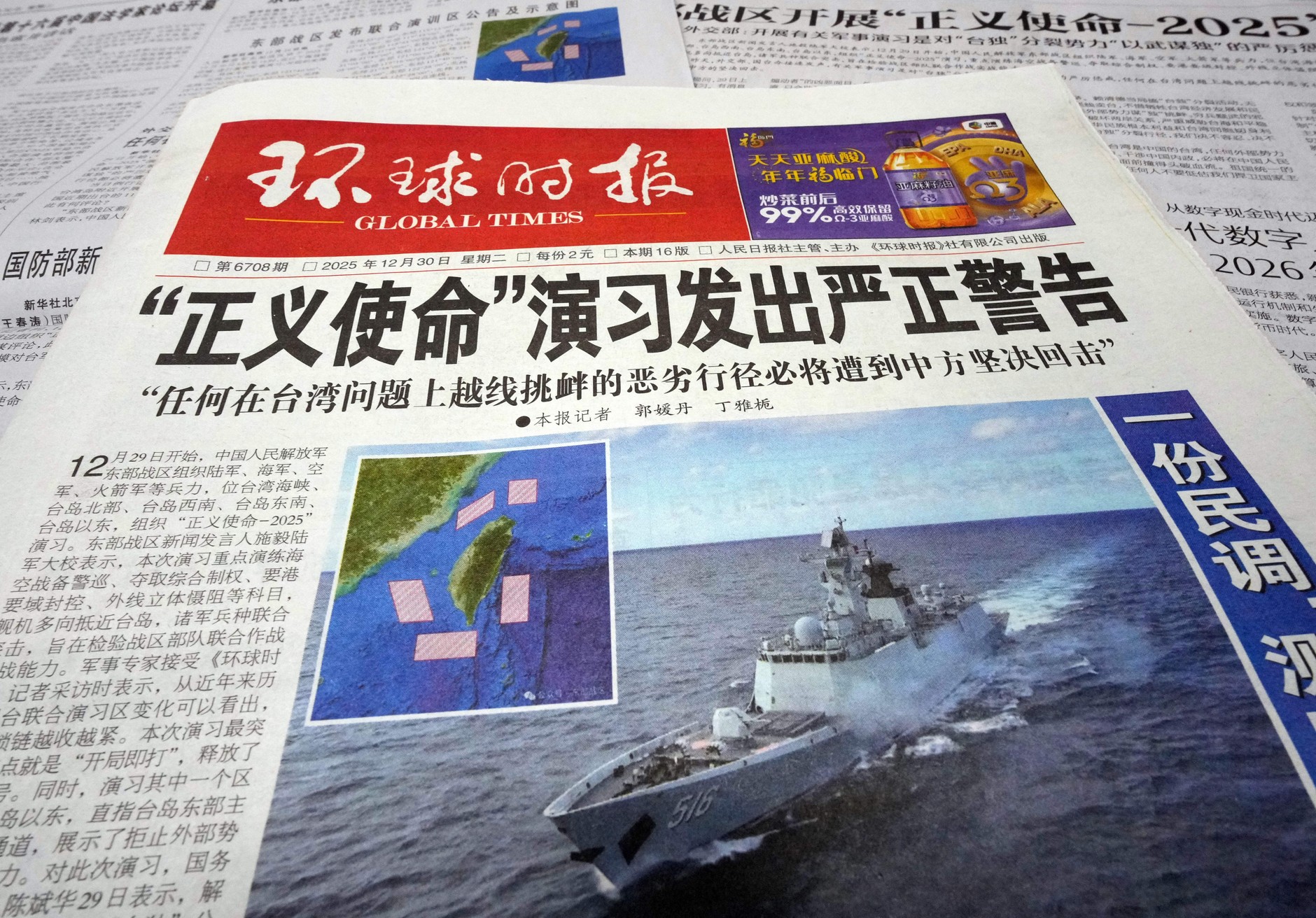
However, Beijing itself has no problems building tension. At the end of December 2025, the “Justice Mission 2025” exercises were held. During this time, the Chinese armed forces conducted multi-day air and naval exercises around the island, including simulated port blockade and combat operations, involving the army, navy, air force, missile forces and coast guard.
A Chinese newspaper reports on the “Justice Mission 2025” exercises. The headline reads: “Exercise Issues Stark Warning”Ichiro Ohara / Yomiuri / The Yomiuri Shimbun via AFP / AFP
The culminating moment was December 29, when the Taiwanese Ministry of National Defense recorded one of the most violent manifestations of Chinese military activity in recent years. About a hundred Chinese planes operated around the island. As many as 90 of them violated the median line in the Taiwan Strait, actually undermining the border that had stabilized the situation in the region for decades.
The situation was further exacerbated by the participation of naval forces: in addition to 14 warships, 14 units of the Chinese Coast Guard also appeared.
On the second day, several practice missiles were fired from Pingtan Island.
Chinese President Xi Jinping, while delivering his 2026 New Year's address in Beijing, warned that China intends to annex Taiwan – even by force if necessary.
“The unification of our homeland, as a historical trend, is unstoppable,” Xi said in a speech broadcast by state television CCTV. “Compatriots on both sides of the Taiwan Strait are bound by blood ties stronger than water,” he added.