The secrets of the Pogany castle in Șara Hațegului. Former 19th century count estate brought back to life

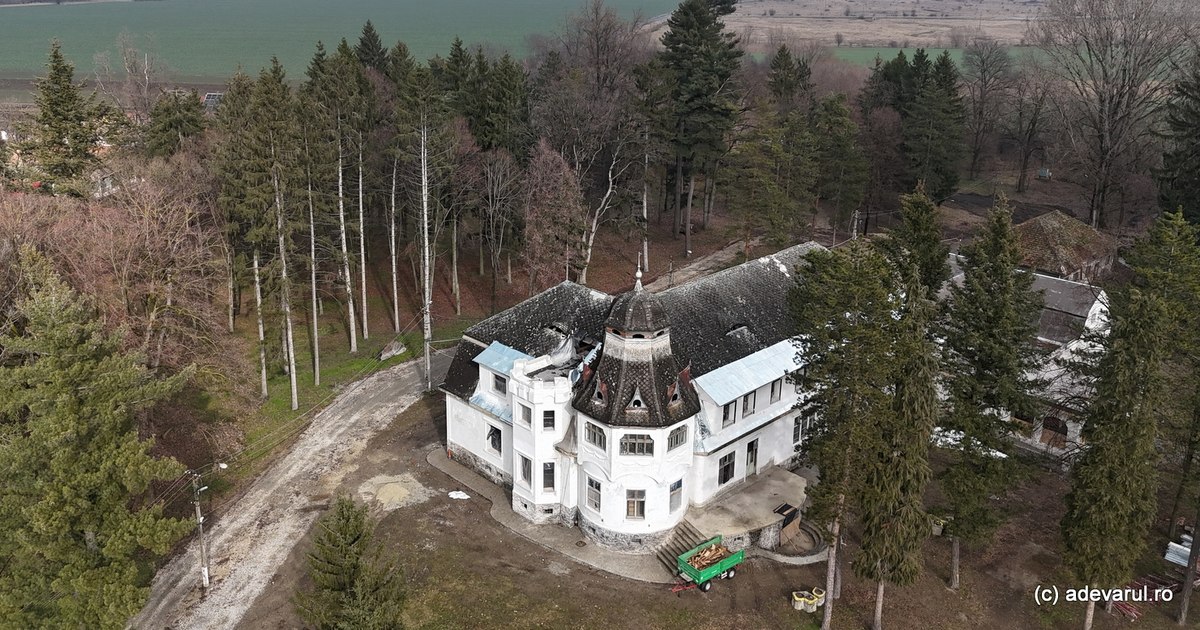
Pogány Castle in Hunedoara County will be returned to the tourist circuit. Built almost two centuries ago, the edifice was nationalized by the communist regime, which used it as a hospital. After 1990, it was retroceded to the heirs of the Pogány family.
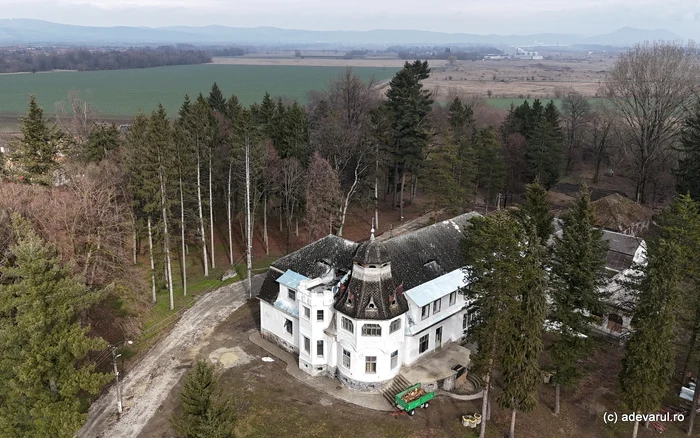
Pogany Castle. Photo: Daniel Guță. TRUTH
Pogány Castle in the village of Păclișa (Hunedoara County), a former noble estate in Șara Hațegului, will be restored and destined for the tourist circuit.
“Currently, only the conservation and maintenance work of the courtyard is being done. We are waiting for the architects to complete the PUZ, which is in an advanced phase, and then the rest of the project – which, from a technical point of view, is completed – has to overcome the bureaucratic stage.” stated, for “Adevărul”, the businessman Dan Felea, the owner of the building.
The castle in Șara Hațegului, brought back to life
In 2015, Pogány Castle was put up for sale by an auction house, after it had been returned to the descendants of the Pogány family, from whom the communist regime had confiscated it immediately after World War II.
In the early years of communism, it functioned as a children's ward, then became the administrative headquarters of the local neuropsychiatric hospital. After 1990, it was retroceded, and the descendants of the Pogány family put it up for sale, along with about 17 hectares of land. Being a historical monument, the Romanian state had the right of preemption to acquire the former noble domain.
“The Pogány estate, consisting of the castle and a dendrological park of 17 hectares, was offered to the state, as part of the pre-emption procedure, for the discounted value compared to the evaluation, of 500,000 euros. Starting from the moment of receiving the refusal of the Ministry of Culture to exercise the state's pre-emption for the purchase of the historical monument, Artmark Historical Estate can legally proceed to put the Pogány castle up for sale, by auction, competitive bidding or transaction private”, then inform the auction house Artmark.
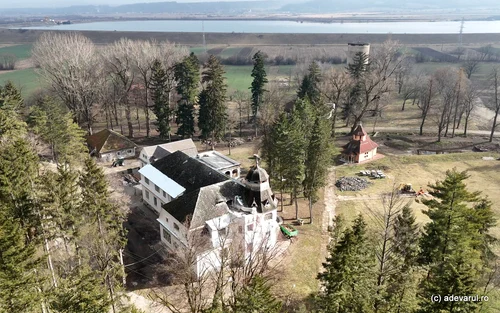
Image 1/9:
Pogany Castle Photo Daniel Guță THE TRUTH (30) jpg
While the Ministry of Culture and the Town Hall of the Totești commune refused the purchase of the castle, the Hunedoara County Council expressed its interest in it, but did not buy it. The county authorities instead invested in the rehabilitation of the Nopcsa Castle in Săcel, owned by the institution. The Nopcsa castle, restored and turned into a museum, is located about six kilometers from the castle in Păclișa. A few kilometers away are two other noble castles from the 19th century: Kendeffy, from Sântămaria-Orlea, and Nalati, from Hațeg. Both are degraded, the first being preserved, and the one in Hațeg in ruins.
The luxurious castle of the Pogany prefect
The Pogány Castle in Păclișa was built in the middle of the 19th century, being one of the Baroque buildings in Transylvania still in a good state of preservation. He belonged to the Pogány noble family, part of the 19th century Transylvanian elite. Margit Pogány (1879–1964), the lover and muse of the sculptor Constantin Brâncuși, was born and raised here. At the end of the 19th century, the castle in Păclişa was the residence of the committee Károly Pogány (1844–1925), one of the most important representatives of the aristocracy of Banat.
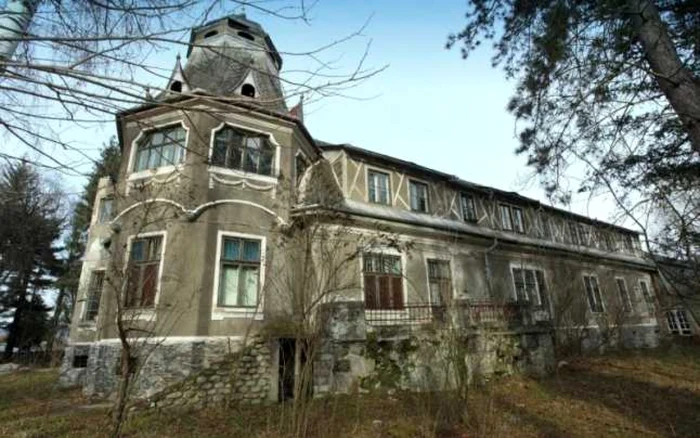
Pogany Castle. before renovation Photo: Artmarkt.
Károly Pogány de Clopotiva (locality neighboring Păclișa) was born in Aiud, being the son of the prefect of Alba de Jos county, with the same name. He studied law at the University of Budapest, and in 1866 he became a clerk at the Chancellery of the Imperial Court of Transylvania. In 1872 he was elected deputy for Abrud, and from 1875 to 1901 he was a parliamentarian for Hunedoara. Later, he was appointed prefect of Caraș-Severin County by Emperor Franz Joseph I.
Romanians appreciated him because he spoke excellent Romanian, noted the press of the time, and historians mention him as one of the supporters of the construction of the Lugoj-Ilia railway line, inaugurated in 1898. He was also involved in the restoration of the Corvini Castle, at the end of the 19th century, in the development of the Hunedoara Iron Works, established in 1884, and in the construction of the Hațeg-Caransebeș railway, inaugurated in 1909.
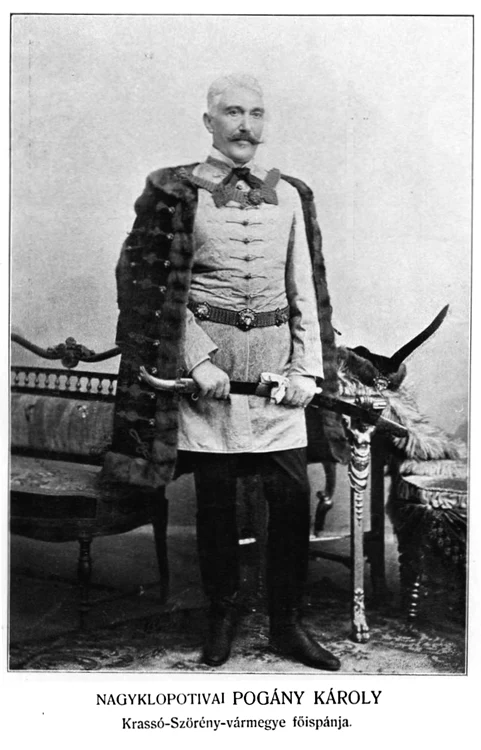
Karoly Pogany. Wikipedia
In 1896, Prince Franz Ferdinand, the heir to the Austro-Hungarian Empire, came to hunt black goats in the Retezat Mountains. In the early years of the 20th century, he lived in Lugoj, and during his tenure as prefect of the Caraș-Severin county, the power plant in Lugoj, the theater on the banks of the Timiș, the reformed church and several factories were built.
In the same period, the development works for navigation on the Danube, at Portile de Fier, were also carried out. He retired in 1906, and spent the last years of his life in Aiud, where he worked in agriculture.
Pogany Castle, children's center
After the Second World War, Pogány Castle was confiscated by the Romanian state, and the former committee's family was removed from Păclișa.
“In the village of Păclișa, in the castle where the Pogány landowner used to boast, one of the most modern sanatoriums for children was set up. Hundreds of children of working people, weak and prone to illness, steel their bodies here, enjoying careful medical care and abundant nutrition”. informed the communist press in 1951.
In the 1950s, the castle and its annexes housed the children of the miners from the Jiu Valley, brought to school camps, then it became a prevention center, but also a home for refugee children from Greece affected by the civil war, and also for orphans from North Korea. It was named “Kim ir Sen Colony”.
Since the 60s, a neuropsychiatric hospital for children was established in Păclişa, and the mansion became the administrative headquarters of the medical unit, which operated until the 2000s.
At the beginning of the 90s, three centers for children were operating around Haţeg, in former noble mansions. The Nopcsa Castle in Săcel and its annexes, nationalized and transformed by the communist regime into a helping school, housed in 1990 over 250 helpless children, almost isolated from society.
In Bretea Strei, over 70 children from broken families were raised in the Preschool House, another former mansion. Ten kilometers from Haţeg, the former Pogany castle had been transformed by the communist authorities into a center for children with special needs, overcrowded in 1990, with over 400 children and young people, brought from several areas of the country and kept in precarious conditions. The centers were abolished after 1990, and from the 2000s, the castle was claimed by the descendants of the Pogany family.