The Ural River in Kazakhstan on the verge of disaster. Environmentalists are sounding the alarm


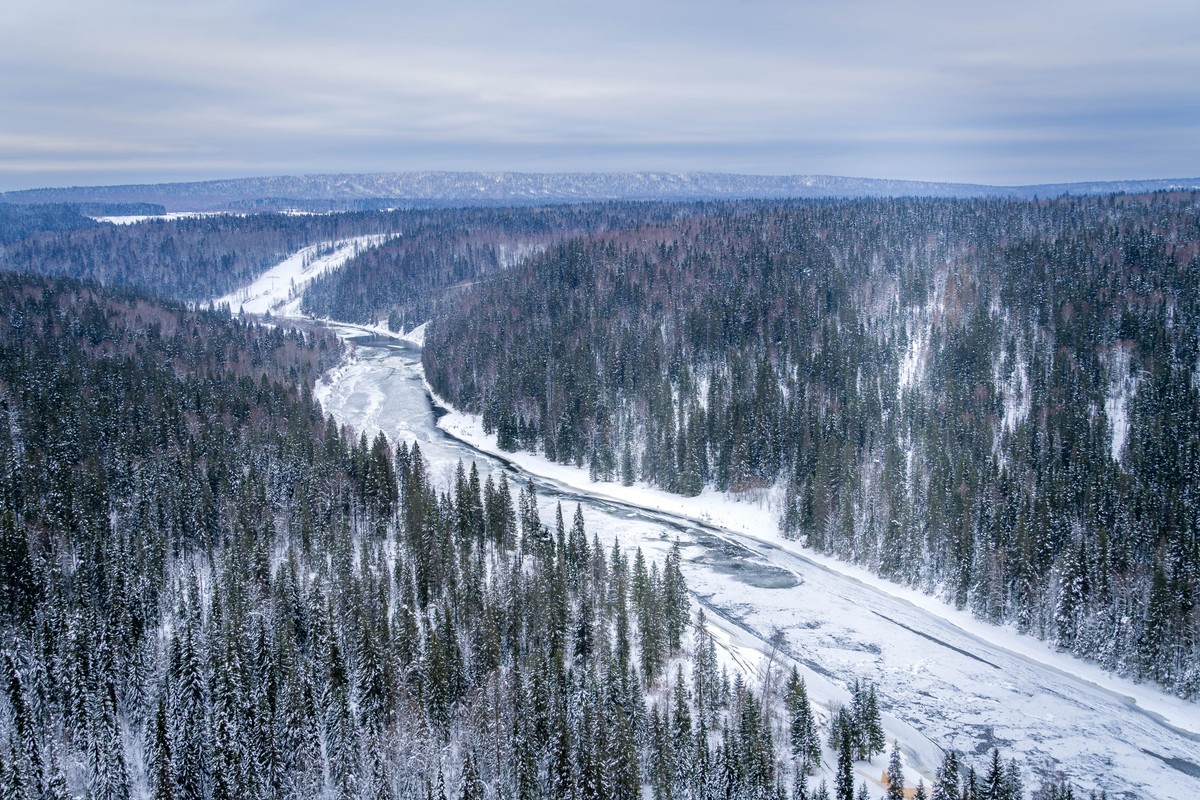
The Ural River, known as Zhayyk in Kazakhstan, is one of the longest rivers in Eurasia. It begins its course in Russian Bashkortostan and ends in the Caspian Sea, flowing through the Atyrau Oblast in Kazakhstan. The 2,428 km long river marks a significant section of the conventional border between Europe and Asia. Today, however, the Urals are facing a deep ecological crisis, the scale of which raises concerns among both local communities and international environmental organizations.
The rest of the article is below the video;
Read also: This fish costs more than wagyu. Fishermen risk their lives to catch one fish
The ecosystem is at the breaking point
Experts indicate that the main causes of river degradation are decreasing water levels, pollution and human interference in the natural course of the riverbed. Upstream, in Russia, dams and retention reservoirs, such as the Iriklinsky Lagoon, retain water that, under natural conditions, should flood areas further south in spring. As a result, in the middle and lower reaches of the Urals, especially in Kazakhstan, the water level drops dramatically and the current weakens. In places where a dynamic current once cleaned the riverbed, there is now stagnant water, leading to oxygen deficiency, death of fish and the development of pathogens.
The river is also struggling with the problem of pollution. Petroleum substances, heavy metals and toxic compounds are regularly detected there, which accumulate in sediments and living organisms, negatively affecting the entire ecological network.
Biodiversity decline
The international ecological coalition “Rivers Without Borders” draws attention to the dramatic decline in biodiversity in the Urals. Based on research by Russian biologists Oksana Nikitina and Alexei Kosolapov, the organization reports that the number of phytoplankton species in the middle reaches of the river has decreased by 35. In the lower reaches, about 90 percent was lost. spawning places of sturgeons, which is the result of siltation and pollution of the bottom. The population of commercial fish such as carp, bream and pike has also decreased.
— In the middle reaches of the Urals, the diversity of phytoplankton decreased by 35 species, and the number of commercial fish decreased: carp, bream, perch and pike. The most dramatic situation concerns sturgeons, activists of the organization warn.
“We no longer drink water from the Urals”
Zlata Udovichenko, an environmental activist from Uralsk, has been monitoring the state of the river for years, comparing water quality data with results from previous years. As he emphasizes, the situation is not improving, on the contrary – it is getting worse.
— We haven't been drinking water from the Urals for a long time, although my dad has a childhood photo of him lying on his stomach and drinking water straight from the river as a small child, Udovichenko recalls.
According to the activist, great damage is caused to the river by the exploitation of mines on its banks, where sand and gravel are extracted. Disturbing the river bed leads to increased water evaporation, which in turn contributes to its shallowing. The cutting down of riparian forests, which naturally help the river retain moisture, also has a negative impact.
Uncontrolled dams and lack of regulation
Udovichenko draws attention to the problem of uncontrolled dams and dams in the Urals and its tributaries. As he emphasizes, Kazvodkhoz, the institution responsible for water management in Kazakhstan, relies solely on voluntarily provided data. In practice, this means that farmers often do not report the construction of dams, which further deepens the problem.
The activist also criticizes the state's lack of interest in river pollution and changes in its bed. It warns that if current trends continue, the river will continue to deteriorate and its levels will remain low. It also draws attention to the need to include new scientific data in water agreements between Russia and Kazakhstan.