“Grossly violated.” Trump rejects Putin's offer of the latest US-Russia nuclear deal and proposes something else


US President Donald Trump on Thursday rejected his Russian counterpart's offer to voluntarily extend, by one year, the limit on the deployment of strategic nuclear weapons, after the expiration of the bilateral New START pact, which kept this type of weaponry under control for more than two decades, writes Reuters.
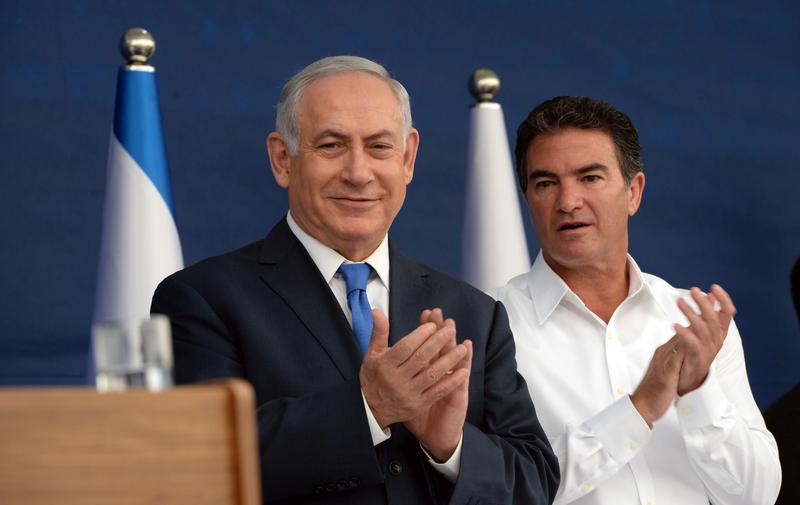
“Instead of extending New START (…) we should rather put our nuclear experts to work on a new, improved and modernized treaty that can last long into the future,” Trump wrote in a post on his social media platform, Truth Social.
The White House leader claimed that the treaty was “badly negotiated (under the presidency of Barack Obama, no) by the US and grossly violated.”
Trump's full message:
- “The United States is the most powerful country in the world. In my first term, I completely rebuilt the military, including new and many refurbished nuclear weapons. I also added the Space Force and now we continue to rebuild the military to unprecedented levels.
- We're even adding battleships that are 100 times more powerful than those that roamed the seas during World War II – Iowa, Missouri, Alabama and others.
- I have prevented the outbreak of nuclear wars around the world between Pakistan and India, Iran and Israel, and between Russia and Ukraine.
- Instead of extending NEW START (a poorly negotiated agreement by the United States, which, among other things, is grossly violated), we should put our nuclear experts to work on a new, improved, and modernized treaty that can last long into the future. Thank you for your attention to this matter! (Signed:) THE PRESIDENT DONALD J. TRUMP“.
Trump was thus responding to Russian President Vladimir Putin's proposal that the parties respect for a year the limits established by the 2010 agreement on the deployment of strategic nuclear warheads and the missiles, aircraft and submarines that carry them.
New START was the last arms control treaty between the world's two major nuclear powers. It allowed for one extension, which Putin and former US President Joe Biden agreed to for five years, in 2021.
Earlier in the day, Kremlin spokesman Dmitry Peskov said Russia was still willing to engage in dialogue with the US if Washington responded constructively to Putin's proposal.
“Listen, if there will be constructive answers, of course we will have a dialogue,” Peskov told reporters.
The latest in a series of nuclear treaties
New START was the latest in a series of nuclear deals between Moscow and Washington dating back more than half a century to the Cold War era.
In addition to setting limits on the number of nuclear weapons, these agreements included inspection regimes that experts say served to build a level of trust between the two nuclear adversaries, helping to create a safer world.
If another deal does not replace the treaty, then security analysts predict a more dangerous international environment with a greater risk of miscalculation. Forced to make pessimistic assumptions about each other's intentions, the US and Russia would have reason to increase their nuclear arsenals, especially as China is now trying to catch up with its own rapid nuclear development.
The warning sent by the head of the UN
UN Secretary-General Antonio Guterres said on Wednesday that the rollback of decades of arms control achievements “could not come at a worse time – the risk of a nuclear weapon being used is the highest it has been in decades”.
He urged the parties to resume negotiations without delay to agree on a successor framework that would restore verifiable limits on nuclear weapons.
Asked about the information on the negotiations between the US and Russia, UN spokesman Stephane Dujarric said in a press conference at the United Nations headquarters in New York: “It is a very dangerous time when there is no framework to regulate these nuclear weapons. We sincerely hope that the negotiations will be positive and fruitful.”
Trump has said he wants to replace New START with a better deal that includes China. But Beijing refused negotiations with Moscow and Washington. China has a fraction of the warheads of the two powers – about 600, compared to about 4,000 for Russia and the US.
Reiterating this position on Thursday, China said the expiry of the treaty was regrettable and urged the US to resume dialogue with Russia on “strategic stability”.
Peskov also said that Russia will adopt a responsible approach. The White House announced this week that Trump will decide the way forward on nuclear arms control, which he will “clarify according to his own timetable.”
When the pact expired
There has been confusion over the exact date the nuclear pact expires, but Peskov said the treaty was ending Thursday evening.
Former Russian President Dmitry Medvedev, who signed the treaty with then-US President Barack Obama in 2010, said on Wednesday that New START and the pact's predecessors are now “a thing of the past”.
Russia's Foreign Ministry said Moscow believes the treaty is no longer applicable and that both sides are free to choose their next steps.
The ministry in Moscow added that Russia is ready to take “decisive military and technical countermeasures to mitigate potential additional threats to national security,” but is also open to diplomacy.
Ukraine, which has been at war with Russia since 2022, says the expiration of the treaty is a consequence of Russia's efforts to achieve “fragmentation of the global security architecture” and has branded it “another tool of nuclear blackmail to undermine international support for Ukraine.”
Strategic nuclear weapons are long-range systems that each side would use to strike the other side's capital, military and industrial centers in the event of a nuclear war.
These are different from so-called tactical nuclear weapons, which have less power and are designed for limited hits or use on the battlefield.
If they were not constrained by any agreement, then Russia and the US could within a few years deploy hundreds of nuclear warheads in addition to the 1,550 limit provided by the New START pact, experts say.
“Transparency and predictability are among the more intangible benefits of arms control and underpin deterrence and strategic stability,” said Karim Haggag, director of the Stockholm International Peace Research Institute.