Romanians, forced to choose between the warmth of the house and everyday life. High consumption in January increased gas bills by 30%

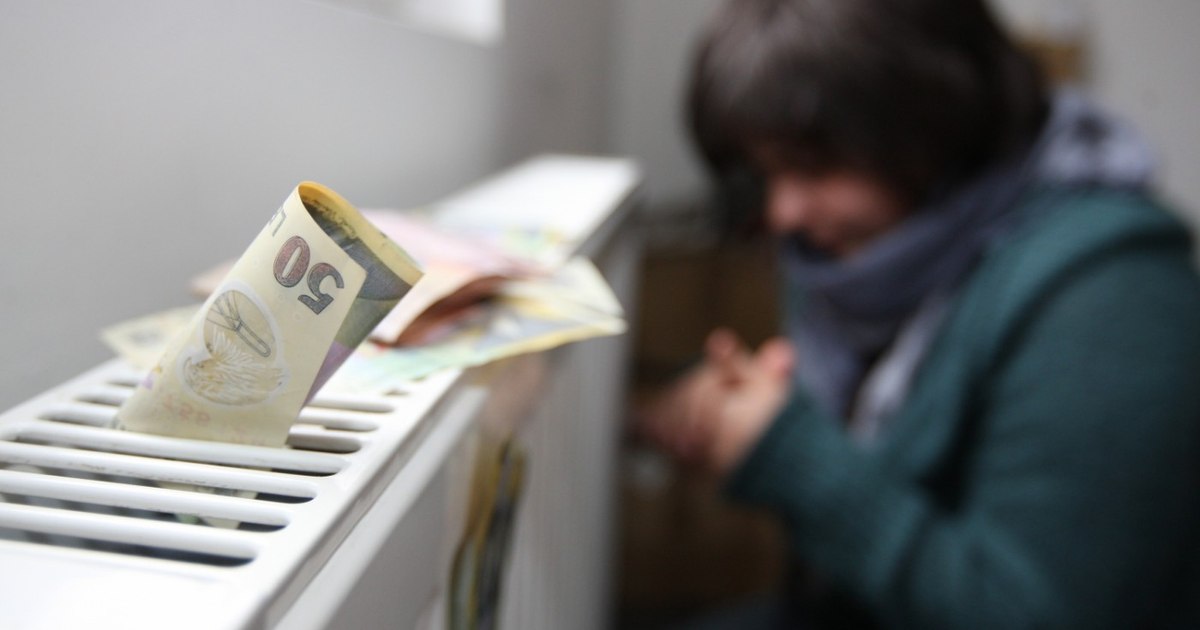
For many Romanians, heating is no longer a comfort, but a choice, having to decide whether they stay in the cold and have some money left over for everyday living, or stay comfortably warm and have no money for much after paying the gas bills.
For many Romanians, heating is no longer a comfort, but a choice. Archive photo
Romania has once again entered the same work of winter where the cold is no longer just a sensation, but becomes a cost. A cost that is clearly visible in apartments, houses and, above all, in bills. And the news is that in January 2026 gas bills will be up to 30% higher than in January 2025″, said energy expert Dumitru Chisăliță, president of the Intelligent Energy Association (AEI).
According to him, last month, the quantities of gas consumed in Romania, by consumers connected to the distribution systems (numerically the largest being domestic consumers), were 18% higher than in January 2025.
“Even if the quantities of gas in the storage warehouses increased by 11%, this additional consumption was mainly covered by imports, imports that came with prices up to 40% higher. It should be noted that in January 2025 we were net exporters of gas.
Gases from gas storages were the main “source” that covered consumption on the day with the highest gas consumption in 2026, but in fact the situation in Romania was saved by imported gases, which had the greatest flexibility, having an increase of almost 500% compared to the average of the month (compared to 14% flexibility of gases from storage and 0.1% of gases from domestic production)“, explained Chisăliță.
The energy expert explained that the increase in the value of the gas bill in January for household customers will be due in proportion to approx. 20% of the increase in the amount of gas consumed and about 5% will be due to the increase in the price of gas, as a result of the expensive gas purchased from import in January 2026 to save Romania during the cold (the prices of gas purchased from import in January 2026 were up to 83% higher than the price set administratively for gases from domestic production).
Home heating is no longer a convenience, it is already a choice
For many Romanians, says the specialist, heating is no longer a comfort, but a choice between “to be warm” and “to have money leftIn theory, the price of gas can be capped, regulated, discussed in official releases.
“In practice, however, the frost does not need approvals. The frost gets into your walls, in the windows, in the cold corners of the old apartments and forces the central unit to work twice as hard. And here is the big problem, when the cold gets more intense, not only the temperature outside changes – the behavior in the house also changes. We keep the central unit on more, we raise the thermostat “just one degree”, we ventilate less, we stay inside more. Consumption increases almost imperceptibly, but the bill comes perfectly aware of how much you have burned. In isolated apartments, the increase can mean 100–200 lei more. In non-insulated homes or houses, it can mean 200-400 lei more in January 2026. And this in a context where salaries remain the same, even if maintenance costs increase a lot”explained the expert.
“Thousands of blocks lose heat like a sieve”
But perhaps the most bitter conclusion is another, as Dumitru Chisăliță appreciates: “Romania still works in winter after a thermal lottery. Whoever has an apartment in an isolated building and neighbors who heat becomes “lucky”. Whoever lives on the corner, on the ground floor or on the top floor, who has damp walls and old carpentry pays not only for the gas, but also for all the old construction and maintenance mistakes. And there's one more thing, the increase in the bill in winter not only affects the comfort, but also the psyche. People end up watching the boiler like a stress meter: “how long should I keep it?”, “what temperature should I set?”, “if I take a radiator out of operation”, “if I dress thicker?”. That's not economics — it's adapting to a system where efficient housing is the exception, not the rule. The real problem isn't that it was a colder January. The problem is that, year after year, Romanians ask themselves how do we warm ourselves decently without burying ourselves financially?”.
According to the energy expert, the solution will come from real investments in energy efficiency, in thermal rehabilitation, in better plants, in smart adjustments, in consumer education and in protecting the vulnerable.
Until then, however, says Chisăliță, an isolated apartment is safe “Easier”. “An old corner apartment with cold walls and tired windows pays double, but often this is only seen when the frost brings some noticeable bills. Romania does not have a “frost problem”. Romania has a problem with the fact that thousands of blocks lose heat like a sieve”added the energy expert.
The calculations made by the president of AEI show that in January 2026 the estimated costs for heating, hot water, cooking, for an isolated dwelling, have increased compared to January 2025:
a) Apartment
• 2 rooms: 300 lei / January 2025 → 400 lei / January 2026 (+100 lei)
• 3 rooms: 350 lei / January 2025 → 455 lei / January 2026 (+105 lei)
• 4 rooms: 450 lei / January 2025 → 585 lei / January 2026 (+135 lei)
b) House (100–150 sqm) 600 lei / January 2025 → 780 lei / January 2026 (+180 lei)
“And that's just the average. If you live in a 'problem' apartment or an older house, the increase feels like a slap in the face.” added the specialist.
“Keep the thermostat down” — advice that sounds good in theory but bad in practice
The energy specialist explained that phrases like “keep the thermostat down”, leave it at 19 – 20 degrees already mean discomfort. “When you have 18°C in the house, it's not just cold. It's discomfort, it's dampness, it's fatigue. It's the child who does homework with cold hands. It's grandma with two blankets on her when she sleeps. It's the man who works from home and trembles next to his laptop. We are not talking about “fad”. We are talking about normalcy”explained Chisăliță.
He explained that the bills are higher when it is very cold outside, because the power plant also works more, but also because “nwe balance it on expensive instant imports”.
“Here's the technical part, no poetry. When the temperature outside drops, the difference between the 'temperature you want in the house' and the 'temperature outside' increases. The boiler starts more often and stays on longer. That's it. And there is another truth that Romanians feel, but rarely say, when it's seriously cold, it doesn't matter if you have a “smart” thermostat, it matters that the home is insulated.
In many blocks, comfort does not come from your boiler. It comes from luck. If you have neighbors who heat a lot, they “lend” you heat. If you have a corner or top floor apartment, you pay the “bad luck tax” in your gas bill. added the expert.