New maximum threshold for the content of toxins in milk powder, recommended in the European Union


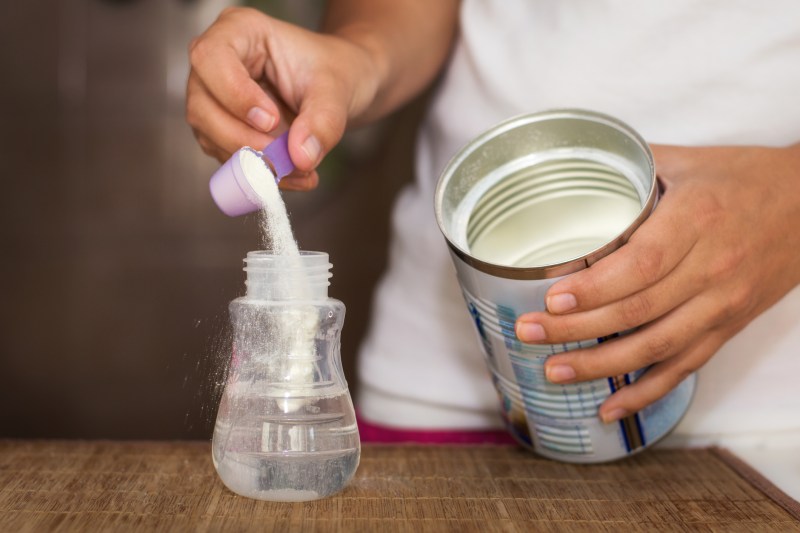
Infant milk powder. PHOTO: © Krystyna Taran | Dreamstime.com
The European Food Safety Authority (EFSA) on Monday recommended a maximum threshold for the toxin cereulide in infant formula, which France said was likely to prompt some producers to withdraw additional products from the market, Reuters reports.
Cereulide, a toxin that “can cause nausea and vomiting”, was detected at a Chinese factory that supplies ingredients to major manufacturers of infant formula, including Nestle, Danone and Lactalis.
The contamination has triggered market withdrawals of infant formula in dozens of countries and raised concerns among parents, notes Agerpres.
The European Commission asked EFSA to urgently establish a scientific safety threshold, known as an acute reference dose (DAR), to guide governments and manufacturers on when products should be withdrawn from shelves.
In its assessment, EFSA proposed a new limit “of 0.014 micrograms per kilogram of body weight for infants. The agency said that 'very small' babies process substances differently and require additional protection.” Vomiting was identified as the main short-term symptom used to determine the threshold.
The French Ministry of Agriculture, which anticipated the EFSA recommendation late last week, warned that “the level is more than half the previous one and that a stricter threshold would probably lead to further withdrawals from the market as a precaution”.
French producer Popote announced on Monday that it was recalling two batches of infant milk following the new recommendation on the maximum permissible toxicity threshold.
In contrast, EFSA's recommendations are good news for Nestle and Danone, as both companies' thresholds for undetectable levels of cereulide in infant formula are below EFSA's level, analysts at Barclays said.
Neither of these two companies should be forced to carry out further product recalls, they argued.
Danone shares were up 2.9 percent, while Nestle shares were up 3.1 percent by 14:00 GMT, Reuters said.
“We welcome the latest rapid risk assessment by EFSA to provide more clarity on the food safety framework for cereulide in infant formula,” according to a Nestle statement, which also states that the company has requested harmonization based on a scientific approach to risk management.
Danone had no immediate comment.
The French Ministry of Agriculture and Popote announced on Monday that the Chinese company Cabio Biotech was the producer of the arachidonic acid (ARA) oil at the source of the contamination.
EFSA's recommendations are not legally binding, but EU countries usually follow them when deciding whether to withdraw food products or restrict sales.
The agency also estimated how much formula infants are likely to consume in a 24-hour period, allowing scientists to calculate when the new limit will be exceeded. Based on these consumption levels, EFSA reported that concentrations of cereulide above 0.054 micrograms per liter in infant formula and 0.1 microgram per liter in follow-on formula could be of concern.
French investigators are investigating whether there is a link between the deaths of two infants and the withdrawn milk powder products, the Health Ministry said, adding that there was no such evidence at this time. The results are expected in the coming days.
Infant milk powder. PHOTO: © Krystyna Taran | Dreamstime.com