Fear looks into the Kremlin. Putin's last advantage is weakening. And the US is tightening the screw [OPINIA]


On Wednesday, January 28, Secretary of State Marco Rubio informed the Senate Foreign Relations Committee that neither US special envoy Steve Witkoff nor President Donald Trump's son-in-law, Jared Kushner, they will not participate in peace talks.
Rubio did not provide a specific explanation — only that “[Rosja i Ukraina] they will resume talks this week. In this context, talks are two-way. There may be a US representative there, but it won't be Steve or Jared.”
This announcement apparently caught the attention of the Kremlin. Surprisingly, Russian President Vladimir Putin ordered his special envoy Kirill Dmitriev to go to Miami, where he met with American officials.
As the US takes a step back at the talks table, Russia is frantically looking for a way out as oil, time and influence begin to slip out of its hands.
An entry appeared on Steve Witkoff's account on X (formerly Twitter).
“Today in Florida, Russian Special Envoy Kirill Dmitriev held fruitful and constructive meetings as part of U.S. mediation to advance progress toward a peaceful resolution of the conflict in Ukraine. […] “This meeting provides hope that Russia is willing to work to ensure peace in Ukraine, and we are grateful to President Trump for his key leadership in pursuing a lasting and robust peace.”
Fruitful and constructive for whom? This is still not a peace agreement between Russia and the United States. Russia is at war with Ukraine.
And where was Ukraine? Where was Europe? Why did Russia need a one-on-one conversation with Trump's team before the next meeting? Given Ukraine's successes, Trump may be losing interest in Russian oil.
Putin needs America
Still, something has changed. Witkoff is flying to the Middle East again to participate in the trilateral talks, now rescheduled for February 4 and 5 in Abu Dhabi.
Has there been a deal again? Or maybe they are going back to the old agreement? Is Russia starting to understand that Trump's team may have just changed the rules of the game, and Russian oil is no longer the asset that Putin considered it to be?
If so, that may explain why Russian Foreign Minister Sergei Lavrov is pushing to return to an agreement that Moscow claims — or wants us to believe — was already struck between Putin and Trump at a summit in Alaska last August.
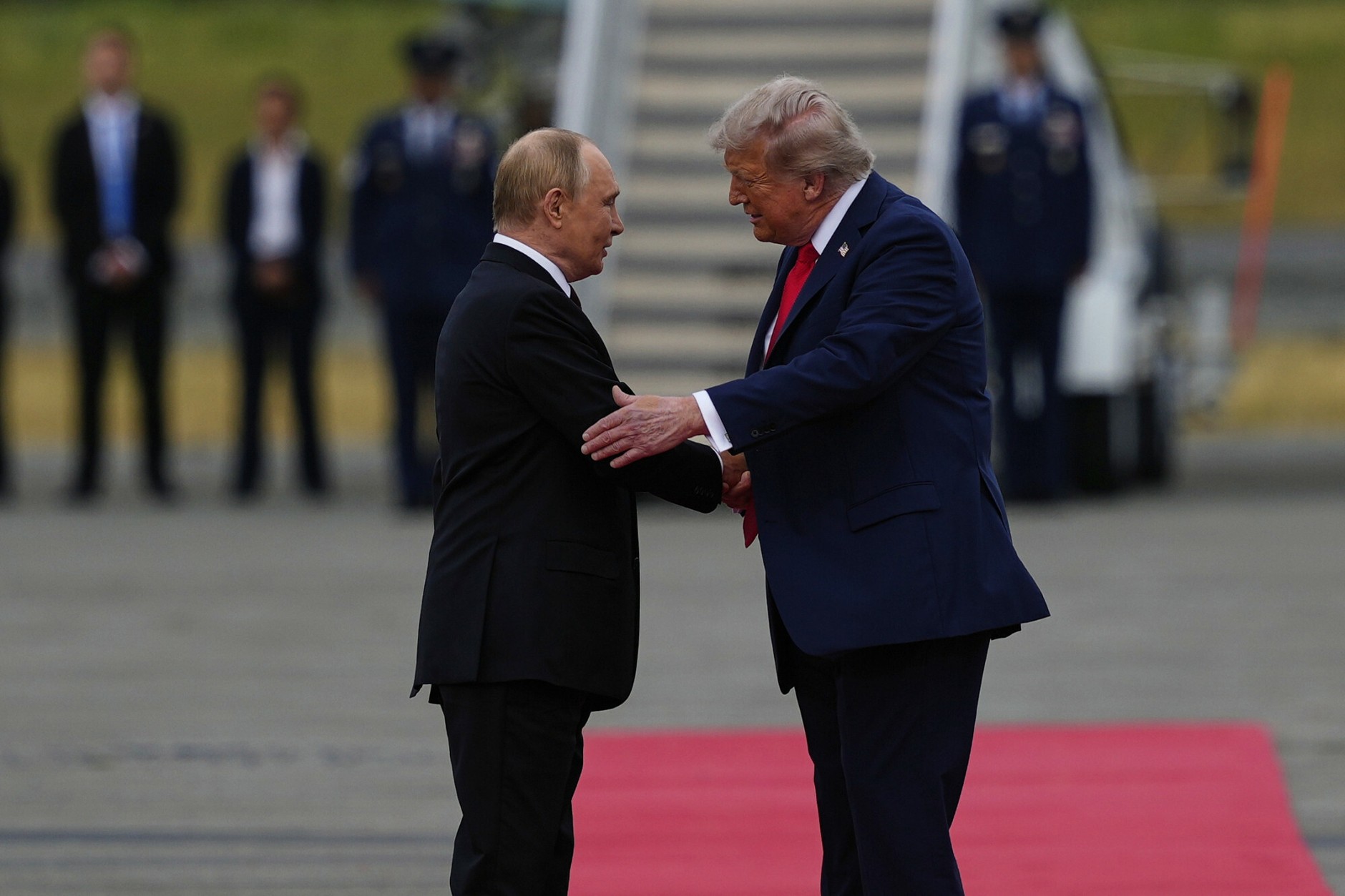
Vladimir Putin and Donald Trump, Anchorage, Alaska, August 15, 2025.Julia Demaree Nikhinson/Associated Press/East News/East News
If there was in fact an agreement there – the key word is “there was” – Ukraine annulled it. Kyiv refuses to stop resisting. Ukrainian President Volodymyr Zelensky and his generals do not intend to give in to Russia's maximalist demands.
And Putin needs the US to enforce it. Because his army is unable to “cash the checks” that the Kremlin issues.
Putin's last asset
According to the Center for Strategic and International Studies (CSIS), the Russian army is “advancing 15 to 70 meters per day since the beginning of 2024, a pace slower than many campaigns during World War I,” with more than 1 million 240 thousand. 680 own losses.
Russia is losing soldiers on the battlefield faster than it can replace them – even more than 25,000. monthly. For an army that depends on large masses of people, this is a serious warning sign. Ukraine continues to expose Russia militarily.
No wonder Dmitriev went to Miami in such a hurry. Maybe this is an attempt to “sweeten the offer” to encourage the US to act more decisively together with Ukraine and NATO?
Dmitriev is Putin's “financial man” — responsible for creating “economic opportunities.” The Trump team is tempted by these “opportunities”, knowing that American companies have lost over $324 billion. (approx. PLN 1,430 billion) after withdrawing from Russia following its invasion of Ukraine.
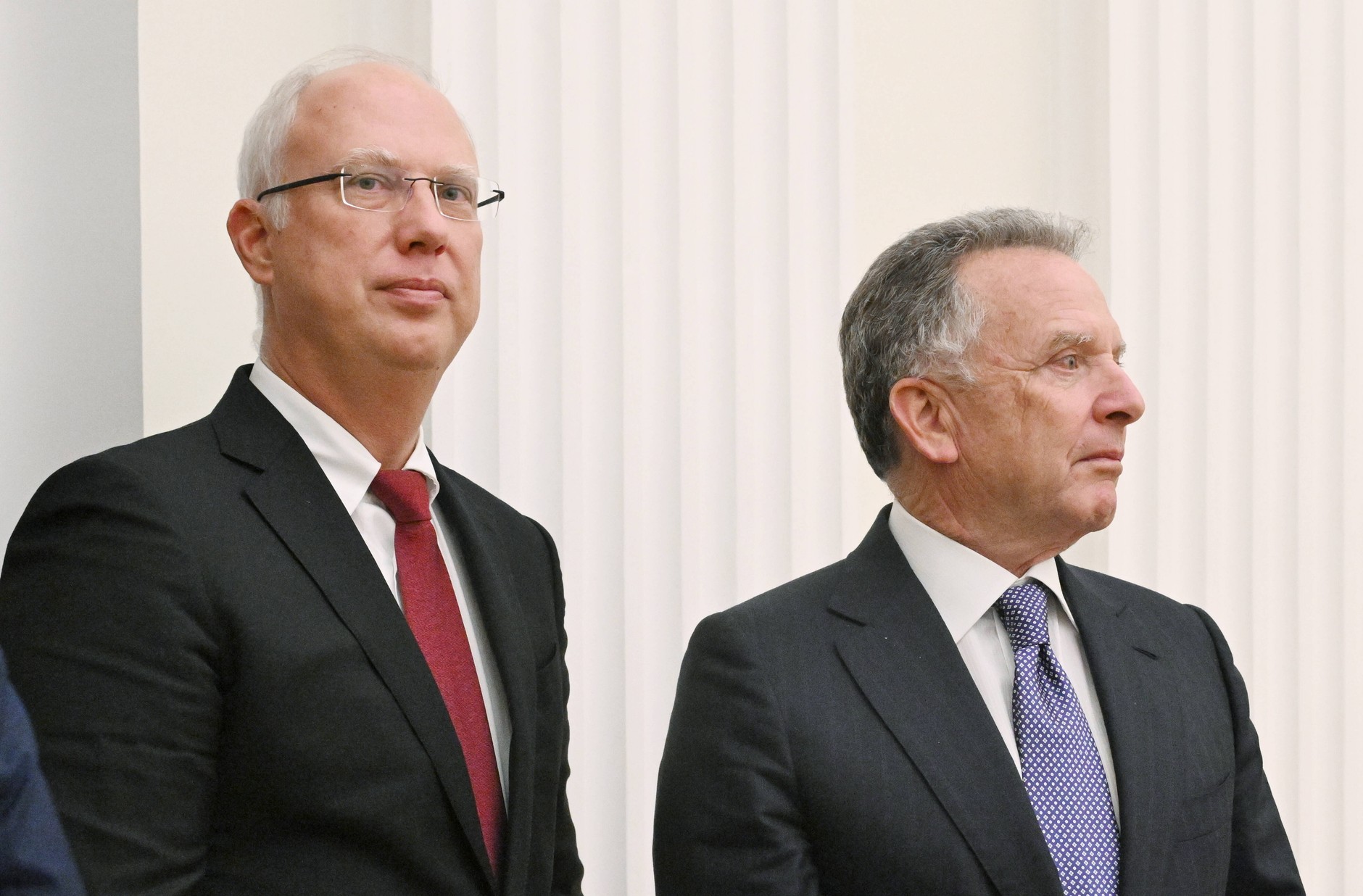
Special Representative of the President of the Russian Federation Kirill Dmitriev and United States Presidential Envoy Steve Witkoff at the Kremlin in Moscow, Russia, December 2, 2025.KRISTINA KORMILITSINA / SPUTNIK / KREMLIN POOL / PAP
But time is running out. As the Kremlin's resources – both funds and soldiers – dwindle, time becomes Russia's enemy.
Russian oil is Putin's only remaining way to buy his exhausted army and economy more time to complete his nearly four-year “special military operation” in Ukraine.
A “win-win” plan that went down in flames
The Wall Street Journal reported that during the Trump-Putin summit, secret talks took place between Russia's largest state-owned energy company and Exxon's senior vice president, Neil Chapman, about returning to the “massive Sakhalin-1 project.” Of course, if both governments agreed to it as part of the peace process in Ukraine.
The Sakhalin-1 project was one of Exxon's largest investment projects – the company had been operating there since 1995 and owned 30 percent. shares together with state-owned Rosneft and Japanese and Indian partners.
It is estimated that the Sakhalin-1 deposits contain over 2 billion barrels of oil and approximately 485 billion cubic meters of natural gas.
It was supposed to be a “win-win” solution between Washington and Moscow. The only one that had a voice – and used it – was Ukraine, destroying Russian oil refineries.
Given Ukraine's success, Trump may be losing interest in Russian oil. Especially in light of the recent events of recent weeks.
Trump's new strategy
The White House may go further. American oil companies have returned to Venezuela, and the United States is defending Nigerian Christians from ISIS terrorists while supporting a pro-US government – which could give access to its oil reserves.
Gbenga Komolafe, executive director of the Upstream Petroleum Regulatory Commission of Nigeria, said Nigeria's oil and gas reserves have reached a record high of 37 billion 240 million barrels.
And dominating the oil market gives you a huge advantage.
And if the regime in Iran collapsed, Trump could also control Tehran's vast oil reserves. American oil companies would probably be very interested in returning to Iran's oil fields.
Iran is the sixth largest oil producer in the world – it produces approximately 3 million barrels per day, which is approximately 4%. global oil production. It also has 209 billion barrels of reserves, second only to Venezuela and Saudi Arabia. As CNN reported, “its current daily production is less than half the 6.5 million barrels per day that Iran produced in the mid-1970s, before revolutionaries overthrew the shah.”
Interesting. When you look at it from a different perspective, it suddenly seems that Russia is starting to chase the American negotiators.
“Is Russia also ready?”
According to the US National Security Strategy for 2025, Washington wants to “prevent adversary forces from dominating the Middle East, its oil and gas resources and the strategic points through which they flow.”
Regime change in Iran — with a pro-Western government — is one way to prevent an adversary from dominating the Middle East. The thought of a transitional government led by Reza Pahlavi in Iran is widely discussed.
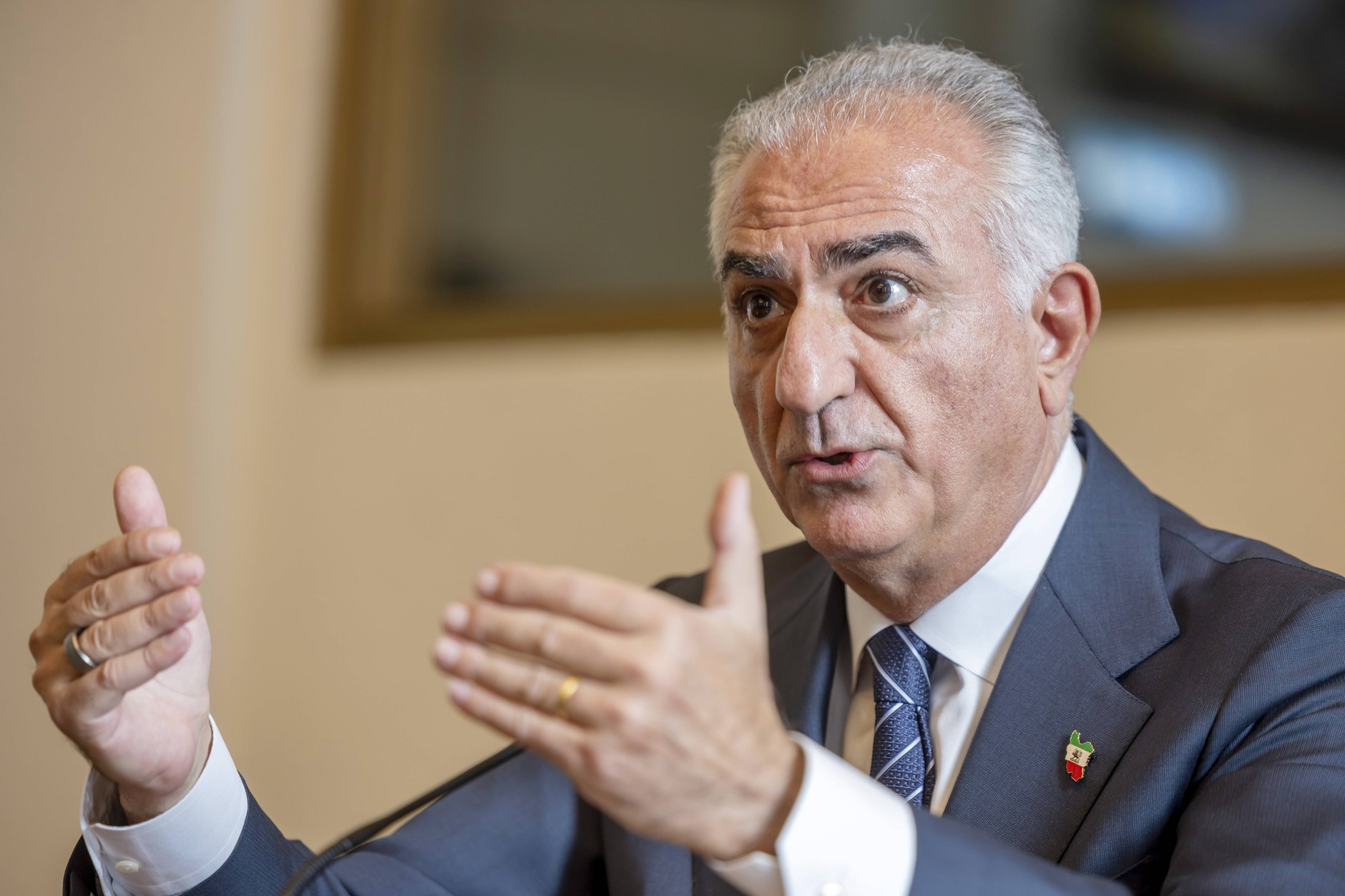
Reza Pahlavi in Geneva, Switzerland, on February 17, 2025.SALVATORE DI NOLFI / PAP
Should the current Iranian government collapse, the threat from the Iranian Revolutionary Guard in the Strait of Hormuz, as well as the Houthi threat to the Bab al-Mandab Strait [która łączy Morze Czerwone z Zatoką Adeńską] would be much smaller or completely eliminated.
Could this new reality – or newfound advantage – be enough to make Russia abandon its maximalist demands?
Or maybe Dmitriev and Lavrov still believe that Can Putin “buy” his way out of the crisis and achieve at the negotiating table what he cannot on the battlefields of Ukraine?
Meanwhile, Zelensky announced on Telegram that “Ukraine is ready for substantive talks.”
We will have to wait and see if Russia is also ready. We doubt it.