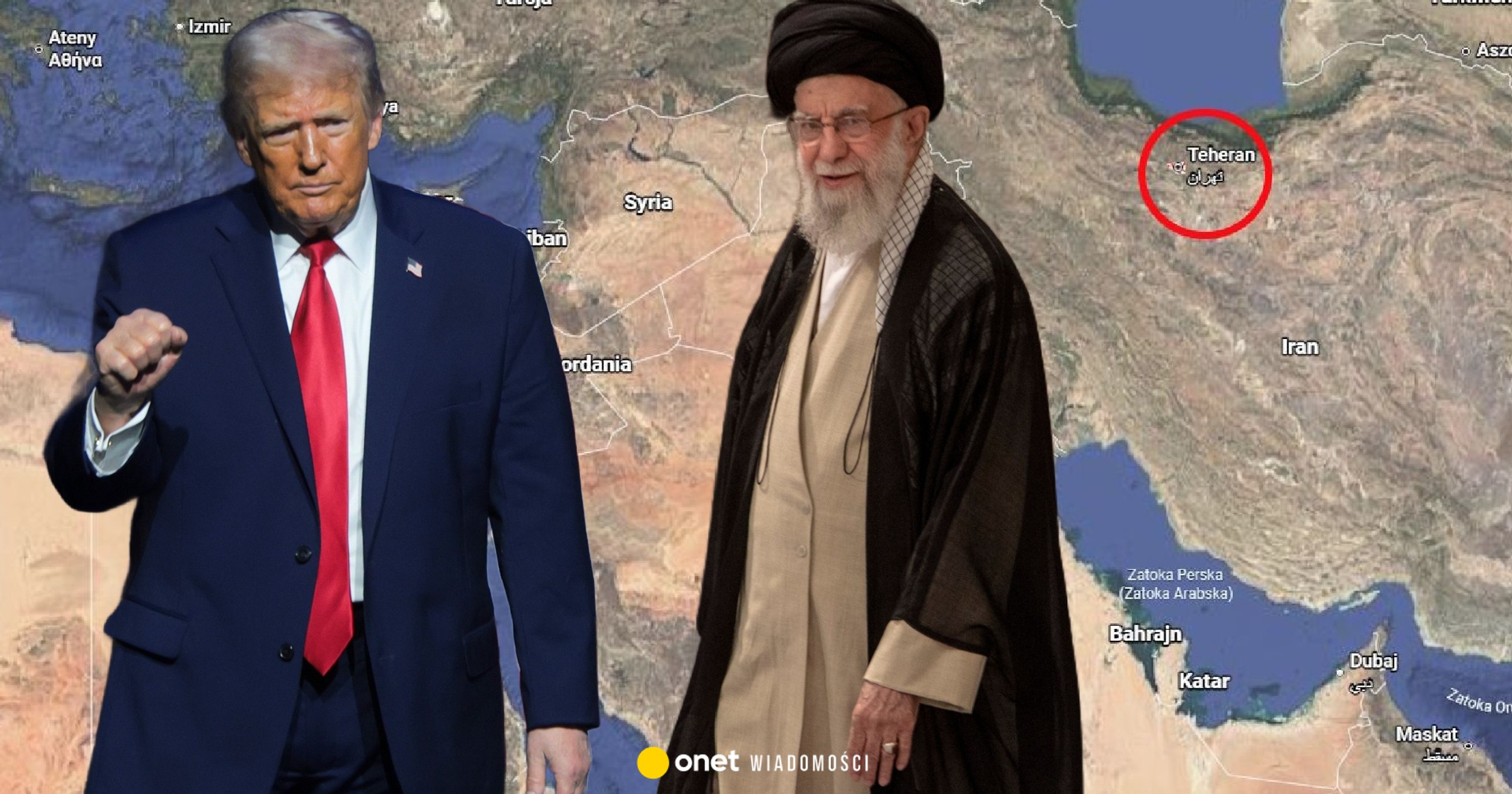
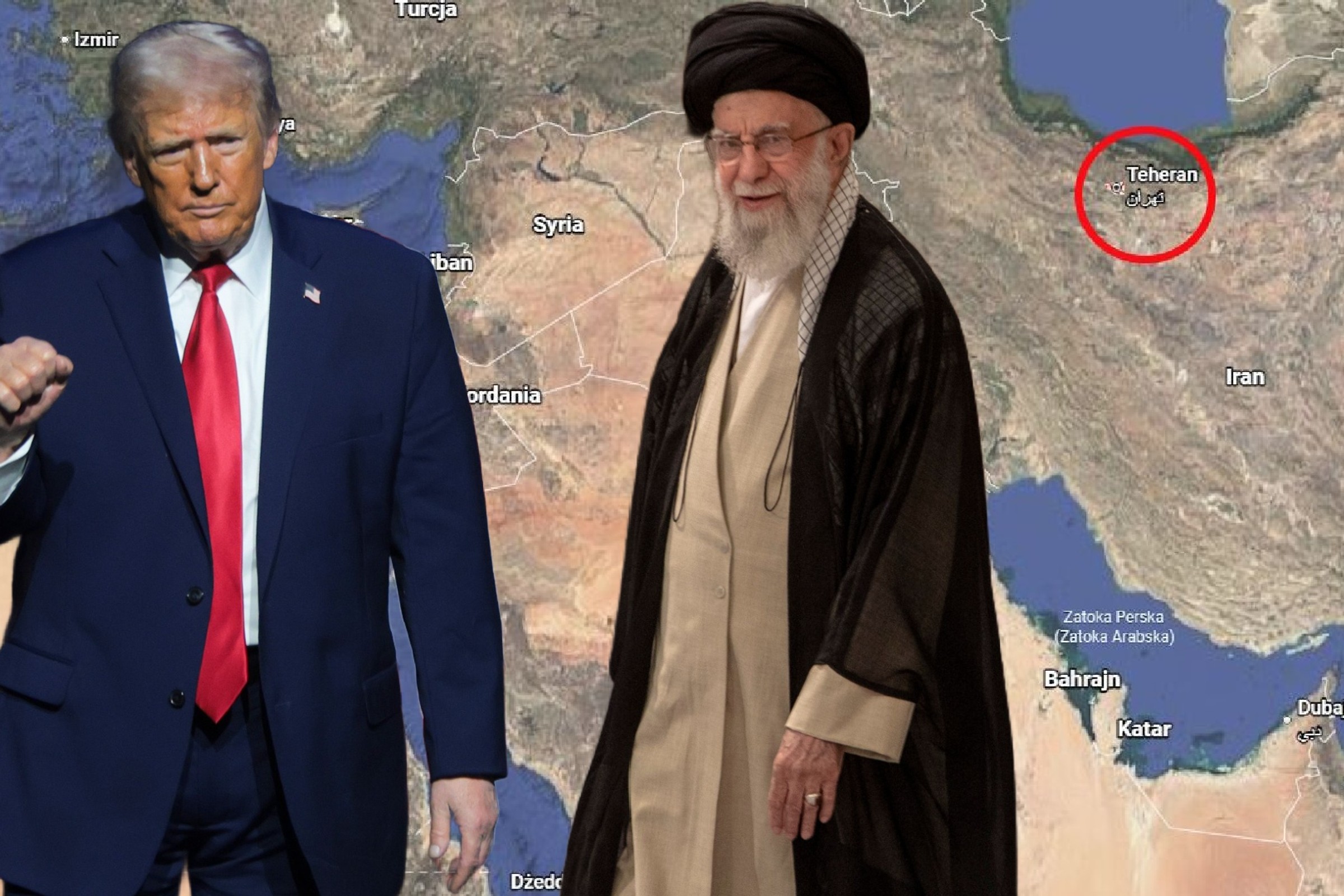
Will the United States attack Iran or will there be an agreement? “If there is no agreement, we will see what happens,” the US president said on Friday. Were the mullahs given a deadline to reach an agreement before conflict broke out? “Oh, they know, that's for sure,” Trump said in response to the journalist's question. However, he did not specify the date.
As reported by the American newspaper “The New York Times”, the White House is currently considering three possible scenarios of an attack on the mullahs' regime. Each of them carries a high risk of retaliation. All the more so because, according to American investigators, last year conspirators from within the Iranian regime discussed a plan to assassinate the US president.
The use of American special forces in Iran is the riskiest scenario. American commandos could secretly enter the country to destroy those parts of nuclear facilities that survived the American airstrikes in June this year.
The article continues below the video
American soldiers have been training for such missions for years, but they are extremely dangerous. Trump himself has repeatedly recalled internally the failed 1980 hostage rescue operation during Jimmy Carter's presidency — a failure he has no intention of repeating.
2. Air attacks
The second scenario assumes mass airstrikes on military and political command centers in Tehran. The goal would be to create such chaos that the Iranian regime would collapse and Supreme Mullah Ali Khamenei would be overthrown. Trump would also have a personal motivation to do so. According to American investigators, last year conspirators from within the Iranian regime discussed a plan to assassinate the US president.
According to the New York Times, it is not certain whether a new leadership willing to compromise would be created after this event.
3. Air attack [tylko] for the missile program
The third scenario is apparently pushed primarily by Israel. This is another heavy blow to Iran's missile program, which intelligence services say has been largely rebuilt after last summer's war.
Tehran openly threatens retaliation and announces that in the event of a US attack it will target Israeli facilities. That's why there's growing fear in Jerusalem about Iranian missiles — and pressure on Washington to strike together.
Officially, Trump maintains his readiness to talk. White House spokeswoman Karoline Leavitt told the New York Times that the president hoped military action would not be necessary. At the same time, she warned that Iran must “reach an agreement before it is too late.”
According to reports, Trump has not made a decision yet. Public threats are therefore intended to increase pressure on Tehran.
A powerful explosion in a port in southern Iran
An explosion occurred in a building in the port of Bandar Abbas in southern Iran on the Persian Gulf on Saturday, state media reported, quoted by Reuters. The Islamic Revolutionary Guard Corps (IRGC) has denied rumors that the naval commander was killed. The cause of the explosion has not been officially announced yet.
The cause of the explosion has not been officially announced yet. According to television, the explosion destroyed it two floors of an eight-story building, as well as several cars and shops.
Emergency services and fire brigades are working on the site, Iranian media reported.
Protests in Iran
At the beginning of January this year. The largest protests in years took place in Iran. Their participants initially opposed the disastrous economic situation in the country. Residents have taken to the streets because the unbearable cost of living has been crippling Iran's middle and lower middle classes for over 10 years.
Moreover, environmental conditions have also deteriorated rapidly: air pollution has reached dangerous levels, and after years of drought and overuse of groundwater, Tehran's drinking water has become dangerously scarce. Daily life has been seriously disrupted, not only due to the lack of water in the taps, but also due to frequent interruptions in the supply of electricity and cooking gas.
Later, however, the demonstrations took on a political dimension and began to include demands aimed at the foundations of the Islamic Republic. And this was too much for the regime in Tehran.
There is no confirmed news that the demonstrations were finally suppressed. The number of confirmed victims of the wave of protests in Iran has reached at least 5,002 people, reports the AP agency, citing activists from the non-governmental organization HRANA. As predicted, this number will continue to increase. The Internet in Iran has not been working for three weeks, which makes the flow of information very difficult.
Meanwhile, Iranian President Massoud Pezeshkian accused the United States, Israel and Europe of exploiting the country's economic problems, inciting social unrest and providing the population with the means to “break the nation” during the recent protests. This statement comes at a time of growing tensions in the region.
In turn, Iranian state television broadcast material in which the commander of the country's navy presented rows of missiles ready to be launched.
I’m Ashley Davis as an editor, I’m committed to upholding the highest standards of integrity and accuracy in every piece we publish. My work is driven by curiosity, a passion for truth, and a belief that journalism plays a crucial role in shaping public discourse. I strive to tell stories that not only inform but also inspire action and conversation.