Dragoș Pîslaru explains the absence of President Dan from Davos: “If you were there, it was very complicated to get hit in the wing”

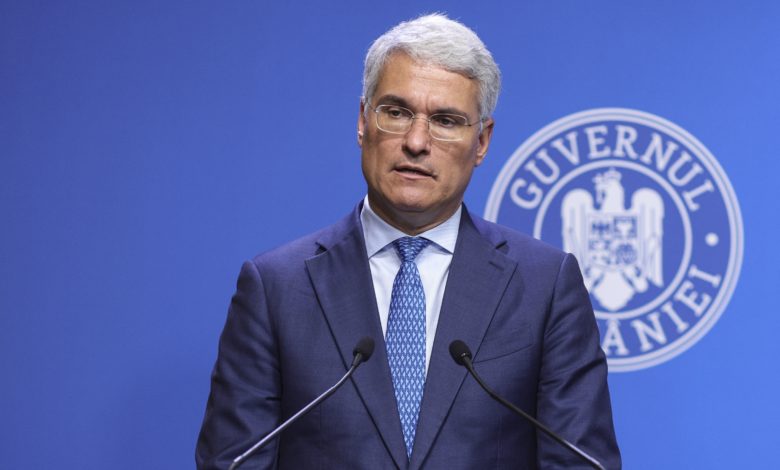
Dragoș Pîslaru, the Minister of European Investments and Projects, said on Prima TV that a presence of President Nicușor Dan at the World Economic Forum in Davos would have forced Romania to take immediate decisions on matters in which it would have preferred to analyze them longer. “It was very complicated, if you were there, to get hit in a wing”, reasoned Pîslaru.
Minister Dragoş Pîslaru showed that President Nicușor Dan was not the only high-level leader who did not come to Davos.
“I think that his lordship thought about the presence in a context where he would have been pushed perhaps for some immediate decisions that Romania felt that we should not take quickly before. (…) It was something in which there was enormous pressure on who was there at Davos and it was very complicated if you were there to get hit in the wing”, said Pîslaru, quoted by News.ro.
The minister believes that there was too much fuss in the country related to Romania's representation at this event, given that Romania was marginally represented at Davos in previous years
“This time, when I did send a delegation, everyone became a foreign policy specialist”, commented the minister.
The case of the Spanish Prime Minister
Pîslaru recalled that other top leaders also avoided appearing at the World Economic Forum, depending on their circumstances and interests.
“What I want to tell you and it's an important argument, Prime Minister Sanchez, when he saw that the United States was coming with the pressure again on 5% contribution to NATO and that they took out Spain as a negative example, he decided not to come anymore. Guterres, the Secretary General of the United Nations, was cut from the program. I mean, there are many who realized that maybe it's not worth it, and so I think it's better that he didn't go from the beginning than to appear that he withdrew from the conference”, he stated Dragoş Pîslaru.
On the other hand, he estimated that in the coming years Romania will be represented including at the level of the president and will come up with an agenda with the objectives it is pursuing.
“I think that Romania's representation was, I repeat, very robust. For next year, all of us in the delegation – the presidential adviser, Radu Burnete, was also present – agreed that we need to prepare much more in advance and have the presence of the president clearly and somehow nail things down and we'll see now, after we've all gained more experience, we know exactly how Davos can be best utilized. I think we'll have no only a presence at the level of the president, but in the end some clear objectives that we can obtain institutionally from the participations we have”, said Dragoş Pîslaru.
“I don't walk around the world”
Marius Lazurca, presidential adviser on national security issues, said on January 18 that President Dan is not going to Davos because of other priorities on his agenda.
“The agenda of the president, of any president, is under siege by emergencies, crises and priorities. The main exercise that any head of state must do is to prioritize the crises, emergencies and events that appear on the agenda of his reign,” said Marius Lazurca, quoted by News.ro.
He also stated that the decision to stay in the country was taken after in-depth and often contradictory discussions.
“At the moment when this decision was taken, I must tell you that it was not taken lightly and following in-depth and often contradictory discussions regarding the appropriateness of his presence at Davos. In the end, the president decided to stay in the country. His message to the Romanians was “I do not teleport around the world when there are such important things that demand my presence in the country, especially when my advisors cannot build enough substance for my presence at Davos”. So, if there is someone to blame, it is me”, said the presidential adviser.
Romania was represented, at the 56th annual meeting of the World Economic Forum in Davos, Switzerland, from January 19-23, by the Minister of Foreign Affairs, Oana Ţoiu, the Minister of Investments and European Projects, Dragoş Pîslaru, the Minister of Energy, Bogdan Ivan, and the presidential adviser Radu Burnete.