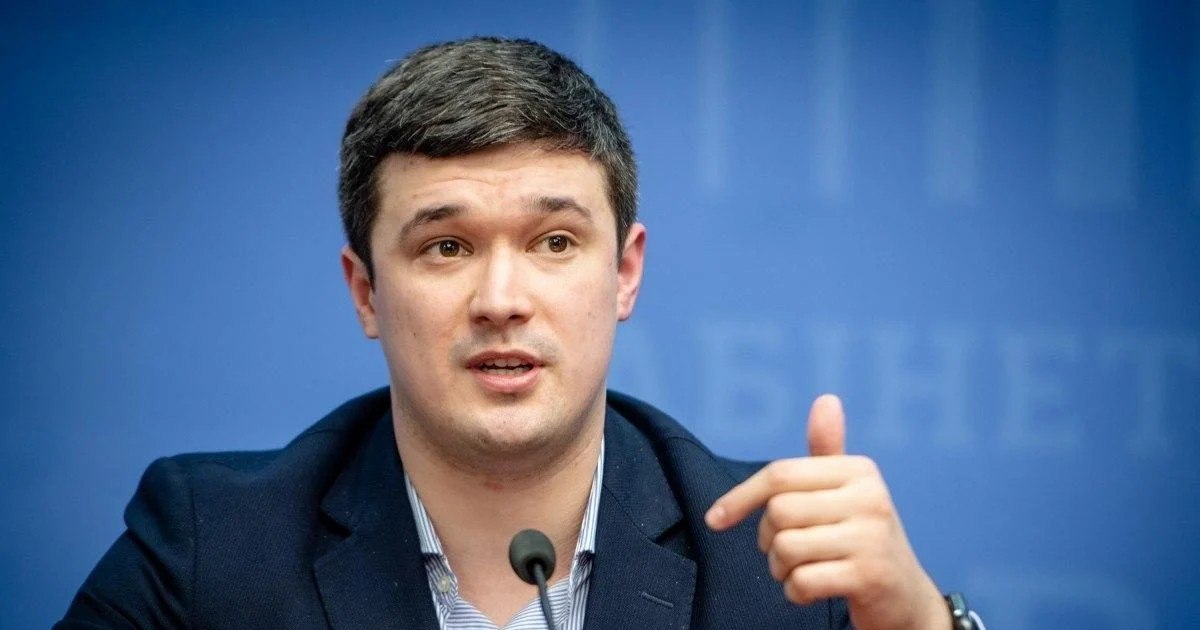
“Bitch, you're coming with me.” Putin's soldiers attack even 10-year-old Russian girls


The independent Russian investigative website Insider tries to show the scale of this wave of violence by soldiers from Putin's army (whom he himself presents as the new Russian elite) against Russian women, children and men who stand in their way.
At 5:30 a.m. on October 28, 2025, Svetlana left her home in the border town of Shebekino in the Belgorod Oblast to walk her three dogs. In the morning fog, she noticed a man on a bicycle wearing “a camouflage military uniform with an assault rifle slung across his back like a backpack.” When Svetlana was approaching the entrance to her apartment building, the man approached her, took the rifle from his back and put it to her chest. “Bitch, you come with me or I will shoot you,” he said. Svetlana's terrified dogs ran away.
The soldier grabbed her by the collar of her jacket, pulled her hood over her head and dragged her out of the residential area and into a place where it was dark. Struggling, (Svetlana) reached for the trigger of his rifle and pulled it, hoping the sound of the gunshot would get people's attention, but no one came to help.
The soldier hit her on the head, choked her and threatened her with a knife. “He choked me like he knew what he was doing – in a way that wouldn't have killed me outright, but it would have stunned me, incapacitated me, and made me suffer.” — Svetlana recalls.
She was lucky: one of the neighbors finally heard a noise outside and showed up with a flashlight. The soldier immediately released Svetlana and ran away. The neighbor tried to catch him but was unable to keep up with him.
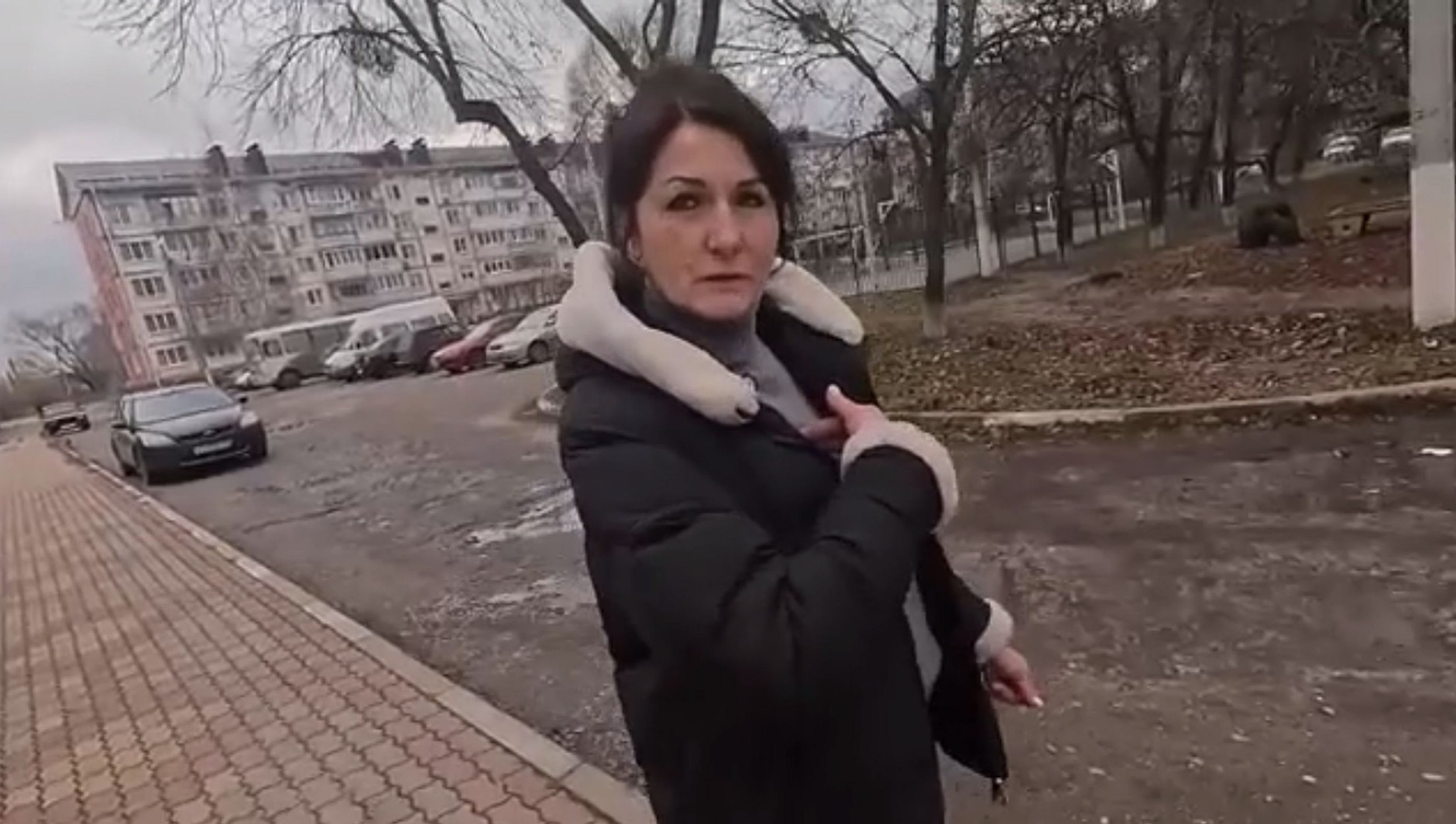
Svetlana, a resident of Shebekino, who survived the attack of recidivist Alexei KostrikinInsider/Insider
It later turned out that the attacker was Alexei Kostrikin, a recidivist previously convicted of theft and robbery, who had been recruited to fight in the war. The same day, after the attack in Shebekin, he went to the village of Novaya Tavolzhanka, where he killed a man and raped his wife. As Svetlana explained, ballistics examination showed that the shell that was left after she pulled the trigger of his gun and the bullet that was found in the body of the killed man in Tavolzhanka came from the same weapon.
Svetlana was called to the police station to help identify the attacker. The police showed her a photo and played her voicemail. She recognized his voice immediately. “He talked to the taxi driver in a dispassionate, calm voice, without any inflection,” Svetlana recalls. “I immediately confirmed that it was his voice,” she adds.
Svetlana and other residents are baffled how a man with a criminal past could freely move around border towns with weapons and why the military police did not monitor him. “How did these people end up in the army?” – residents wonder on chat groups, as if the mass recruitment of prisoners to the front was something new to them.
After this attack, Svetlana started having panic attacks. He has trouble sleeping, is afraid to walk home after dark, and feels short of breath when he hears footsteps behind him. Doctors diagnosed her with a nervous breakdown. Currently, he is seeking help from a psychologist and taking strong antidepressants. She can't stop thinking about what might have happened if her neighbor hadn't scared off the attacker.
A wave of harassment
Due to the lack of separate statistics on crimes committed by military personnel, the scale of the problem can only be inferred based on indirect data. According to court records, in 2022–2024, 2,000–2,200 cases of rape and 8,000–8,300 cases of other sexual crimes were recorded in Russia per year. For comparison, between 2019 and 2021 there were an average of 1,800-2,000 cases of rape and 6,700-7,500 cases of other sexual crimes per year. Cases peaked in 2023, and the number of incidents in 2024 was still well above pre-war levels. Meanwhile, the conviction rate remains consistently high at around 85-90%.
Typically, information about crimes committed by military personnel in Russia comes from media reports (in the case of the most high-profile cases), press releases from investigative bodies and individual court decisions. There is no shortage of such incidents in the border regions of Russia, where large groups of soldiers are permanently stationed.
In the summer of 2025, in Belgorod, a 39-year-old woman from the city came to the police to report an attempted rape. According to her testimony, on the night of July 13-14, 36-year-old soldier Magomed Mirzaev from Dagestan (a Russian republic in the Caucasus) attacked her in her own apartment. She let the soldier inside, after which he tried to rape her and then ran away. Mirzaev was declared wanted on charges of sexual assault.
Journalists determined that the woman was at least Mirzaev's third known victim. In 2013, he attacked and robbed a young woman in Izberbash, Dagestan. In September 2022, he was arrested for raping a 21-year-old student from Belarus in Saint Petersburg. According to Fontanka, Mirzaev administered an unknown drug to her, preventing her from fighting.
At that time, he was already a soldier and from April 2022 he fought in Ukraine. After serving his sentence, he signed another contract with the Ministry of Defense, was pardoned and sent to war again. He went to the Belgorod Oblast as an active soldier.
In November 2024, the media described another case in the Belgorod Oblast. The soldier was accused of sexually molesting an 11-year-old girl. The Astra Telegram channel identified him as 41-year-old Corporal Alexander Andreev. The investigation showed that Andreev had raped a student from the village of Veselaja Lopan three times. After one of these acts, he tried to force her to remain silent by paying her 180,000. rubles (about PLN 8,300), but a week later he raped her again. Andreyev was arrested and criminal proceedings are pending against him.
Another sentence was handed down by the Military Court of the Bryansk Garrison in September 2023. A contract soldier was sentenced to 15 years of imprisonment in a maximum security penal colony for sexual harassment of his 10-year-old stepdaughter. His personal information was redacted from court records, but according to the investigation and testimony of his wife, he took part in the Russian invasion of Ukraine from August to November 2022. After being discharged from the army, he became aggressive and started drinking. In March 2023, he hit a girl and committed “acts of sexual violence” against her.
Residents, frustrated with the legal system, sometimes take matters into their own hands. In August 2025, Valery Malikov from the city of Lgov was arrested in the Kursk Oblast. He was accused of killing a soldier who sexually harassed his partner. The circuit court reported that on the evening of August 2, a man in a military uniform knocked on Malikov's door, asking for cigarettes. The men got to know each other and decided to celebrate Air Force Day together. During the meeting, the guest offered the housewife sex for money, but she refused. Later that night, Malikov noticed that the soldier was still molesting his partner and killed him with an axe. In the morning he buried the body near the house.
“How dare you? I was at the front!”
Harassment by soldiers has become so common that women in the Belgorod Oblast are now afraid to ride trains. According to sources Insider routes connecting Belgorod with Moscow are popular with groups of soldiers. The carriages – both compartments and third-class seats – are often filled with soldiers who hang out in the dining cars, get drunk and act aggressively. Other passengers, as the women noted, try to avoid any conflicts with them – soldiers returning from the front are perceived as people accustomed to violence and often armed, and many civilians are afraid to “mess with heroes”, expecting that in case of problems the state will side with the military.
One such conflict occurred last summer on a train from Belgorod to Saint Petersburg, says Oksana [imię zmienione]mother of two children from Belgorod. She traveled on the lower bunk in a third-class compartment, accompanied by older women and a soldier who occupied the bed above Oksana. The first thing that caught Oksana's attention was a large khaki backpack, “the size of a man.” The soldier boarded the train in Kursk and went straight to the dining car. When he returned later that night, visibly drunk, he began molesting Oksana. When she told him directly that she didn't want his company, he became furious: “Why don't you want it? I was at the front! You have to talk to me.” According to Oksana, the other male passengers “were either asleep or chose not to respond” to her cries for help. The only people who came to her aid were the elderly women sitting across from her. Later the conductor appeared and with great difficulty managed to calm the soldier down.
Impunity of soldiers
The problem lies not only in the huge number of criminals convicted of rape and murder among Russian soldiers, but also in the very practice of enlisting in the army as a way to avoid prison. This policy sends a clear message of impunity: even if you do something that qualifies for a prison sentence, you can still just go back to the front. Statistics from the Ministry of Justice show a more than tenfold increase in the number of criminal cases frozen at the stage of court proceedings. This was especially visible in 2024.
The increase occurred in the so-called “other matters”, which includes the defendant's inability to participate in the proceedings due to being drafted into military service – a provision adopted in spring 2024. Over 17,000 cases were suspended in court and countless numbers were frozen at the investigation stage after the suspect decided to solve his legal problems by signing an agreement with the Ministry of Defense.