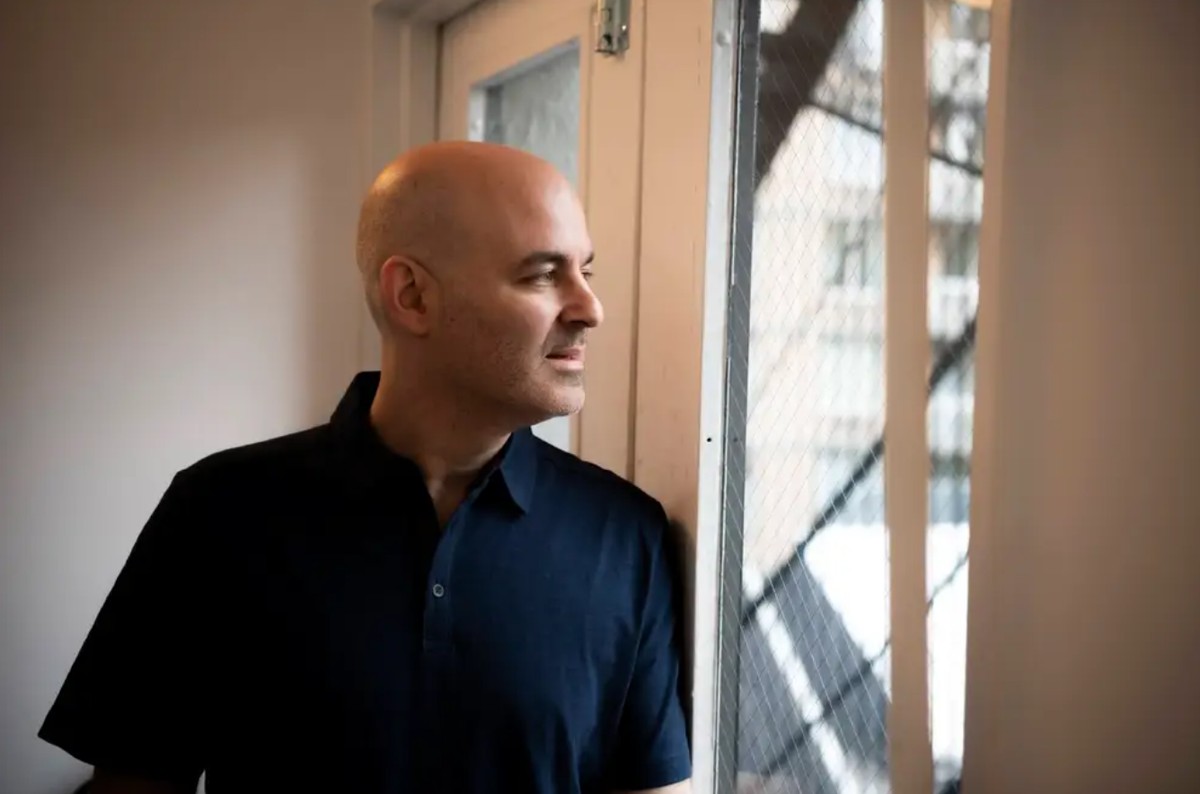
This first-person narrative article is based on an interview with Jay Mandel, a 48-year-old marketing professional who also works for Uber Eats in the New York area. The interview has been edited for length and clarity.
I have worked in corporate America in the digital marketing space for most of my career.
The peak moment of my career was eight years at MasterCard, where I was promoted to the position of vice president responsible for global social media. I also worked at IBM. Recently, I was involved in marketing consulting and lecturing as a contract professor, but it did not bring sufficient income. I am currently raising funds to start my own company.
The idea of starting part-time work (so-called gig work) was suggested to me by my therapistsaying that it would help me a lot to see how other people live.
Read also in BUSINESS INSIDER
I avoided this idea for several months. I studied at Columbia University. I have a master's degree. I talked to people close to me and they said, “You shouldn't have to resort to this.”
Finally, in October, I completed my first order for Uber Eats.
Extra effort isn't always rewarded in part-time work
At the beginning I had the impression that I was invisible to most people. In one assigned course, I had to pick up a cake. It turned out that the bakery didn't have the cake the customer wanted, so I spent 20 minutes on the phone, talking to the customer and the bakery staff at the same time, to find the right solution.
When I finally delivered the order, the woman who ordered the cake had a completely blank expression on her face – no “thank you”, no extra tip, nothing. In my previous job, extra effort was usually met with some form of recognition. I don't often experience this in my work as a supplier.
Then I realized that these companies charge very high delivery fees. It shouldn't be the customer's responsibility to compensate with a tip.
I also don't always feel like I have a choice when it comes to the orders I accept. Sometimes I don't like pickup or delivery in the Bronx, and I usually don't want to fulfill McDonald's orders either.
See also: Experiments in Alaska and Norway. This is what the future of the economy and earning money may look like
I also performed orders for Uber Courier, which involved delivering items between private individuals. Sometimes it was a backpack, other times it was a charger. This is a really valuable service and I wish Uber would put more emphasis on it.
Uber Eats pays the bills, but it doesn't give me a sense of control
The money I make with Uber – often several hundred dollars a week — I spend it so my kids can have a great weekend, like going out to dinner.
In general, Working for Uber Eats was a humbling experience for me. I don't consider myself better than other suppliers. I try to smile and be that bright moment in someone's day. I have fun doing it, visit new restaurants and get to know neighborhoods that I would never have visited under other circumstances.
It is very difficult to assess how common my experience is among people who use part-time work to make ends meet while cultivating professional ambitions. Unemployment statistics don't include people like me who work in the system gig economy. I never thought I would have such financial difficulties and I feel like more of my friends are in a similar situation than not.
I don't see my professional situation as the result of my own decisions. Whether it's Uber Eats or the work of a contract lecturer, it's part of a larger system that I have no control over.
The above text is a translation from American edition of Business Insider