For HISTORY! The act was signed for the UFO in the heart of Romania, which will cost 64,000,000 euros


Article by Maria Olteanu – Published Saturday, January 24, 2026, 2:49 p.m. / Updated Saturday, January 24, 2026, 2:49 p.m.
Hunedoara will have a new stadium in the near future. The announcement was made by Bogdan Apostu, FIFA agent close to the club which is very close to promotion in the first league.
Entering a deadlock at one point, the project was finally approved by the Government of Romania and the National Investment Company. The stadium will be able to be used by the local team, Corvinul, and will represent a first for Romania, as it will be the first investment of such scope by those from CNI in a city that is not the county capital.
The new stadium in Hunedoara will cost almost 64 million euros, and will include, among other things, a boxing gym, strength and cardio rooms, medical office, changing rooms equipped with showers, conference rooms, restaurant area, administrative offices. The arena will have an area of 37,207 square meters and a capacity of 10,900 seats. The deadline for building the arena is 22 months.
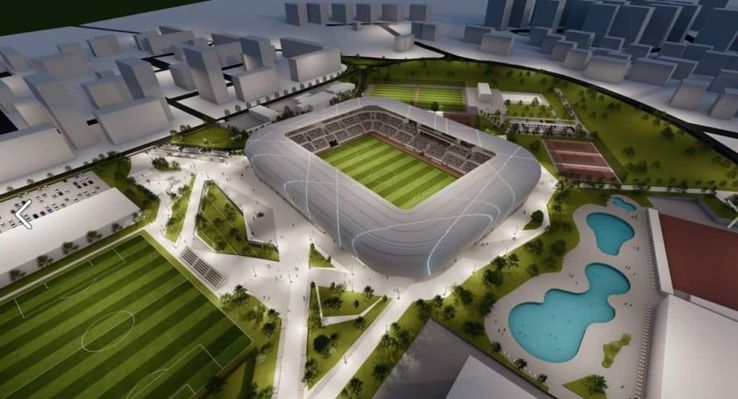
Hunedoara will have a new stadium and it will be named after Michael Klein
“Corvinul is the only undefeated team, from the first two divisions in Romania, in the current season. Then, Hunedoara is close to starting the construction of the new stadium, after the project was approved by the CNI and the Government of Romania. It has been signed!
Now those from the City Council, as well as Dan Boboutanu, the mayor of Hunedoara, are close to accessing that 25% co-financing, according to the new regulations in the field.
It is a loan that will be taken over a longer period. In total, the stadium will cost 64 million euros, but the co-financing will not be from the total amount, the capacity of the arena will be 10,900 seats, and the completion period is 22 months
Know that it will be the first investment of the CNI in the historical Transylvania and the first investment of such scope in a city, which is not the county capital”, said Bogdan Apostu, according to digisport.ro.
Corvinul is looking for its own stadium if it promotes to the Superliga
Corvinul Hunedoara, the leader in League 2, issued a statement a few days ago in which he presented to the supporters which stadiums they considered for playing matches in the event that they will be promoted to the Superliga.
The variants taken into account by the people of Hunedoara are the “Municipal” from Sibiu and the “Petre Libardi” stadium from Petroșani. The Valea Jiului stadium has not hosted a match in the first league for 19 years. The Hunedoers cannot perform at the city stadium in the Superliga and must find another option. The club also conveyed the fact that the stadiums in Târgu Jiu and Arad, the stadium where UTA also play, were also considered.
“Where do we play? In Hunedoara at the moment, the team is in League 2. But for promotion, the options are Sibiu, Petroșani and Arad, in that order. Yes, Petroșani is also an option because it is in the county. Now, that stadium is not homologated, but I understood that those from the County Council assumed an investment of over one million euros for nighttime and de-icing. That's about what the stadium there still needs.
But I think it will be Sibiu. The Cup was also won there, a connection was created. The only impediment is the fact that Sibiu has two teams (FC Hermannstadt and Inter Sibiu) that play on the field, and Corvinul would be the third, so the approval of the Sibiu City Hall is needed”, said Apostu, for the source cited above.
-
The team led by Florin Maxim is the leader in League 2 with 43 points accumulated in 17 stages. Corvinul have not lost a single match in the current League 2 season and have a 7-point lead over second-placed Sepsi with 4 legs to go before the end of the regular season.
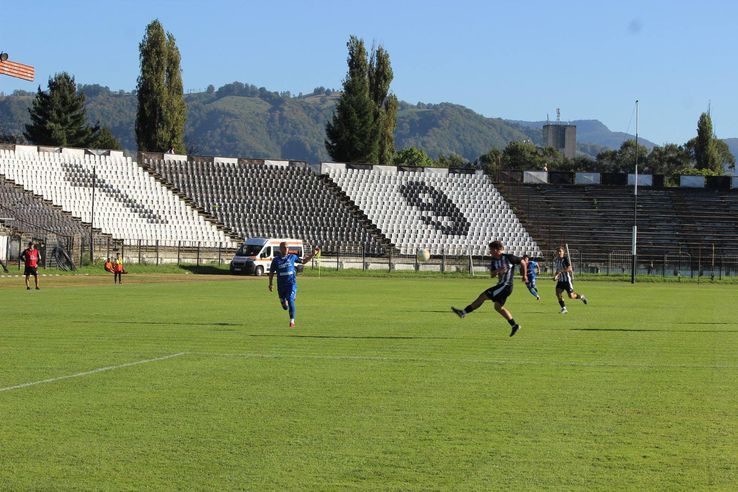
The new stadium in Hunedoara had been put on hold
In August 2025, Dan Boboutanu, the mayor of Hunedoara, announced that he was forcing the works on the new Corvinu stadium, in the context in which the construction of the sports arenas was put on “stand-by” by the Romanian government, because they involved expenses that prevent balancing the national budget.
As the situation was resolved in the meantime, and the Dinamo and the Pitesti stadiums received the “green light”, the same happened with the Hunedoara arena.