“When they find a signal in an area, the special forces enter the houses and beat people”, says an Iranian from Romania / What his sister told him, in the country torn by protests and violent repression


After five days of not knowing anything about his sister in Iran, Mehrzad Moghazehi, a chef settled in Romania since 1991 and a Romanian citizen, managed to talk to his sister, who was still in the country, for almost an hour. He described a life lived at home, out of fear, with warning lights in the streets, teenagers sent with guns against protesters and a society that, he says, has no way out: “People live every day as a fight for survival.”
- In a discussion with HotNews, Moghazehi tells what his sister told him about what is happening in Iran, but also how he interprets the slogans shouted in the streets and the desperate appeals to the international community.
Mehrzad Moghazehi is a chef, has Romanian citizenship and has been living in Romania since 1991, where he settled with his family. His mother and brother live in Romania, and his father died in the early 90s. His sister, married, who lives in the Middle Eastern country, remained in Iran. HotNews will not publish the location for security reasons. The last time Moghazehi was in Iran was eight years ago.
Mehrzad Moghazehi says he was only able to get in touch with his sister after international mobile phone calls were briefly allowed.
“Back when the internet was down, people couldn't call on WhatsApp or Telegram. Then they opened international GSM calls. They're very expensive, but everyone called relatives from abroad,” he says.
The discussion lasted almost an hour. Moghazehi says his sister spoke on the phone with him and other family members in Romania for the first time after five days of total lack of contact.
“I don't allow them to go out on the street so they don't gather. I fire warning shots”
From what his sister told him, Moghazehi says, everyday life is dominated by fear.
“He told me that they don't allow people to go out on the street, so that they don't gather. And even if they don't go out to protest, they go out to go somewhere and warning shots are fired,” he says. According to his sister's accounts, security forces patrol neighborhoods and intervene if they detect alternative sources of communication.
“He told me that people still use Starlink. When they find signal in an area, they break into houses, create chaos, beat people and intimidate them. They arrest some people,” he says.
“They sent children with guns to the streets”
One of the most serious claims made by Moghazehi concerns the way some young people are being used in the suppression of protests:
“He told me that some of the Islamic Revolutionary Guard Corps and the army refused to go out into the streets to kill Iranians. And then they sent 17-, 18-, 19-, 20-year-olds with no training. They gave them guns.”
According to him, from what was reported to him from Iran, some of these young people are acting like a game. “They think they're playing Counter-Strike,” says Moghazehi. “I've seen videos where they brag: 'I killed five', 'I killed three'. They brag about it.”
“Shooting Alice. Doctors remove eyes to save lives”
Mehrzad Moghazehi says his sister also told him about the use of munitions that cause serious injuries, including blindness, and drone attacks on protesters:
“He told me that it is fired at close range with alice-type ammunition, which hits people's faces and bodies, causing serious injuries, including blindness. A doctor in Iran said that in one day, hundreds of young men arrived at the hospital with injuries to the eyes and all over the body, and that he had to remove eyes to prevent infections and so that people could survive.”
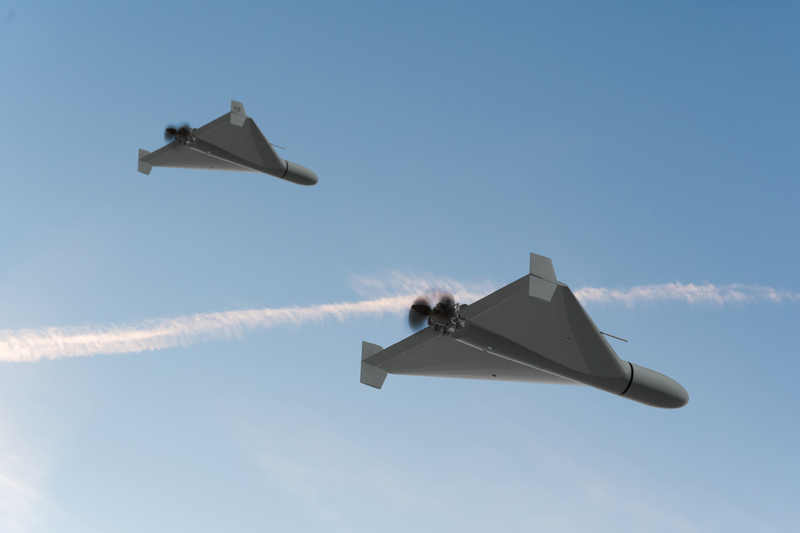
He states that his sister also described aerial attacks on the crowds: “She told me that there are drones passing through the streets and shooting at the protesters. A drone passes by, shoots everything it has and kills people. That's how dozens or hundreds of victims suddenly appear.”
Moghazehi says his sister also spoke to him about the difficulty of those injured in the protests getting medical care.
“He told me that hospitals receive people from the security structures as a priority, and civilians are refused or sent home. Many try to treat themselves secretly, through houses,” he says.
“If the regime doesn't fall, it slaughters us all”
Asked how his sister lives her life these days, Moghazehi's answer is short and to the point. “He's staying in the house. That's what he told me. 'We don't feel like doing anything anymore. We're very scared.'”
The main fear, he says, is about what comes next. “Her question was, 'What if this regime doesn't fall? It's going to slaughter us all.'”
Moghazehi states that his sister told him about the arrests and the violence: “She told me that a lot of people were arrested and that people were killed. We know it's a bloody regime (…) From what the insiders tell us, people live every day as a struggle for survival.”
“Why isn't the international community stepping in?”
Another thing that constantly comes up in the discussions with those in Iran is the “feeling of abandonment”, the man says. “The amazement is that the international community does not intervene. People wonder why in other conflicts the world reacts immediately, and here there were days without internet, without any way of communication,” says Moghazehi.
He says the diaspora tries to stay connected to the reality in Iran through informal social media channels: “We have trusted people, artists, young people who film and send what's happening. That's how we see it.”
Moghazehi also talks about the slogans shouted during the protests. “People are shouting 'Reza Pahlavi' and 'Long live the king,'” he says.
The name invoked is that of Reza Pahlavi, the son of the last Shah of Iran, Mohammad Reza Shah Pahlavi, who was ousted from power in 1979 when Iran became an Islamic republic.
Moghazehi explains that in the discourse of supporters of the monarchy, there is an argument related to how the reign of the last shah ended. “The last shah did not formally abdicate, but left the country to avoid bloodshed. Therefore, the monarchical line was not terminated by an official act,” he claims.
For some of the protesters, the monarchy is seen as a symbolic alternative to the religious regime: “People want to show that there is an alternative. It's not just about one person.”
He also says that Iranian society is deeply divided and that the monarchy remains a highly controversial topic: “They are talking about a plan in stages: the fall of the regime, a transition period and then a referendum in which the people will choose what form of government they want.”
A call to Romanians
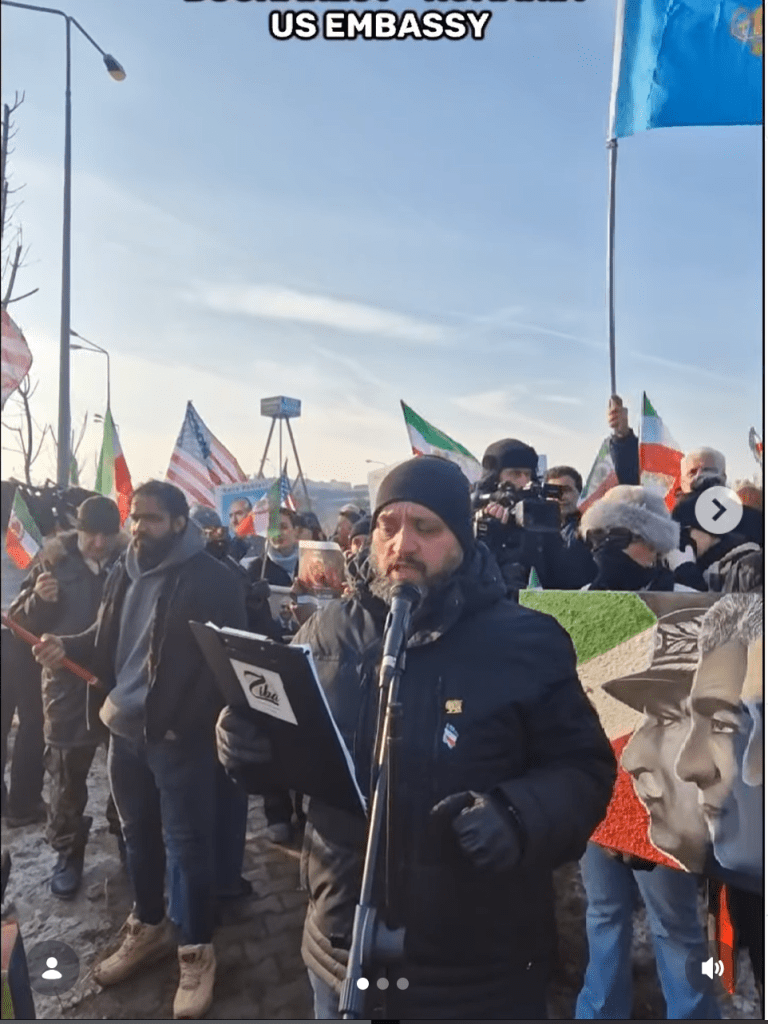
Settled in Romania since 1991, Moghazehi says that he participated and helped organize protests by the Iranian diaspora, including in front of the US Embassy in Bucharest: “At today's action, the requirement was clear: for the United States to intervene. I have also seen videos from Iran where people say: “Mr. President, help us. They are killing us”, he says.
At the end of the discussion, Moghazehi says that his message to the Romanians is a simple one: “I would like the Romanian people to be with us, in our actions in Romania. Many Romanians come to the protests and support us.”