2026-01-23 12:32
publication
2026-01-23 12:32
Czech Prime Minister Andrej Babisz said in an interview for the Hungarian weekly “Mandiner” published on Friday that he expects the Visegrad Group to resume cooperation “if we manage to convince Poland to return.”
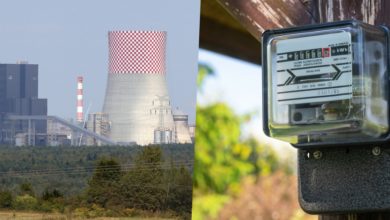
“We want the Czech Republic to become the best place in the world, and we will do everything in our power to make this happen. When we were in power before, we were probably in the best position among the Visegrad Group (V4) countries, now Poland and Hungary are also doing great, but the biggest problem is energy prices,” said Babisz, who headed the government in 2017-2021.
He assessed that the previous government, led by Petro Fiala, “did not address this problem substantively, and extremely high energy prices led at some points to inflation reaching 19 percent.” Babisz said that the Czech Republic had become one of the worst-functioning countries in Europe, and “for four years the government only talked about the war and Ukraine, not caring about the everyday problems of its citizens.”
Asked whether the V4 “will manage to resume cooperation after the crisis”, the Czech Prime Minister replied in the affirmative, but added that “the question is whether we will be able to convince Poland to join us again.”
“There were and are differences of opinion on the war in Ukraine, but in my opinion we should focus on European problems, where our interests converge. We need to convince Poland to return to V4 and (…) introduce restrictions on energy prices in the region,” Babisz emphasized.
Babisz: The war must end
He stressed that the war in Ukraine “must be ended as soon as possible.” “We need peace, and then we will be able to talk about reconstruction and help for Ukraine,” he argued.
The Czech Prime Minister also supported the idea of direct negotiations between Europe and Russia. “When (Hungarian Prime Minister Viktor) Orban negotiated first with Ukrainian President Volodymyr Zelensky and then with Russian leader Vladimir Putin, he was met with sharp criticism. Now, finally, more and more voices say that Europe should also negotiate,” he noted.
During Hungary's rotating presidency of the EU Council in 2024, Orban traveled to Kiev and Moscow on – as he himself said – “peacekeeping missions” and met with Zelensky and Russian leader Vladimir Putin. The meeting with the internationally isolated Putin was kept secret until the last minute and caused a wave of criticism from the most important EU institutions and politicians.
“We just don't know whether it is too late. Without (US President) Donald Trump, achieving peace today is practically impossible,” Babisz said.
Czech Prime Minister: Ukraine is not ready to join the European Union
Moreover, in his opinion, Ukraine “is not yet ready to join the European Union.” He added that priority in the enlargement process should be given to the Western Balkan countries, “several of which are already ready for membership.”
Cooperation between the countries that make up the Visegrad Group – the Czech Republic, Poland, Slovakia and Hungary – has weakened in recent years due to differences in approaches to issues such as Russia's war against Ukraine and attitudes towards Russia itself. At the beginning of December, the President of the Republic of Poland, Karol Nawrocki, met at the V4 summit in Esztergom with the presidents of Hungary, the Czech Republic and Slovakia. Originally, he was also supposed to talk to Orban in Budapest, but this meeting was canceled after the Hungarian Prime Minister's visit to Moscow and his talks with Putin.
Jakub Bawołek from Budapest (PAP)
jbw/ akl/ ktl/