This year's winter so far is finally a real winter – snowy and with negative temperatures. How do we cope with heating our homes in such increasingly rare conditions?
The rest of the article is below the video:
The increased demand for heat affects the power system (in January, Poland reached historic records in power demand and its generation) and, obviously, on end energy consumers. Together with the frosts, the topic of exorbitant costs, which heat pump owners have to bear even longer, since December, has returned; Even the Minister of Energy, Miłosz Motyka, publicly commented on the matter. Are “horror bills” for pump users a real problem?
Read also: Record electricity bills for heat pump owners. The Minister of Energy comments
Is the state to blame?
Media reports indicate bills of up to PLN 800-1,000 per month. The amounts may be a headache, but experts note that heat pumps were often installed in buildings that were not suitable for them.
— The state is to some extent responsible for this situation. Until recently, in programs such as Clean Air, subsidies were granted regardless of the insulation status of the house. With low subsidized costs, the pumps were installed in buildings not adapted to this type of heat source – says Tidiane Sano, owner of the construction and finishing company Blacktarpan, which deals with, among others, thermal modernization of buildings, including under Clean Air.
Heat pumps as a whipping boy?
Paweł Lachman, president of the Polish Organization for the Development of Heat Pump Technology (PORT PC), points out that in order to operate effectively, the devices must be properly selected.
– The heating power of the heat pump is not constant — is variable and depends on the external temperature and the temperature of the heating water in the installation. The key parameter to pay attention to is the efficiency of work in cold climates, i.e. at low temperatures, when the highest demand for heat occurs, he explains. He says that heat pumps adapted to such conditions work well in Scandinavian countries, where statistically winters are still more severe than in Poland.
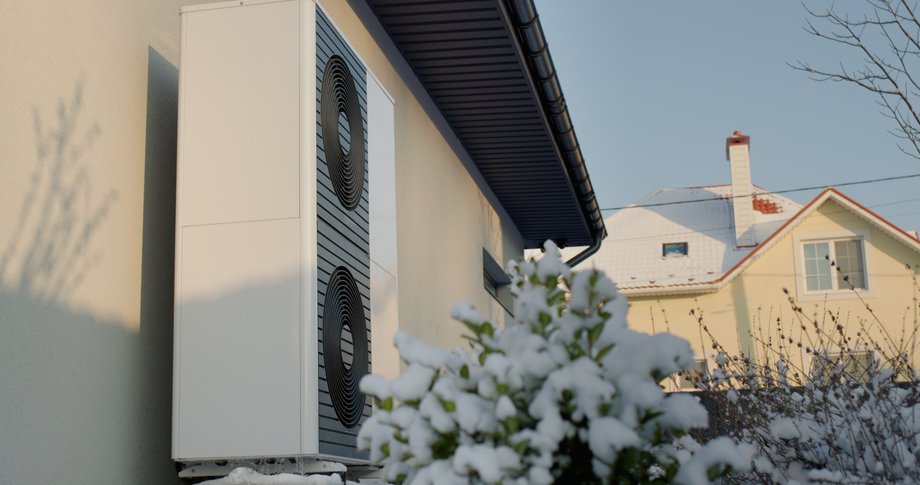
Heat pump
|
StockMediaSeller / Shutterstock
Abuse of 100% funding levels in the previous edition of Clean Air and the lack of control over contractors led to cases of pumps being installed by incompetent people who were unable or unwilling to select an installation appropriate to a given house, its insulation or size.
— The result is later publicized cases of high bills or, for example, freezing of heat pumps when condensed condensate is not drained in air-to-water devices (which transfers heat from the outdoor air to the water in the heating installation – editor's note). At approx. 700 thousand installed heat pumps in Poland, because this is how we currently estimate their number, it is not difficult to find such stories. However, the same applies to pellet boilers, which, when financed from Clean Air, were often very cheap and of very low quality. Therefore, heat pumps should not be a unique “whipping boy”, argues Lachman.
Optimum temperatures
The efficiency of a heat pump, i.e. the ratio of consumed electrical energy to thermal energy transferred from the environment, depends on the temperature difference. As Paweł Lachman explains, the difference between the external heat source and the internal source should be as low as possible, which is why the devices must have a properly set heating curve – the relationship between both indicators. Therefore, energy carriers in installations such as radiators should not exceed the temperature of approximately 55-60 degrees Celsius.
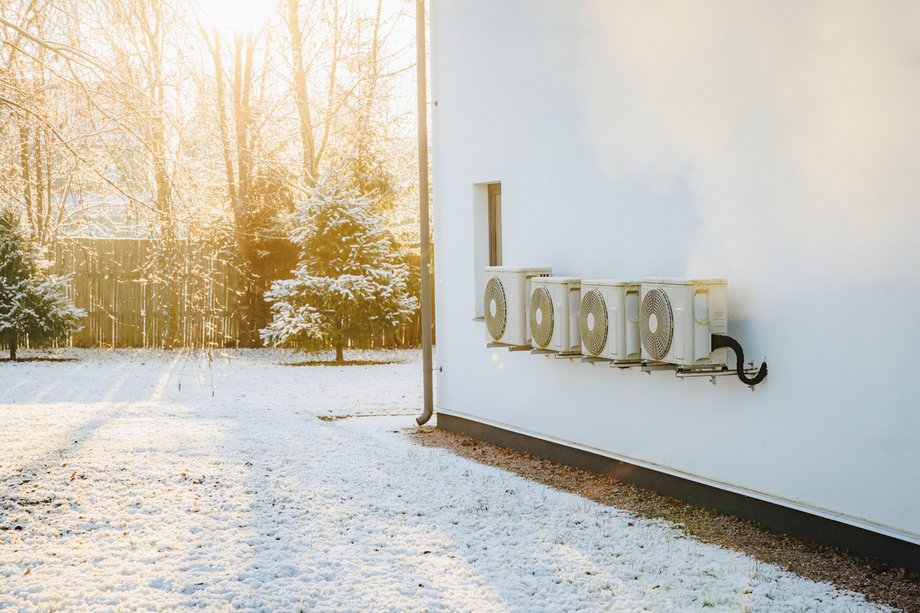
The efficiency of the heat pump decreases as the temperature difference between the external and internal heat source increases
|
nblx / Shutterstock
Does this mean that heat pumps are not a universal solution, because not all houses can be heated in this way to a level that provides the residents with the so-called thermal comfort?
– I estimate that just over 30 percent buildings in Poland are indeed not suitable for the use of air-water devices without major thermal modernization – a better solution in their case may be air-air pumps, i.e. air conditioners. If we add appropriate building insulation, which will reduce energy losses, e.g. by replacing windows, the potential increases even moreas shown by efficiency data from the European Product Register for Energy Labels EPREL – we hear from the president of PORT PC.
Lachman admits that during longer periods of lower temperatures, when the efficiency of heat pumps decreases and they are additionally “supported” by electric heaters, The devices may be less efficient than pellet or gas boilers under certain conditions.
— At an external temperature of -10 degrees Celsius and two-zone tariffs for the sale and distribution of electricity, the costs of heating with a heat pump are more or less comparable to the costs of heating with gas. At -15 degrees Celsius, gas takes the lead, but such temperatures are rare, and over the entire season, pumps turn out to be a cheaper solution – he argues.
Will dynamic tariffs and warehouses be standard?
Zone tariffs, in which pumps can benefit from lower energy prices at night, are one of the solutions that can potentially favor users of this technology and increase its profitability. As we wrote in Business Insider, ensuring access to cheaper energy with simultaneous flexibility of its consumption is the key to the electrification of heatingbut also other sectors of the economy.
Read also: Without cheap electricity, there will be no electrification. Tariffs must promote flexibility?
—With a heat pump, weekend tariffs with lower prices on G12w weekends and three-zone G13 tariffs are also profitable, says Lachman. The next step is dynamic tariffs, in which the hourly energy price directly follows a given market price – with a possible safety net in the form of a maximum price.
—I think that in new buildings with heat pumps, photovoltaic installations and electricity storage, dynamic tariffs will slowly become the standard. The appropriate combination of solutions can make such a building energy self-sufficient at a level of over 60%. per year – predicts Paweł Lachman. It also assumes a decline in the prices of technologies that will become more and more available even without subsidy support.