Trump in Davos. This is a bucket of cold water for the EU. “The American Dream is Dead”


European governments have come to a difficult conclusion: Americans are the bad guys now.
This view prevails in almost all European capitals, according to nine EU diplomats as the leaders of the 27 EU countries gather in Brussels on Thursday for an emergency summit. The interlocutors come from countries with varying degrees of historical sympathy for the United States, and they make it clear that this way of thinking is particularly pronounced in places that previously had the strongest ties with Washington.
Sense fear and skepticism remains, and the summit will take place even though Donald Trump announced on Wednesday evening that he had reached an agreement on Greenland and would ultimately not impose tariffs on European countries – underscoring that the meeting was more than just a reaction to the latest row.
The US president's plans for Greenland, which the American presented earlier in the day in Davos, Switzerland, demanding “immediate negotiations” to obtain the island, were a concern for many leaders. the straw that broke the camel's back. Throughout the first year of Trump's second term, they clung to the hope that their worst fears about the country that has been the backbone of European security since 1945 would not come true.
But the moment for niceties “is over” and “it's time to stand up to Trump,” Anders Fogh Rasmussen, former NATO secretary general and former prime minister of Denmark, told BBC Radio.
“The American Dream is Dead”
Several envoys POLITICO spoke to for this article say they feel personally betrayed because some of them studied and worked in the United States or advocated closer transatlantic ties.
“Our American dream is dead,” says an EU diplomat from a country that was one of the bloc's transatlantic advocates. — Donald Trump murdered them.
Europe's shared awareness is likely to be evident at the summit – and not just in potential decisions about preparation retaliatory measures towards the US if Trump changed course again and continued his claims against Greenland.
This will also be evident in the statements that leaders are likely to make privately and then publicly. French President Emmanuel Macron announced this in his speech in Davos, saying that Europe has “very strong tools” and “we must use them when we are not respected and when the rules of the game are not respected.”
Trump's speech in Davos did not help to soften the mood for 24 hours. before a hastily arranged meeting of leaders in the Belgian capital. The purpose of the meeting is to discuss the next response to the crumbling post-war order.
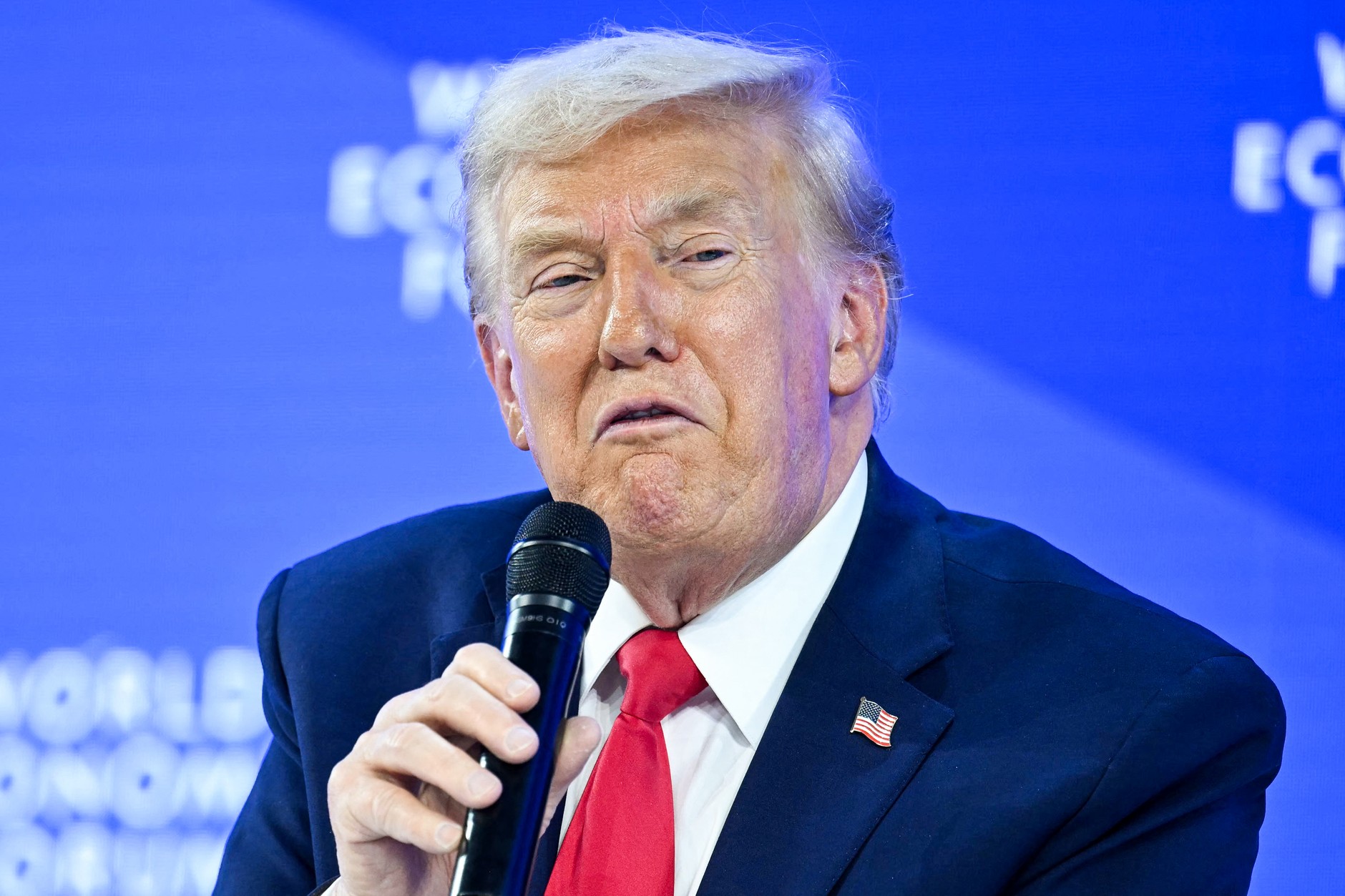
US President Donald Trump speaks in Davos, January 21, 2026.Mandel Ngan / AFP
Transatlantic split
Although Trump ruled out using military force to take over Greenland, EU governments did not consider it a concession due to the sharp tone of his statement on Europe and a clear confirmation of his intentions, say two EU diplomats.
Trump eventually backed down from his threat to impose tariffs on eight European countries that he considered an obstacle to the Greenland issue, but by that point the situation was already too advanced.
“After the last few days of back-and-forth, we should now wait and see what substantive agreements are reached between them [sekretarzem generalnym NATO] Rutte and Trump,” said German Vice-Chancellor Lars Klingbeil in an interview with the German television station ZDF. “Whatever solution is now found for Greenland, everyone must understand that we cannot sit back, relax and be content“.
When the US president threatened to introduce these tariffs on Saturday, the schism became a reality, according to one EU diplomat.
— Perhaps this move will give us a few months, or maybe it will be more permanent, says another interlocutor, referring to Trump's change in position. — Today's speech, I think [Trumpa] will give food for thought to most, if not all, capital cities, regardless of whether tariffs are introduced or not.
The collapse of world order
European Commission President Ursula von der Leyen summed up the mood during her speech in Davos on Tuesday. “The world has changed permanently,” she said. “We have to adapt to this.”
During the summit, EU leaders will discuss the state of transatlantic relations. Before Trump withdrew from the tariff increase, they were preparing to ask the Commission to prepare the most powerful trade weapon against the United States, the Anti-Coercion Instrument (ACI), POLITICO reported on Tuesday.
The EU has created its own trade bazooka in 2023 to deal with the threat from countries perceived as hostile, in particular China, which was feared to be using its markets and economies to blackmail the EU into meeting its demands. The idea that Brussels would use it against the United States was previously unthinkable.
“We are experiencing a major breakdown in the global order,” notes a senior envoy from a country perceived in the EU as a key American ally. He adds that leaders will discuss mitigating risks related to the United States – a term previously reserved for the EU's relations with Beijing. — Trust has been lost – say diplomats.
The summit will be like therapy, according to one EU representative familiar with preparations for the European Council meeting. The meeting will be an opportunity for leaders to issue a concrete response to Trump's Davos speech and subsequent announcement of the agreement.
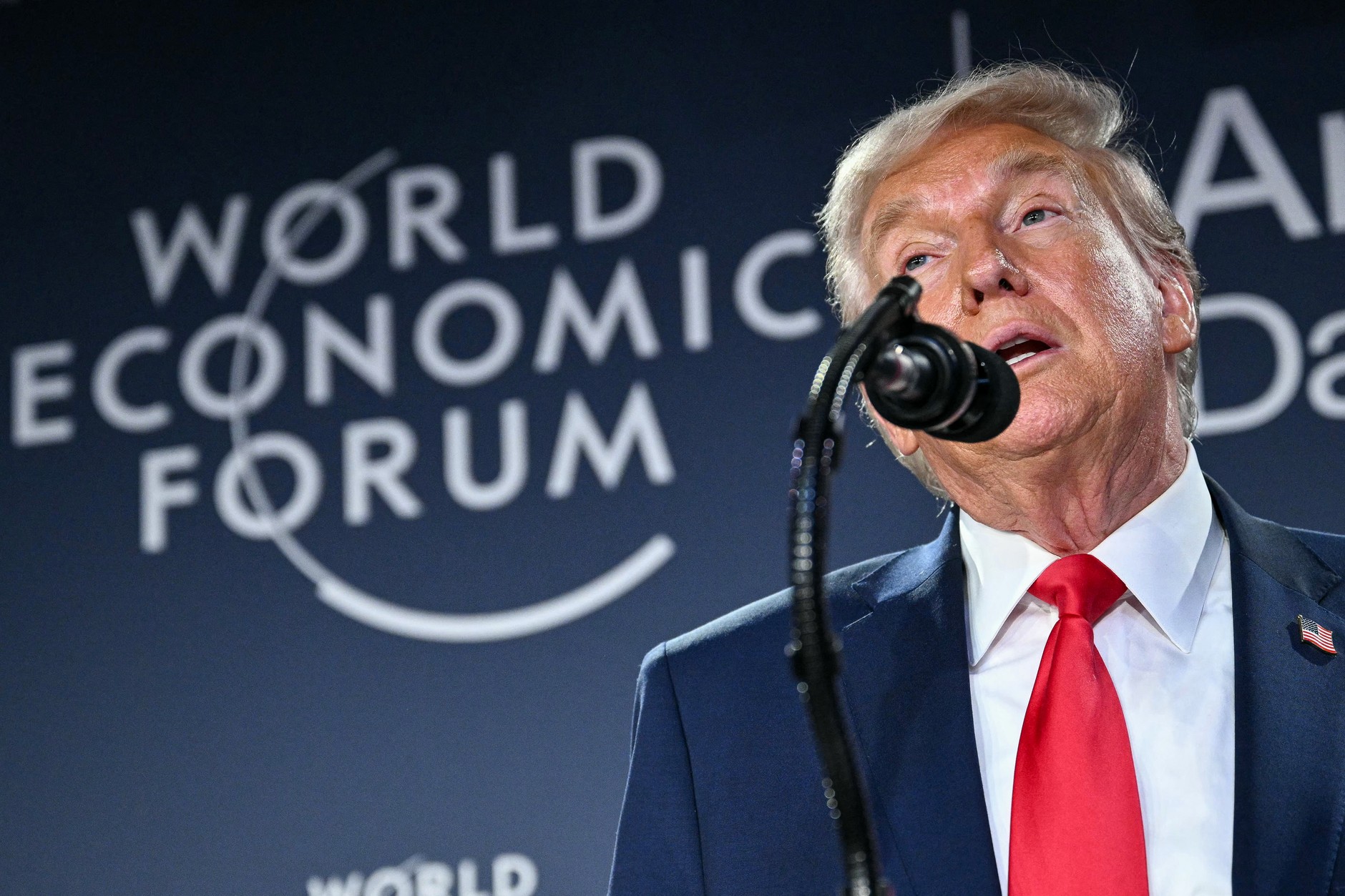
US President Donald Trump at a meeting with business leaders in Davos, January 21, 2026.Mandel Ngan / AFP
A painful blow to Denmark
The assessment that the United States is no longer a reliable ally emerged gradually. European leaders first opened their eyes when the Trump administration published its national security strategy in early December, in which it pledged to support “patriotic European parties” to the detriment of the EU. (Which may go some way to explaining why some EU leaders, such as Hungary's Viktor Orban, continue to cling to Trump).
Trump then renewed his rhetoric about taking over Greenland, the U.S. ambassador to Iceland called himself the governor of the 52nd U.S. state, and Trump sent a letter to Norwegian Prime Minister Jonas Gahr Store saying that not awarding him the Nobel Peace Prize means that he “will no longer feel the obligation to think only about peace.”
Two senior diplomats interviewed by POLITICO compare the current situation in the United States to the period before World War II. “I think we've passed the Munich turning point,” says one, referring to the 1938 meeting during which Britain, France and Italy gave in to Adolf Hitler, allowing him to annex Czechoslovakia. — We realize that appeasement is no longer the right policy.
The sudden decline in the United States' importance was particularly painful for Denmark, which Trump called “ungrateful” in Davos.
Copenhagen was shocked by his behavior as it had remained for decades one of America's friendliest allies. Denmark has sent its armed forces to some of the most dangerous combat zones, including Helmand province in Afghanistan, to support the US. The country suffered some of the greatest loss of life per capita.
“So many of us studied in the United States, we all wanted to work there,” says one of the Danish representatives. – It's just betrayal.