European troops in Greenland scared Trump. Expert: “Washington's response is ridiculously weak”

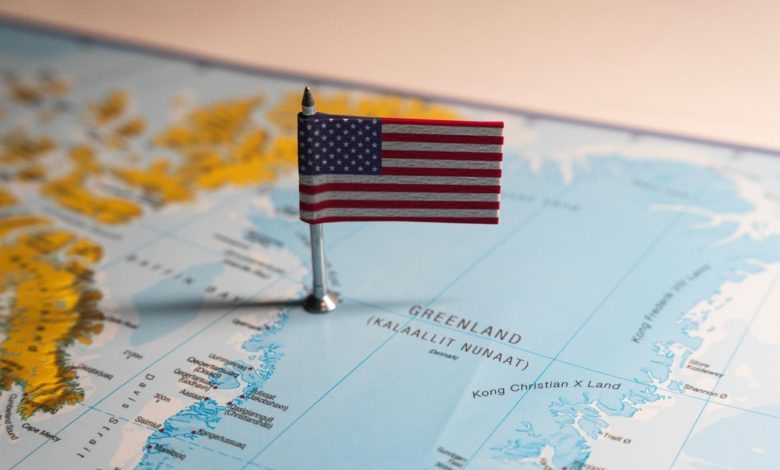
Security expert Marius Ghincea explains why the move by countries such as France, Germany, Norway, Sweden and the United Kingdom to send soldiers for reconnaissance, planning and training missions to Greenland seems to have achieved its goal, that is, deterring US military action.
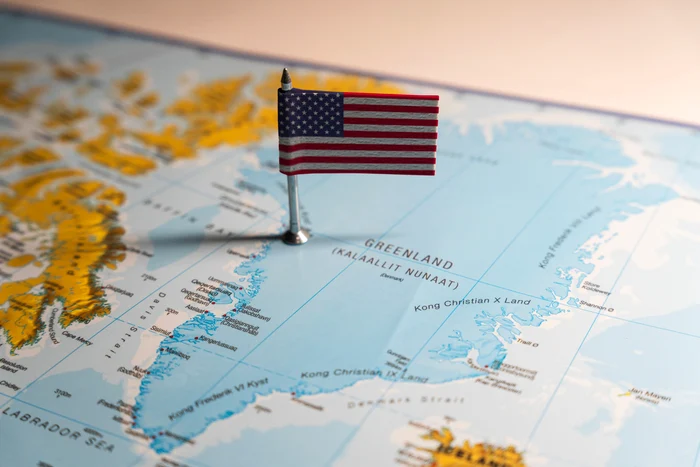
Europe does not seem willing to give up Greenland. PHOTO: Shutterstock
Security analyst Marius Ghincea explains why even a small number of European troops sent to Greenland is an important message that “seems to be working”.
“The European troops sent to Greenland have, mainly, one purpose: to deter US armed action. It is what in the specialized literature we call “tripwire deterrence” and it operates according to the same logic as we operate when we host several hundred or thousands of American, French, Dutch, etc. soldiers in Romania”explains security expert Marius Ghincea, researcher at ETH University in Zurich (Switzerland).
The logic of these symbolic presences is, says the security analyst on a social network, to signal that if these few soldiers die in the event of a military action against the host country (or territory), this will produce political and strategic repercussions that will force the countries of the dead soldiers to respond much more strongly later (deterrence by punishment).
“It is not unreasonable for anyone to believe that those hundreds of soldiers will be able to hold back tens of thousands of American troops if the US decides to invade. Their role is to deter by mere presence, knowing that if they die… there will be a far more significant political and strategic backlash“, he explained.
Ghincea also has good news: “It seems to be working. If the US policy response is limited to imposing new 10% tariffs on EU products (because we have a customs union/single market, you can't selectively impose tariffs on only some member states), then the policy response from the Washington administration is very modest, ridiculously weak. Even percentage wise it shows weakness.”
How Greenland ended up at the center of an international dispute
In January 2026, several European states began sending limited military contingents to Greenland, in a move coordinated by Denmark, amid a diplomatic crisis with the United States over the island's status and strategic control. The move came after US President Donald Trump publicly revived the idea of the US taking control of Greenland, citing security and strategic interests in the Arctic, prompting strong reactions in Copenhagen and European capitals.
The troops sent by the Europeans are numerically reduced and are more symbolic and operational than offensive in nature. France, Germany, Norway, Sweden and the United Kingdom have sent troops for reconnaissance, planning and training missions in arctic conditions alongside Danish forces already present on the island. In some cases these are teams of a few dozen people or even less, integrated into a multinational deployment intended to convey a clear political message of support for Denmark's sovereignty and for European security in the Arctic, not to create a new fighting force in the region.
The official purpose of these deployments is to strengthen the capacity of NATO and the European states to operate in an area that has become increasingly important strategically, against the backdrop of climate change, easier access to maritime routes and resources, but also the increased interest of the great powers in the Arctic. However, the gesture has an obvious political charge: it is a signal of European unity in the face of American pressure and, at the same time, a reaffirmation of the fact that Greenland remains part of the Kingdom of Denmark. Washington's reaction has been harsh, with Trump threatening tariffs against some European states involved, which has heightened transatlantic tensions and turned Greenland into a new flash point in US-European relations.
Why did Germany withdraw its troops from Greenland?
Germany has already withdrawn the troops it had sent to Greenland. The German military said the 15 soldiers displaced as part of a NATO reconnaissance mission at the invitation of Denmark had begun to return home, officially stating that the reconnaissance mission had been completed as planned, but the withdrawal announcement came even in the context of threats of tariffs and tensions with Washington.
The troop withdrawal, although officially presented as part of the end of the planned mission, has sparked speculation that the decision may have been influenced — directly or indirectly — by political pressure linked to US President Donald Trump's threats of tariffs against countries that have stood in solidarity with Denmark over Greenland.
The EU's anti-coercion bazooka is being prepared
On the European side, the reaction to Trump's remarks on tariffs was one of strong condemnation and coordination. Eight European states — Denmark, Finland, France, Germany, the Netherlands, Norway, Sweden and the United Kingdom — issued a joint statement saying the tariff threats undermine transatlantic relations and risk a dangerous spiral, reaffirming solidarity with Denmark and Greenland's right to sovereignty and territorial integrity.
At the European Union level, ambassadors have agreed to step up efforts to deter Washington from imposing tariffs and are even preparing retaliatory measures, including the possibility of tariffs worth up to around €93 billion if the US administration goes ahead with the tariff plan – the EU's so-called anti-coercion bazooka.
German Finance Minister and Vice Chancellor Lars Klingbeil said Germany would not be “blackmailed” and that coordinated countermeasures among European countries were being prepared, including even freezing the US-EU trade deal or imposing their own tariffs on American goods.
Broadly speaking, Europe is responding to Trump's threats with a united front, denouncing the tactics as unacceptable between traditional partners, reaffirming the importance of transatlantic relations, and exploring both diplomatic and economic options to counter pressure from Washington