What does the EU-Mercosur agreement actually mean for the automotive industry in Romania. APIA president's explanations

The European automotive industry is facing a major commercial paradigm shift. The much-discussed agreement between the European Union and the Mercosur countries (Brazil, Argentina, Uruguay and Paraguay) promises to open the doors to a huge market, until now protected by prohibitive tariff barriers. But what, concretely, does this treaty mean for Romania?
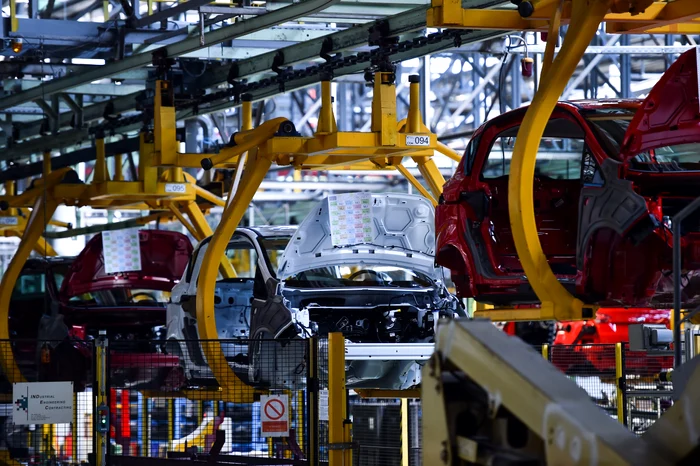
Ford Otosan. PHOTO: Shetterstock
Dan Vardie, president of the Association of Automobile Manufacturers and Importers (APIA), explained to “Adevărul” that, although Romania will not feel a direct impact immediately, the horizontal component industry – one of the most performing branches of the national economy – stands to gain.
Romania, the winner from the shadows: The domino effect in the components industry
Currently, customs duties for the export of European cars to the Mercosur area stand at around 35%, a level that has considerably slowed down the expansion of EU manufacturers in these markets. With the ratification of the agreement, these barriers will fall, and cars produced in Germany, France or Spain will become much more competitive in Latin America.
Although the final assembly plants in Romania (Dacia and Ford Otosan) have sales markets mainly in Europe and neighboring areas, Dan Vardie emphasizes that the real stake for us is integration in the supply chains.
“For Romania, the direct impact of the EU-Mercosur trade agreement will probably be limited, but the indirect effects may be relevant, considering the integration of the local auto industry in European supply chains. The consolidation of EU exports can support the activity of suppliers and companies in the Romanian auto ecosystem, without generating immediate pressure on the domestic market”explains the president of APIA.
Basically, if Western European manufacturers will sell more cars in Brazil or Argentina, they will need more parts produced in Romania.
“Romania has an auto components sector well integrated into European production chains, and any increase in auto exports from the European Union to Mercosur can generate additional opportunities for parts suppliers as well”adds Vardie, pointing out that this agreement “brings more commercial predictability and stability to supply chains”, says Dan Vardie.
When will we see an increase in exports?
However, the removal of taxes will not happen overnight, but will follow a strict timetable, designed to protect local industries from sudden shocks. Dan Vardie warns that we should not expect an explosion of numbers immediately after the signing of the treaty.
“The elimination of tariffs will be phased over several years, so the impact will not be immediate. According to the European Commission's evaluations, as well as the positions expressed by ACEA (Association of European Automobile Manufacturers), the increase in European car exports is expected especially in the medium and long term, as trade barriers are significantly reduced.”, says the president of ALIA.
In an optimistic scenario, exports could triple, provided that South American markets can absorb these volumes.
“Estimates indicate an important growth potential over time for this sector (tripling of exports), but this will depend on the demand in the Mercosur markets and the ability of domestic companies to capitalize on the new trade conditions, not on automatic effects immediately after the ratification of the agreement”says Vardie.
Is South America the “dumping ground” of European heat engines?
One of the most controversial themes related to this deal is the suspicion that Europe, in the midst of forced electrification, is looking for a “valve” to continue selling thermal technology (gasoline and diesel engines) to emerging markets where pollution rules are more relaxed. The president of APIA dismantles this theory, emphasizing that European manufacturers are not changing their decarbonisation strategy, but are adapting to local demand in a regulated framework.
“The EU-Mercosur agreement should not be seen as an instrument to “export the technologies that Europe is abandoning”, but as an official commercial framework that allows companies to respond to the demand in each market, under fair and predictable conditions, which must also take into account the climate objectives”says Dan Vardie.
Moreover, the APIA official reiterates that the direction of the industry remains unchanged, regardless of the destination of exports.
“The strategic direction of the European car industry remains one oriented towards the reduction of CO2 emissions and increasingly “cleaner” and safer technologies. Decisions regarding their mix in various markets will depend on the commercial strategy of the manufacturers and local regulations, not on the commercial agreement itself.”, explained Dan Vardie.