As the Americanist explains, it is not only about shortening trade routes, but above all about… “US geostrategic security in the face of China's growing ambitions”.
Arctic – a new playing field for superpowers
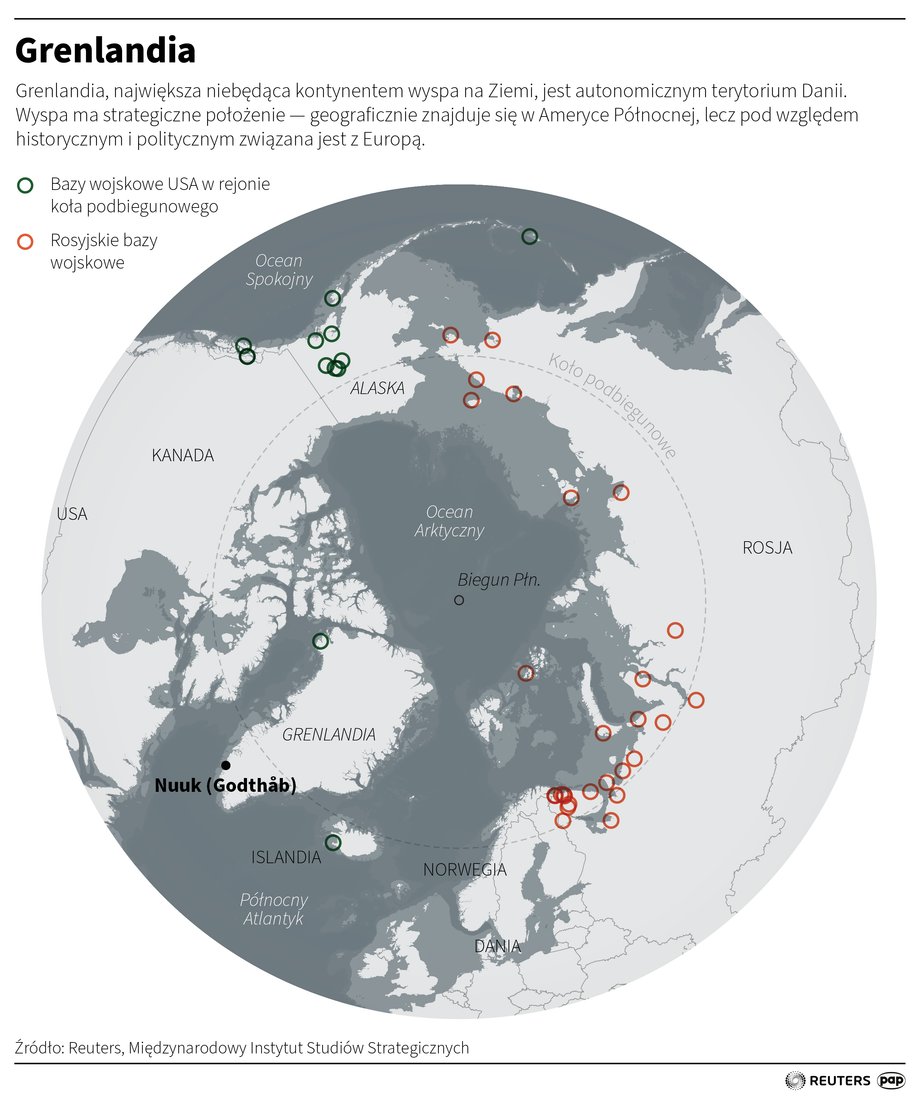
According to Kwiatkowski, China is “constantly expanding its nuclear potential” and is striving to create a network of presence also in the Arctic. He reminds that the Middle Kingdom has already sent there a “supposedly scientific submarine” that mapped the ocean floor and undersea fiber-optic cables between Europe and North America. “This was not pure science, but rather preparation of the ground for future installations“- adds the expert.
Greenland
|
Adam Ziemienowicz / PAP / photos
In this context, Greenland becomes, in his opinion, not so much a geopolitical curiosityif “the only relatively unprotected point on the northern flank of the West”. The United States, despite distributing forces in the Pacific and Atlantic, “does not have a base in this region comparable to Russia's Murmansk.”
The entire conversation is available here:
American association instead of annexation
According to Kwiatkowski, the scenario of a “tough intervention” in Greenland is unlikely. “Tieing the island to the USA” through an association model, similar to Puerto Rico or Guam, seems much more realistic.
“It could be the status of a dependent territory, with the possibility of representation without voting rights in Congress,” he says. America, says the expert, could convince the Greenlanders with investments, market access and financial support. “Today they live largely on Danish subsidies, and Denmark neither has a vision for the island's development nor has the means to secure it.“- says Kwiatkowski.
Tired of Copenhagen
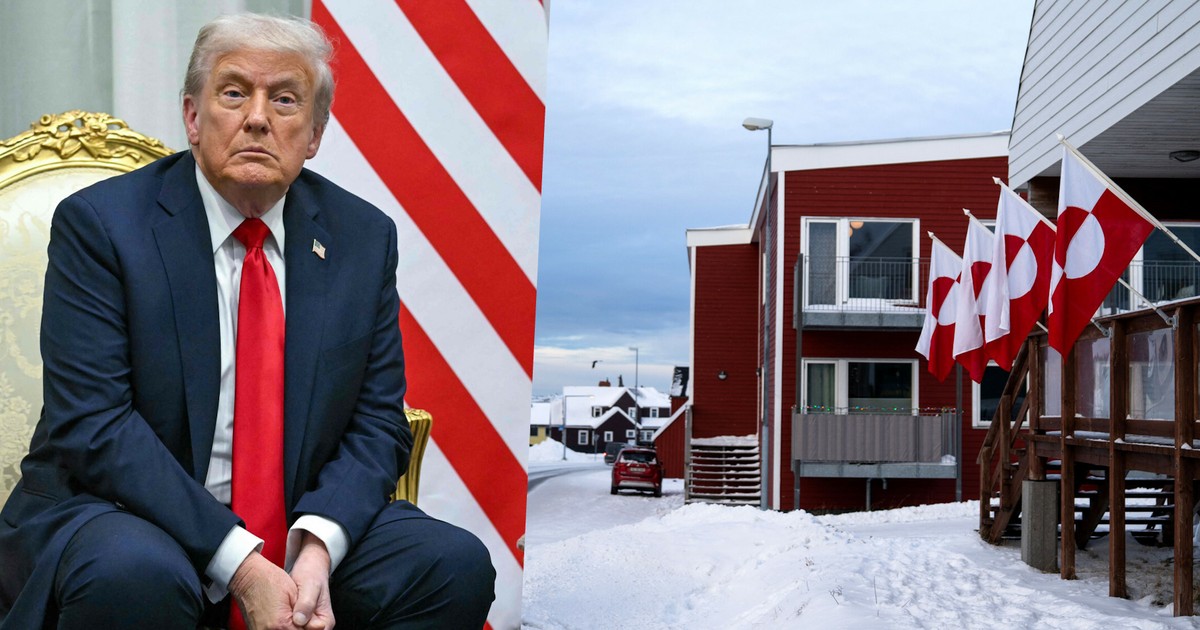
Although Greenland formally remains part of the Kingdom of Denmark, the relations between Copenhagen and Nuuk are – as the Americanist claims – “full of historical past and mutual distance”. Greenlanders, in his opinion, “well remember the times when Denmark remembered them only after Donald Trump's declarations of willingness to buy the island.”
Kwiatkowski also points to Denmark's military limitations: “Even as a NATO member, Copenhagen is unable to guarantee the defense of Greenland. The US would do it with full determination – especially if it considered it part of its security system.”
A game for resources and influence
The second layer of American interest remains natural resources. Greenland contains significant deposits of rare earth metals – key raw materials in the high-tech and arms industries. Their global market has been controlled by China for years.
“The Americans are striving to diversify supplies and regain their raw material advantage,” explains Kwiatkowski. — “They are looking for places where mining and processing can be carried out without the stringent environmental restrictions that block investments in the USA or Europe.”
According to the expert, the Arctic may become for Washington what Latin America was in the 20th century – a zone of exploitation, but also of projection of influence in the face of Chinese economic expansion.
Between big politics and local concerns
A potential “association” with the US would therefore be not only a political gesture, but a security strategy – both for Greenland and the United States. The question whether the island's inhabitants consider American guarantees more credible than Danish dependence remains open.
“It is no longer a matter of national pride or symbolism,” concludes Dr. Kwiatkowski. “The Arctic is becoming the epicenter of superpower competition. And Greenland? It may soon turn out to be its most valuable asset,” he said.
Onet Morning. Financially
“Onet Rano. Finansowo” is a weekly program in which Business Insider journalists talk to invited experts from the world of business and politics about current events and issues related to the Polish economy, public finances and the impact of politics on the wallets of every Pole.
The program can be watched every Wednesday at 10 on the main page of the Onet portal, and from 11 as a podcast on Onet Audio.