The far-right Alternative for Germany has long sought to do so closer relations with the Donald Trump administrationtrying to find powerful allies abroad and break political isolation at home.
However, as German public opinion grows against Trump and his foreign policy – especially in the context of his statements about taking control of Greenland and actions against Nicolas Maduro – AfD leaders began to change their tonegradually distancing themselves from the American president whom they had previously openly supported.
— He broke a fundamental election promise, namely that will not interfere in the affairs of other countriesand he must explain this to his voters, Alice Weidel, co-chair of the AfD, said earlier this week.
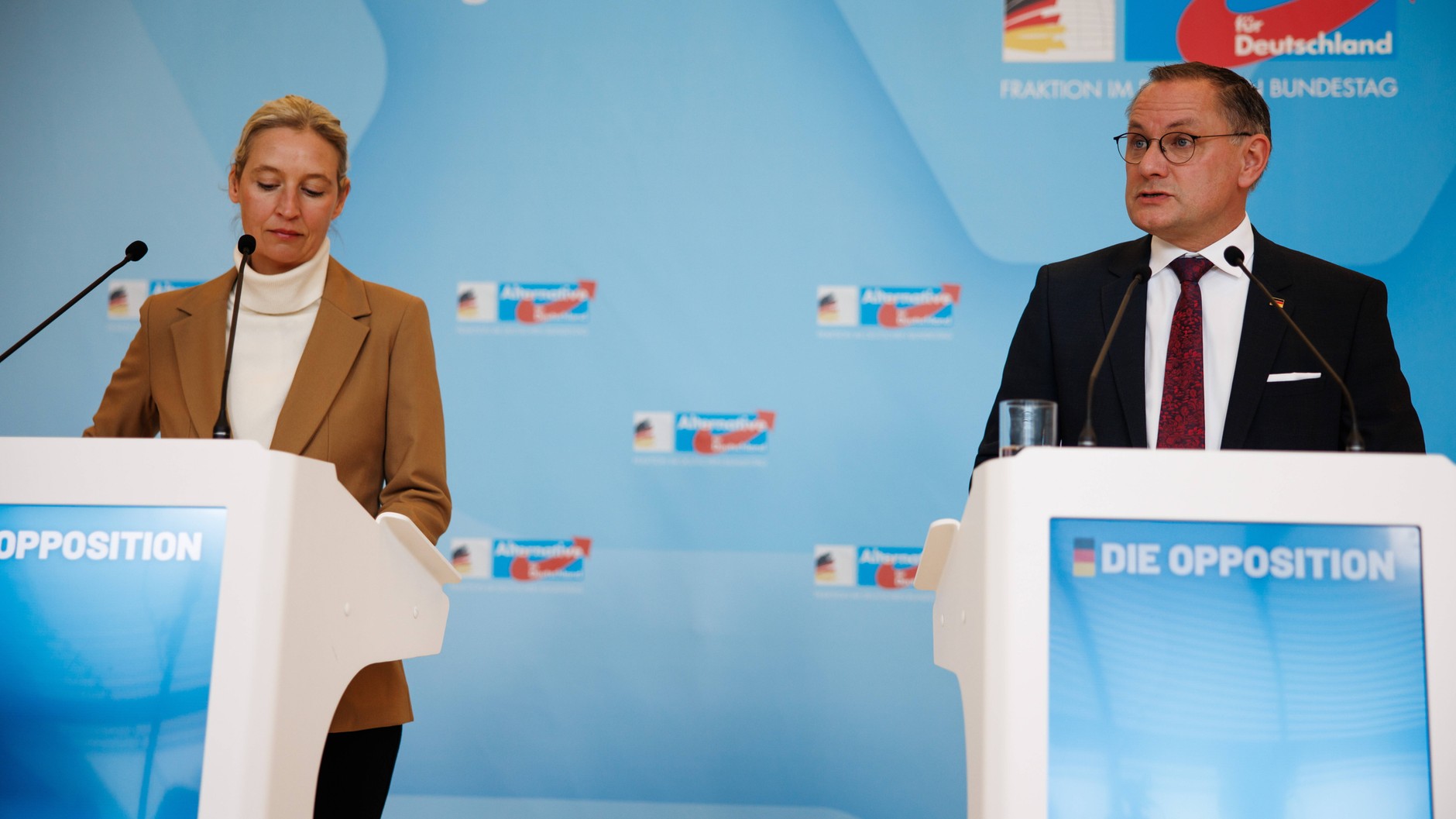
Alice Weidel and Tino Chrupalla, AfD leaders. Berlin, November 4, 2025EPA/CLEMENS BILAN / PAP
Next to Weidel stood Tino Chrupalla, the other party leader who partially defended Trump. He claimed that, in his opinion, it pursues American interests within the “sphere of influence” of the United States. At the same time, he criticized Trump's approach. — Wild West methods should be rejected here, and the end does not always justify the means.
The German far right was supported by Musk and Vance
In distancing themselves from Trump, AfD leaders are following the lead of the French far-right National Rally. Its leaders, due to the enormous unpopularity of the American president, are much more critical of Trump and they see his attempts to get close to European nationalists as a liability.
Responding to Trump's actions towards Greenland and Venezuela, the president of the National Rally Jordan Bardella recently accused the American leader of “imperialistic ambitions”.
Criticism from the AfD this week has been quite moderate, but even such voices of disapproval are rare among this party's leaders. Since the beginning of Trump's second term, the German far-right has been supported by, among others, billionaire Elon Musk and Vice President JD Vance. The AfD saw this as the key to gaining recognition on the national stage and breaking the “firewall” that traditional parties had built to keep it out of power.
The article continues below the video
But the political risks of trying to ally with Trump are becoming increasingly apparent. Polls show that the vast majority of Germans reject both Trump's statements about Greenland and his actions in Venezuela. According to the latest ARD-DeutschlandTrend study only 12 percent Germans evaluate his policy positivelyand only 15 percent recognizes the USA as a reliable partner. This is the lowest result in history.
They criticize, but they still admire
Trump's unpopularity forces AfD leaders to perform difficult acrobatics: criticizing the president, but without undermining the party's efforts so far to strengthen relations with Trump and the Republican Party.
AfD leaders have leaned heavily on support from the Trump administration to end political isolation in Germany. This strategy has yielded some results: When the German Office for the Protection of the Constitution declared the AfD an extremist group last year, US Secretary of State Marco Rubio called it “disguised tyranny”.
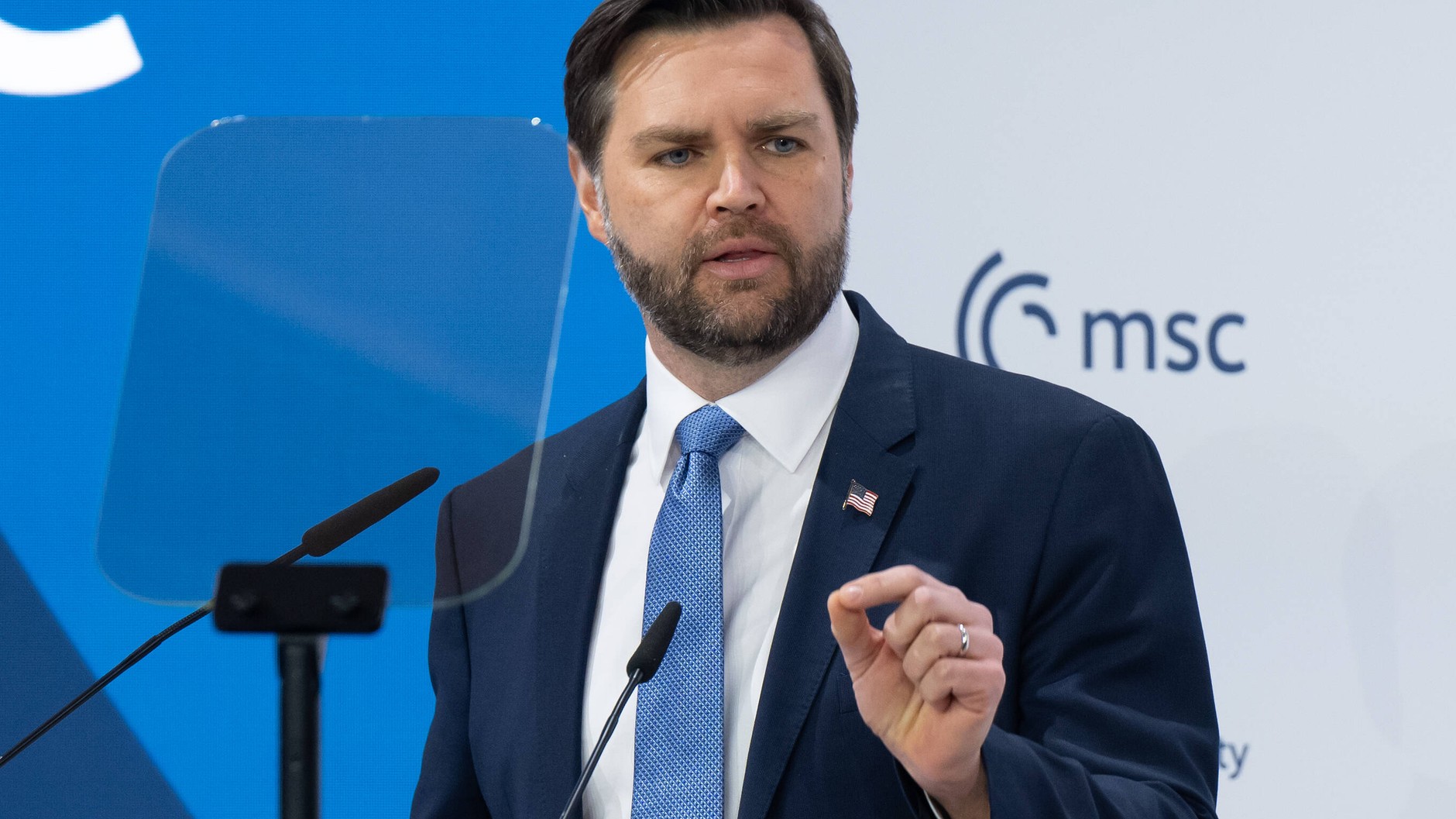
In turn, during last year's Munich Security Conference, Vice President JD Vance appealed to mainstream politicians in Europe to tear down the “walls”which have been separating far-right groups from power for decades.
J.D. Vance, U.S. Vice President, at the Munich Security Conference, February 14, 2025.SVEN HOPPE/dpa / PAP
AfD politicians were delighted with these gestures, eh explains why their current criticism of Trump is tempered with praise. In fact, Weidel and Chrupalla presented Trump's pursuit of the US national interest as a role model.
“Trump's recent actions were geostrategic,” Weidel said. — I would like to finally see how the German federal government conducts policy with citizens in mind, in the interests of Germany.
I’m Ashley Davis as an editor, I’m committed to upholding the highest standards of integrity and accuracy in every piece we publish. My work is driven by curiosity, a passion for truth, and a belief that journalism plays a crucial role in shaping public discourse. I strive to tell stories that not only inform but also inspire action and conversation.