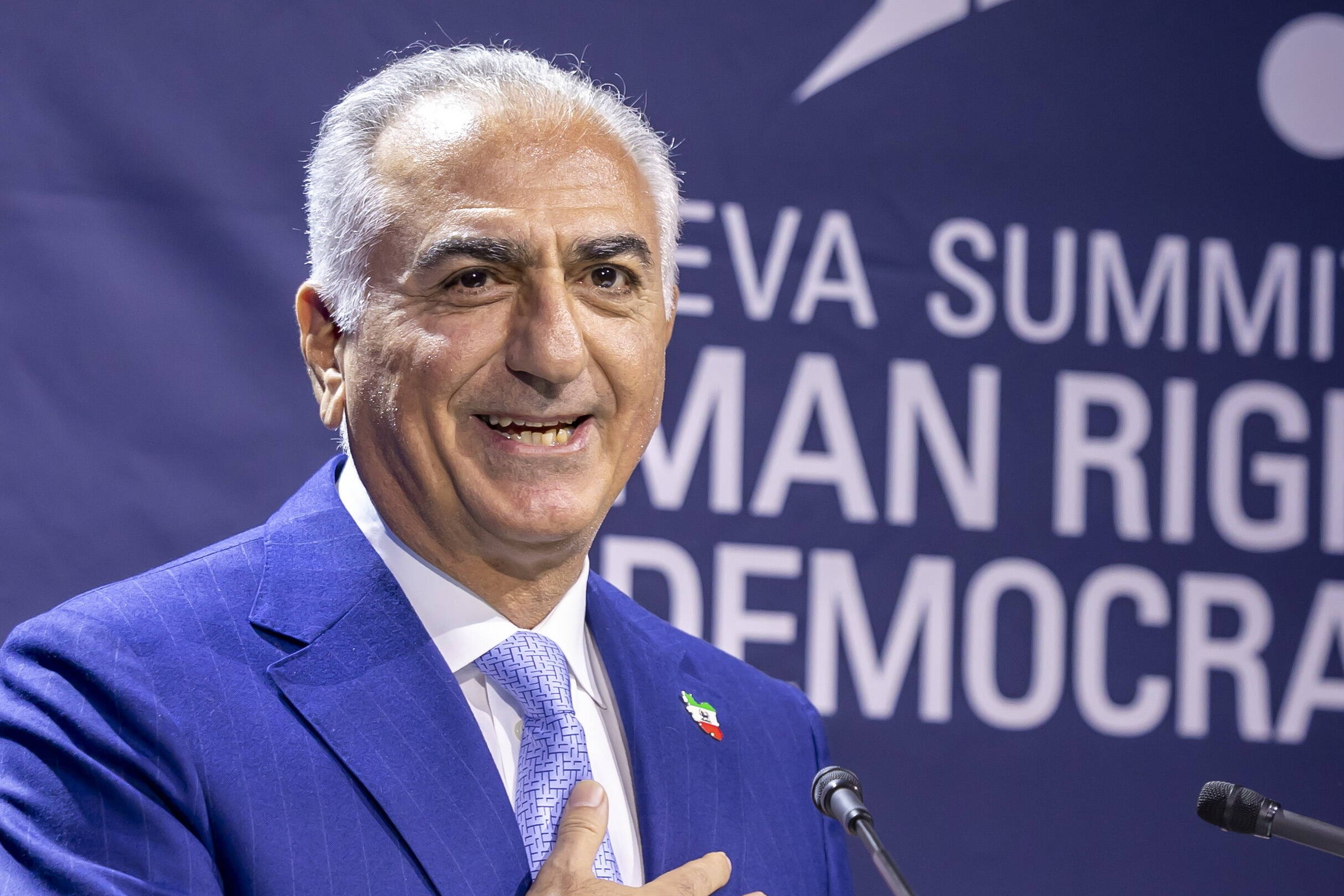
Cyrus Reza Pahlavi admitted that the regime that had been functioning for such a long time would not collapse overnight, “there must be an appropriate arrangement of planets.”
“If we take the time to analyze the situation, we will for the first time in 47 years, all necessary conditions existed” – said the Shah's son in an interview for a French daily. He drew attention to the disastrous situation of the Iranian economy and society's readiness for changes.
The article continues below the video
What are the conditions for overthrowing the regime in Iran?
What three issues are key to Iran's future according to Pahlavi?
What are Pahlavi's plans for Iran's democratic transformation?
What would Pahlavi like to change in Iranian law?
What would Iran look like after the fall of the regime? “We are prepared for this moment”
When asked about his reaction to crowds in Tehran chanting his name, Pahlavi replied that he was very moved, but on the other hand this reaction did not surprise him. “I have been faithful to the same values and share the same views for 40 years. People, and especially young people, know this best,” he noted.
“The way Iranians today see what my father and my great-grandfather did is completely different from how the public understood it during the 1979 Islamic Revolution.” – Pahlavi said and emphasized that Iranians know that he is independent and follows his own path.
Pahlavi pointed out that there are no moderates among the ayatollahs. He appealed to Western countries not to pursue a policy of appeasement with the current regime (a diplomatic strategy involving concessions to the aggressor in order to avoid war), which, in his opinion, is being done, among others, by French government.
When asked how he wants to lead Iran's democratic transition, Pahlavi assured that he and his colleagues have been preparing for the right moment for many years. He added that many experts from various fields are involved in the work on these plans, dealing with issues such as economic, social and political problems.
Three elements of possible changes
Pahlavi listed three fundamental issues for the country. “Firstly territorial integrity (…). Secondly, the defense of individual values and equality for all. Our constitution of the future, in my opinion, should be based on the Universal Declaration of Human Rights and should not contain any discriminatory element. The third assumption is secularism; “I think that all Iranians with truly democratic views must respect the principle of separation of religious and political power, remembering that being a secular person does not mean being anti-religious,” he explained.
He added that, unlike what happened in Iraq in 2003.not all officials in Iran will be fired. “We want to involve as many layers as possible so that the change of government takes place with the greatest possible stability,” he explained, commenting on the possibility of cooperation with those members of the current government who are willing to do so.
The interlocutor of “Le Figaro” recalled that his team recently launched a special encrypted platformwhere, according to Pahlavi, tens of thousands of Iranians who want change have already registered, including, among others, high-ranking military personnel.
– To sum up, it will be necessary to manage the transition period by appointing an interim government, that will allow the state to function and complete the democratic process, Pahlavi emphasized.
The Shah's son assured that he wanted to be in the new Iran universal values that protect against discrimination of any kind, including LGBTQ minorities, were respected. According to Pahlavi, they should also be enshrined in Iranian law.
Anti-government protests continue in Iran for over two weeks. They began with a strike related to the sharp decline in the value of the national currency and the difficult economic situation, but quickly acquired a political character. There were slogans against the government and the power of the ayatollahs. Within a dozen or so days, the demonstrations covered – according to the opposition website Iran International – over 200 cities. To disperse the demonstrators, the police use guns and tear gas. Independent media and non-governmental organizations estimate that between over 500 and over 12,000 people may have died in the demonstrations. people.