Law 141/2025 on the granting of holiday vouchers came with a series of changes for 2026, limiting the number of categories of beneficiaries and simplifying the conditions of use.
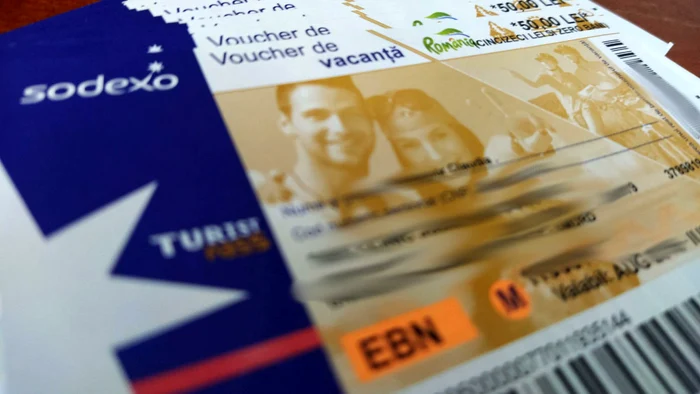
Not all budget holders can receive holiday vouchers in 2026. Archive photo
For many budget holders, the year 2026 will thus mark either the loss of access to holiday vouchers, or a more flexible use of them, depending on the income level and the new legal provisions.
Holiday vouchers are vouchers (in the form of cards) given to employees (budget workers and not only, under certain conditions) to pay for tourist services exclusively in Romania (accommodation, meals, packages) at affiliated establishments, offering tax benefits (partial tax exemptions), and are issued by specialized companies (Sodexo, Up, Edenred, etc.), representing support for domestic tourism, but with strict rules of use (validity period, method of settlement).
Budget holders will also be able to receive holiday vouchers in 2026, their value remaining at 800 lei, as established by the law on the fiscal-budgetary reform, which appeared in the summer. However, because the salary threshold from which it is granted has been reduced, this year there will be fewer beneficiaries of these vouchers.
Thus, according to the law, public institutions can grant employees holiday vouchers worth 800 lei this year as well.
However, between January 1 and December 31, 2026, vouchers can only be granted to employees with basic net monthly salaries of up to 6,000 lei. Therefore, all those who have net salaries above this value and who have benefited from vouchers until now will no longer be entitled to them this year.
The rules applicable in 2025 established that holiday vouchers are granted to employees with net basic salaries of up to 8,000 lei.
“Public institutions (…), regardless of the system of financing and subordination, including activities financed entirely from their own revenues, established alongside public institutions, annually grant holiday vouchers in the amount of 800 lei, during the period January 1, 2026-December 31, 2026, to staff whose net basic monthly salaries are up to 6,000 lei”it is specified in the above-mentioned law.
Instead, the law eliminates the previous condition from GEO 8/2009 related to the use of 800 lei vouchers for the payment of no more than 50% of the value of purchased tourist service packages, for tourist service packages worth at least 1,600 lei.
In other words, those who will receive holiday vouchers worth 800 lei this year will no longer have to, when using them, add the same value to the payment of tourist packages worth at least 1,600 lei.
The procedure for granting vacation vouchers generally involves the submission of an application or a written statement by the employee to the employer, within the set deadline (for example, 30 days from the publication of the regulation for 2025), the employer then processing the application and issuing the vouchers, usually on electronic support (card), which can only be used for tourist services at affiliated establishments, without giving any rest, and the value can be proportional for part-time employees.
Romanian tourism, which relied overwhelmingly on local tourists and was supported by holiday vouchers, is facing a steep decline, say experts in the field.
Since last year, the amount supported by the state has decreased from 1,600 lei to 800 lei, and in order to continue receiving the 800 lei (of which, in the end, 640 remain after paying taxes) the beneficiaries must commit in writing that they will come with a contribution of at least 800 lei.
The disinterest in this mechanism can already be seen in the figures from the Ministry of Finance, presented by the National Association of Tourism Agencies (ANAT).
“The situation is worrying for tourism in Romania, because the holiday vouchers represented an essential mechanism for supporting the hospitality industry. Their drastic decrease, together with the VAT increase, creates an economic shock for thousands of operators in the field, affecting employees, suppliers and local communities in a chain“, ANAT warned in the middle of last year.