Iran's execution machine. How the regime in Tehran kills prisoners on an “industrial scale”

The Iranian authorities are intensifying their brutal crackdown on the population, and arrested protesters face the death penalty for daring to stand up against the regime.
At least 1,500 executions took place by early December PHOTO Iran Human Rights
Security guards have already killed thousands of protesters in an increasingly bloody attempt to suppress any form of opposition. The images that have emerged show victims lined up in body bags, writes the Daily Mail.
The desperate clerics, led by Supreme Leader Ali Khamenei – who the UN has previously accused of using capital punishment “at an industrial level” – are now preparing to unleash a new wave of executions, having captured a huge number of activists.
Erfan Soltani, owner of a clothing store, would be the first to be sentenced to death after being arrested for participating in last week's anti-government protests.
Under Khamenei, Iran's supreme leader for more than 36 years, the country has become notorious as one of the world's most prolific executioners, second only to China. Just last month, it was reported that Iran had more than twice as many executions in 2025 as in 2024. The Norway-based group Iran Human Rights said it had verified at least 1,500 executions by early December, according to the BBC.
Macabre methods of execution
Execution methods range from firing squad to high-altitude dropping. The most common method, however, remains hanging.
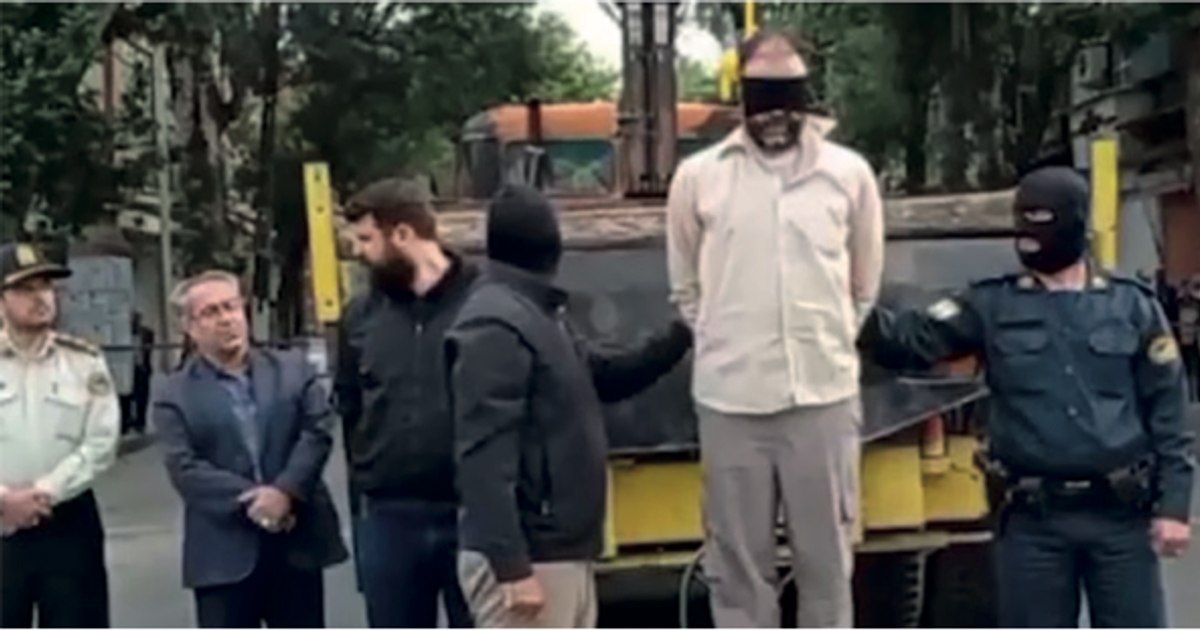
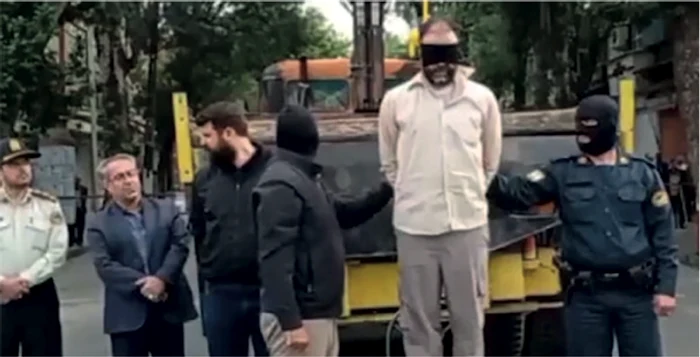
In Iran, gallows are extremely rudimentary. Convicts are lifted by the neck with the help of mobile cranes. Instead of an instant death, the prisoners are strangled, the blood vessels to the brain being blocked. Thus, death can occur after up to 20 minutes of excruciating torture, with victims writhing in pain before their last breath.
Sometimes crowds are encouraged to witness the executions, and often several hangings take place simultaneously, the scenes even being televised. When the hanging is done with the help of a chair, the relatives of the victims killed by the convict have the right to hit the chair, pulling it from under its feet.
According to the Iranian Penal Code, hanging can be combined with other punishments, such as flogging, amputation or crucifixion.
Stoning – one of the most barbaric and medieval practices – has been used to kill more than 150 people since 1980 to date.
Although there were several announcements in the 2000s and 2010s that Iran had abolished the practice, numerous reports from opposition groups and independent media claim that stonings continue and that several inmates are still on death row, sentenced to stoning.
The practice involves burying the convict in sand – up to the waist in the case of men and up to the chest in the case of women – after which the crowd surrounds him and throws stones at him.
The stones are usually not large enough to kill in one hit, meaning the victim can be tortured for hours before dying.
Treatment applied to women
The treatment of women in Iran has deteriorated dramatically in recent years, and the number of women executed has increased alarmingly.
According to dissidents, the catalyst was the growing sense of insecurity of the regime, after the massive waves of protests in recent years – the most important being the riots triggered by the death of Mahsa Amini in 2022, after the young woman died illegally, being accused of wearing the hijab “inappropriate”.
Since then, the number of women executed annually in Iran has doubled.
In 2022, 15 women were executed. In the first nine months of 2025, 38 were killed, according to the National Council of Resistance of Iran (NCRI). Between July 30 and September 30, the regime executed 14 women – that's one every four days.
NCRI, an organization in exile in France and Albania, says that women are executed in Iran mainly for two reasons.
The first is drug trafficking. In a dysfunctional economic system and often coerced by their own husbands, poor women, unable to make a living otherwise, are used to transport drugs within the country. Mafia-type networks, said to have ties to the Islamic Revolutionary Guard Corps, Iran's military, use these women for trafficking. When they are caught – inevitably – they receive death sentences.
The second reason is the premeditated killing of the husband. Under Iranian law, women are subject to the will of their husbands and cannot divorce. As a result, NCRI claims, they end up defending themselves in frequent situations of domestic violence.