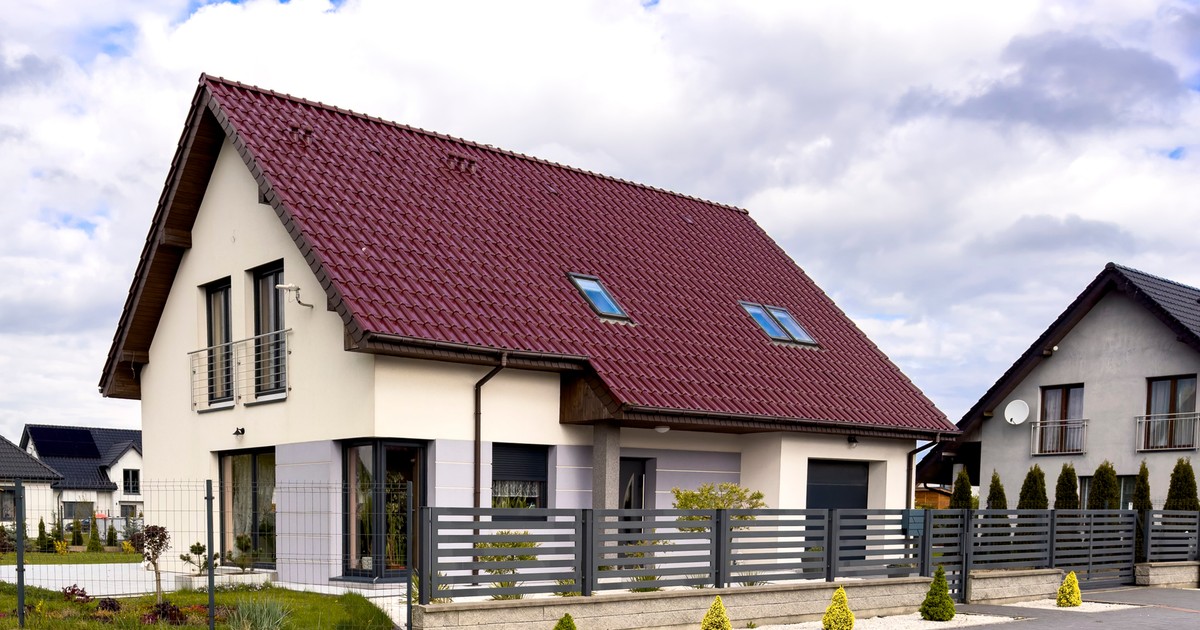
The case was publicized by, among others, the Kobierzyce commune near Wrocław, one of the richest in the country, where – as reported by mayor Piotr Kopeć – single-family buildings are increasingly being used as illegal workers' accommodation.
The rest of the article is below the video:
Read also: Housing was supposed to be a right, not a privilege. We are still waiting for the revolution
Fire and sanitary hazard
From a dozen to several dozen people live in such houses. According to the local government, makeshift accommodation poses a real fire and sanitary threat, generates noise, police interventions and social conflicts, and as a result, reduces the value of nearby properties. Moreover, when a house is sold, it often falls into the hands of the next owner, who repurposes it for collective housing.
According to “Rzeczpospolita”, municipalities indicate that they have practically no tools to fight this practiceand other state bodies have very limited possibilities of action. The phenomenon is intensifying due to gaps in regulations and problems with enforcing applicable law.
Local governments want systemic actions
These difficulties are confirmed by the General Office of Construction Supervision. In its position submitted to “Rzeczpospolita”, the office emphasizes that an illegal change in the use of a building is extremely difficult to detect. Construction supervision can only react after obtaining information about possible irregularities, and each case must be analyzed individually. The mere fact that there are people other than the owner in the residential house does not constitute a violation of the regulations.
Local governments are therefore demanding systemic solutions. On behalf of the Joint Commission of the Government and Territorial Self-Government, the President of Wodzisław Śląski, Mieczysław Kieca, asked the Minister of Finance about the planned legislative activities. In response, the Ministry of Energy and Technology reminds that already today Art. 71 and 71a of the Construction Law regulate the procedure for changing the use of a building, but at the same time it admits that the enforcement of these regulations is difficult.
Higher penalties may not be enough
One of the main barriers is the underinvestment of district construction supervision inspectorates and staff shortages. Additionally, even when an inspection is carried out, the owner of the property is often not found, and he is the one who bears criminal liability. Taking the case to court significantly lengthens the entire process.
The ministry is considering several possible solutions, including increasing the maximum fine (currently to PLN 5,000), the possibility of imposing it multiple times and changing the definition of a collective residence building.
However, as “Rzeczpospolita” notes, the increase in fines alone may turn out to be insufficient, especially when the border between a single-family house and a collective accommodation facility is ambiguous. The Ministry also points to the jurisprudence of administrative courts, according to which short-term rental itself does not always mean a change in the method of use – rather, it is determined by the elements of professionalization and organization of the activity.
More effective enforcement of decisions
Experts emphasize the need to clarify regulations and strengthen supervision. Legal advisor Joanna Sebzda-Załuska points out that current regulations make it possible to respond to illegal changes, although the lack of precise definitions complicates evidentiary proceedings. In turn, Piotr Jarzyński from the National Chamber of Commerce points to the need for more effective enforcement of decisions to restore the original function of the building and the security threats posed by illegal accommodation.
According to Grzegorz Kubalski from the Association of Polish Counties, strengthening supervision alone will not solve the problem. The procedures are lengthy and owners can bypass administrative decisions. INPossible changes include: sanctions against people living in such facilities, higher municipal fees in cases of excessive utility consumption, and determining the minimum living space per person.