A piece of equipment that proved essential in the war in Ukraine is being used by the Iranians to circumvent the regime's isolation

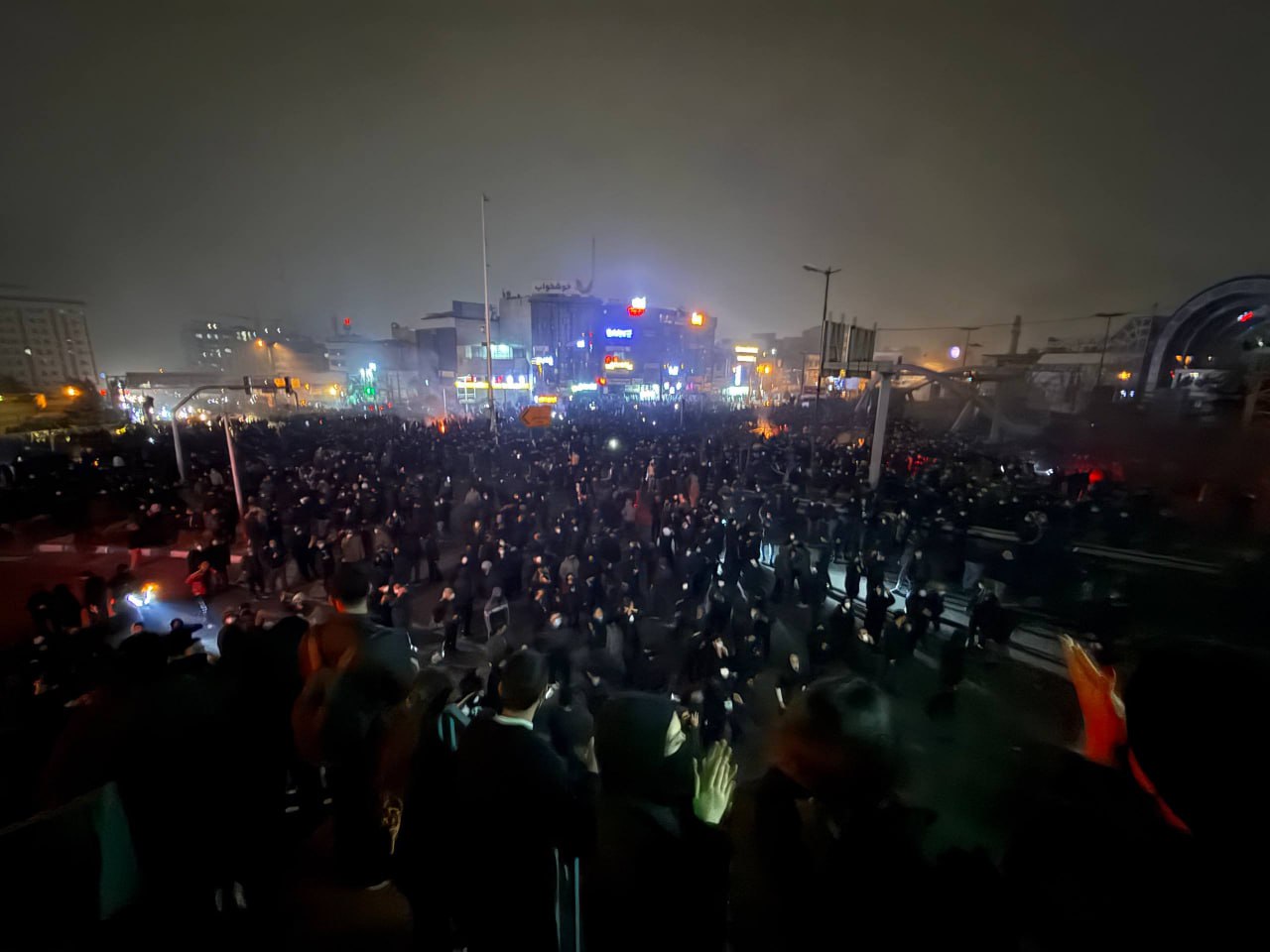
Iranian protesters demonstrate in Tehran, on January 10, 2026. PHOTO: Social Media / Zuma Press / Profimedia
Some Iranians continue to use Elon Musk's Starlink satellite internet service despite a nationwide communications blackout, three people inside the country said, in the latest example of Starlink being used to counter internet blackouts in geopolitical conflict zones.
Iranian authorities have launched a bloody crackdown on national protests in recent days, with measures including the near-total disruption of internet service, which is delivered through fiber optic cables and mobile phone towers.
But Starlink, which transmits the service directly from thousands of low-orbit satellites, is still operating in some places in Iran despite being banned by authorities there, three people who use Starlink in the country told Reuters. One of those people, from western Iran, said he knew dozens of people using Starlink and that users in border towns and cities were largely unaffected by the authorities' decision.
Alp Toker, founder of the Internet monitoring group NetBlocks, said he had heard from people in the region that there was still access to Starlink in Iran, although the service appeared to be down.
“It's discontinuous, but it's still there,” he said.
While it is not clear how Starlink service was partially disrupted in Iran, some experts said it could be the result of interference from Starlink terminals, which exceeds the ability of Internet and mobile phone terminals to receive signals from satellites.
Starlink, which is part of privately held US company SpaceX, did not respond to Reuters requests for comment. Iranian authorities could not be reached on Monday due to telephone and internet outages. Iranian authorities blamed “terrorists” for the social unrest and vowed to protect the system of government.
Essential tool in global conflicts
The vital line of communication that Starlink is thus providing to protesters in Iran is the latest sign of the influence that businessman Elon Musk and his satellite internet service have in global conflicts and unrest around the world.
Starlink was a critical tool for Ukrainian forces after Russia's full-scale invasion in 2022. In Myanmar, where the military junta has imposed repeated internet blackouts, rebel groups, humanitarian organizations and doctors have used Starlink for communications. In Sudan, Starlink has been used by both sides in a years-long civil war due to prolonged internet outages.
On Sunday, US President Donald Trump said he planned to talk to Musk about restoring internet in Iran, without mentioning Starlink.
Musk previously delivered free Starlink terminals, which are slightly larger than a laptop, to Ukraine and offered free internet service there. Standard Starlink terminals cost around $599 plus a monthly service fee, making them unaffordable for many Iranians.
Musk's ability to tip the scales in global conflicts was demonstrated when he shut down Starlink while Ukrainian forces managed to recapture some of the territory occupied by the Russian military in 2022, Reuters previously reported.
Starlink is not licensed to operate in Iran, but Musk has previously said the service is active there. In December 2022, he wrote on his social media platform X that the company was “approaching 100 active Starlink (devices) in Iran”, a modest figure considering Iran's population of 92 million.
Last June, in response to a post on X asking him to provide access to Starlink in Iran, Musk posted that “beams are on.”
After the 12-day war between Iran and Israel in June, Iran's parliament passed a law formally banning the use of Starlink, introducing severe penalties for those who use or distribute the technology without a license, according to Iranian state media.