Prince Reza Pahlavi, the son of the last Shah of Iran, announces that he is returning home and instigates the paralysis of the regime in Tehran. Fears of a 'massacre'


Iran's street protests entered their 13th day on Friday. Thousands of people continued to take to the streets despite the threats. Iranian Prince Reza Pahlavi, the exiled son of Iran's deposed monarch, has called on protesters to continue street demonstrations for two more nights and occupy city centers, while urging energy and transport sector workers to begin nationwide strikes, Iran International reports.
In a message to protesters, Pahlavi praised what he described as their “courage and resistance” after millions responded to his call for protests on Thursday and Friday, saying their mass participation was a decisive response to threats by the Islamic Republic's leadership.
He said the scale of the demonstrations had shaken the ruling establishment and exposed the fragility of its security apparatus.
Pahlavi said the next phase of the movement must focus on both sustained street presence and economic pressure, arguing that cutting off the Islamic Republic's financial sources would cripple its ability to continue repression.
He made a special appeal to workers in transport, oil and gas and the energy sector in general to start a nationwide strike.
Urge for the continuation of the protests
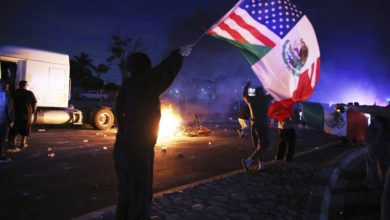
The exiled prince urged protesters to take to the streets again on Saturday and Sunday evenings, starting at 6 p.m., calling on them to carry national flags, symbols and images and to reclaim public spaces.
He stressed that the goal went beyond token demonstrations, saying protesters should prepare to occupy and retain control of central areas of major cities.
To achieve this goal, Pahlavi encouraged the demonstrators to head to the city centers along several routes, unite the separate crowds and prepare for extended stays in the streets by securing supplies in advance.
He also said he was preparing to return to Iran, pledging to stand with the Iranian people in what he described as the victory of a “national revolution”, adding that he believed such a moment was fast approaching.
The crown prince of Iran, a major figure in the country's protests
Pahlavi has been in exile for nearly five decades. His father, the Shah of Iran, was so hated that millions took to the streets in 1979, forcing him to step down.
However, Iran's crown prince, Reza Pahlavi, is trying to position himself as an important player in his country's future, AP comments.
He successfully incited protesters to take to the streets on Thursday night, in a massive escalation of protests that have swept Iran. Initially sparked by the Islamic Republic's weak economy, the demonstrations have become a serious challenge to its theocracy, battered by years of nationwide protests and a 12-day war in June launched by Israel in which the US bombed uranium enrichment facilities.
What is not known is how much real support Pahlavi, 65, who is in exile in the US, has in his native country.
Protests in Iran despite internet shutdown
Iranians demonstrated on Friday evening in several cities, including Tehran, in the thirteenth day of the most important protest movement against power in the last three years, which led the authorities of the Islamic Republic to impose a national blackout of the Internet, reports AFP.
Despite the crackdown, residents marched through several streets in the capital, according to a video verified by AFP and images posted on social media, despite the communications blackout.
Some were banging pots and chanting slogans hostile to the regime, including “death to Khamenei”, referring to Iran's supreme leader.
In the Sadatabad neighborhood of northwest Tehran, they were backed by a concert of drivers' horns, according to the authenticated video.
Other images posted on social media showed similar demonstrations in other parts of Tehran. And foreign-based Persian-language television stations broadcast videos of scores of protesters in Mashhad in the east, Tabriz in the north, and the holy city of Qom.
“It seems to me that the people are taking control of certain cities, which no one would have thought possible a few weeks ago,” US President Donald Trump said, estimating that Iran has “big problems.”
The day before, he had again threatened to “hit Iran very hard” if the authorities responded by killing protesters.
Nobel Peace Prize winner fears 'massacre'
The 2003 Nobel Peace Prize winner, exiled Iranian lawyer Shirin Ebadi, said she feared a “massacre under the guise of a total internet blackout” as connectivity is reduced to 1% of normal levels, according to cybersecurity monitoring NGO Netblocks.
The internet outage “is not a technical problem in Iran, but a tactic,” Shirin Ebadi said, saying she was informed that hundreds of people had been taken to a hospital in Tehran on Thursday with “severe eye injuries” caused by crossfire.
At least 51 protesters, including nine children, have been killed and hundreds injured across Iran since the protests began on December 28, the Norway-based NGO Iran Human Rights counted on Friday.
On Friday, Iranian television showed the damage, citing Tehran's mayor as saying more than 42 buses, public vehicles and ambulances had been set on fire, as well as 10 official buildings.
Ayatollah Ali Khamenei's warning
A district prosecutor in the eastern Iranian city of Esfarayen, as well as several members of the security forces, were killed late Thursday during protests, according to judicial authorities.
Iran's Supreme Leader Ayatollah Ali Khamenei warned on Friday that his country “will not back down” from protests challenging the Islamic Republic, which has been in place since 1979.
Faced with supporters chanting “death to America”, Ali Khamenei took an offensive tone in a speech broadcast on state television.
The Revolutionary Guards, Iran's ideological army, deemed the situation “unacceptable”, vowing to protect the Islamic Revolution. And the judiciary warned on Friday that the punishment for the “revolutionaries” would be “maximum”.
Iranian Foreign Minister Abbas Araghchi accused the United States and Israel of meddling in the protest movement, while dismissing the possibility of foreign military intervention.
The US State Department described these accusations as “a delusional attempt to distract”.
The most important events of the last three years
The demonstrations are the biggest in Iran since the 2022 death of Mahsa Amini, who was arrested for violating the strict dress code for women.
They come at a time when the country is weakened by the war with Israel and strikes against several regional allies, while the UN in September reinstated sanctions over Iran's nuclear program.
Sledgehammers, water cannons, tear gas and beatings: In a joint statement, Amnesty International and Human Rights Watch (HRW) denounced the methods used “to disperse, intimidate and punish largely peaceful demonstrators”.
In a joint statement, the European Union, Canada and Australia hailed “the courage of the Iranian people in defending their dignity and their fundamental right to demonstrate peacefully.”