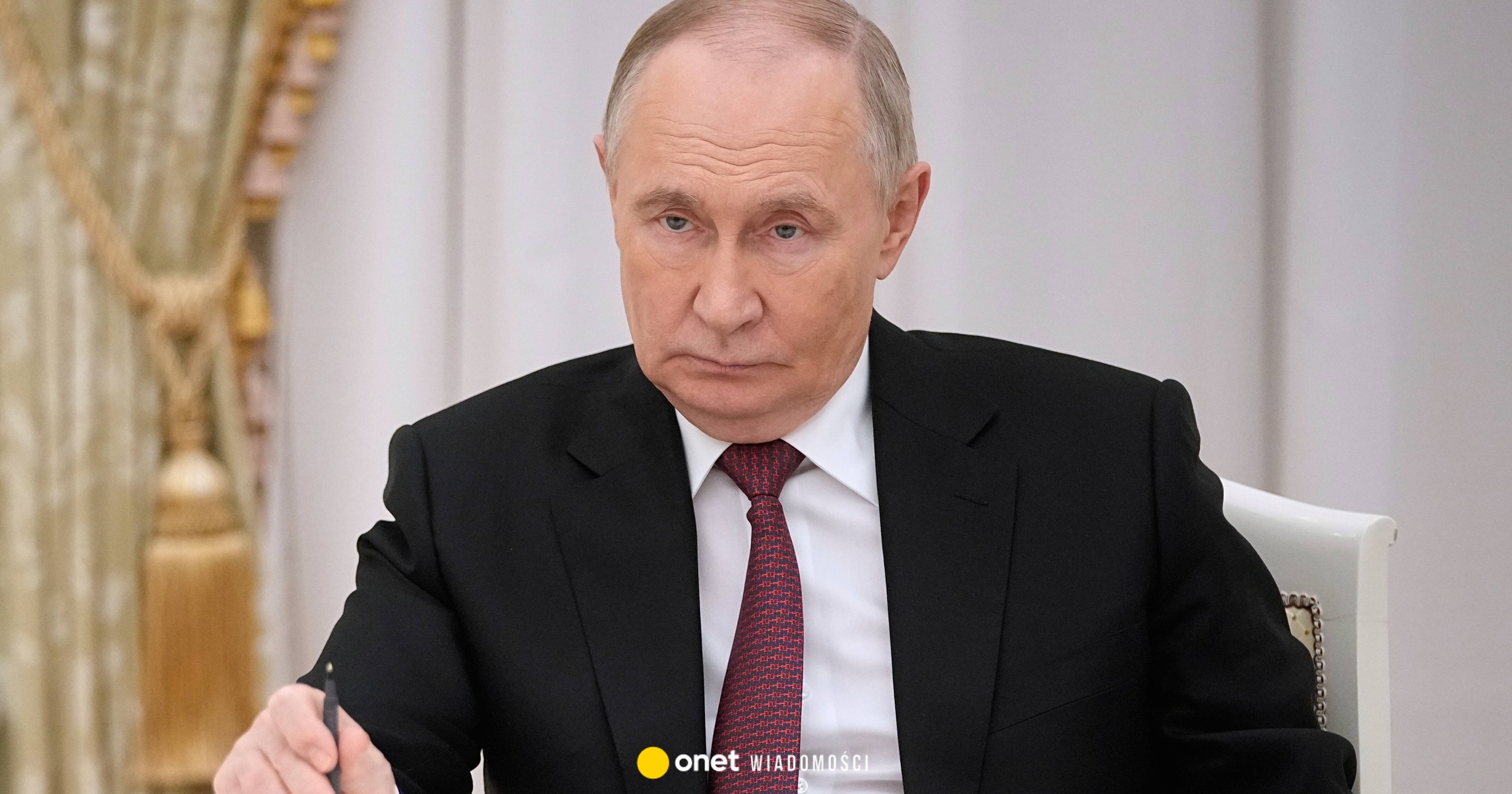
Russia is out of the game. Putin has been driven out of his own backyard [OPINIA]

Russian propaganda may present the operation of capturing Nicolas Maduro by the US as a kind of unofficial agreement – we leave Venezuela to you, you “give” Ukraine to us. However, the takeover of a Russian tanker by American troops in the North Atlantic cannot be presented in any other way than humiliating Russia.
It was funny to watch how in this situation the Kremlin tried to appeal to what it is trying to destroy itself – international law. In the case of the tanker incident, Russia found itself in a position that I seem to be familiar with – which is that the strong can do anything and the weak must obey the law. In this case, Russian speakers must limit themselves even in what they say – because “good people” may show Trump their posts critical of him. And the Kremlin cannot afford to quarrel with him.
A similar thing has already happened with Dmitry Medvedev's statements. The US president has shown more than once how he reacts to such seemingly empty words. Russia's inability to demonstrate force in the case of the tanker is compounded by its leaders' reluctance to make harsh statements or threats, which they have so far been willing to use in difficult or unexpected situations.
This is an important change in geopolitics and Russia's position in it. How did she end up in this situation?
It started with Russia's closest “backyard” – the post-Soviet area, which it has always considered, and still considers, to be its undisputed geopolitical property.
The year 2025 showed that Russia's alliances in this area either remain on paper – like the Collective Security Treaty Organization (CSTO) – or require regular and generous payments from the Kremlin for demonstrating loyalty and legitimizing military-political leadership. This can be seen in contacts with the leaders of the Commonwealth of Independent States, although not all countries.
A prolonged full-scale war with Ukraine, no matter what the Kremlin calls it, will not cease to be a war. There is no specific end date. During a recent speech, Putin gleefully announced that he intends to fight through 2026 – he believes that the Russian army is so well positioned to attack Slovyansk-Kramatorsk. Kyiv's receipt of EU funding for the next two years also confirms everyone's belief that Ukraine has a solid base and its defense forces will continue to resist.
Continuation of the Russian-Ukrainian war until 2026, at the current scale, will further limit Russia's ability to display strength externally — will weaken its influence even on countries traditionally considered by Moscow as vassals. This process has been ongoing since 2022, but at the end of 2024 it accelerated significantly.
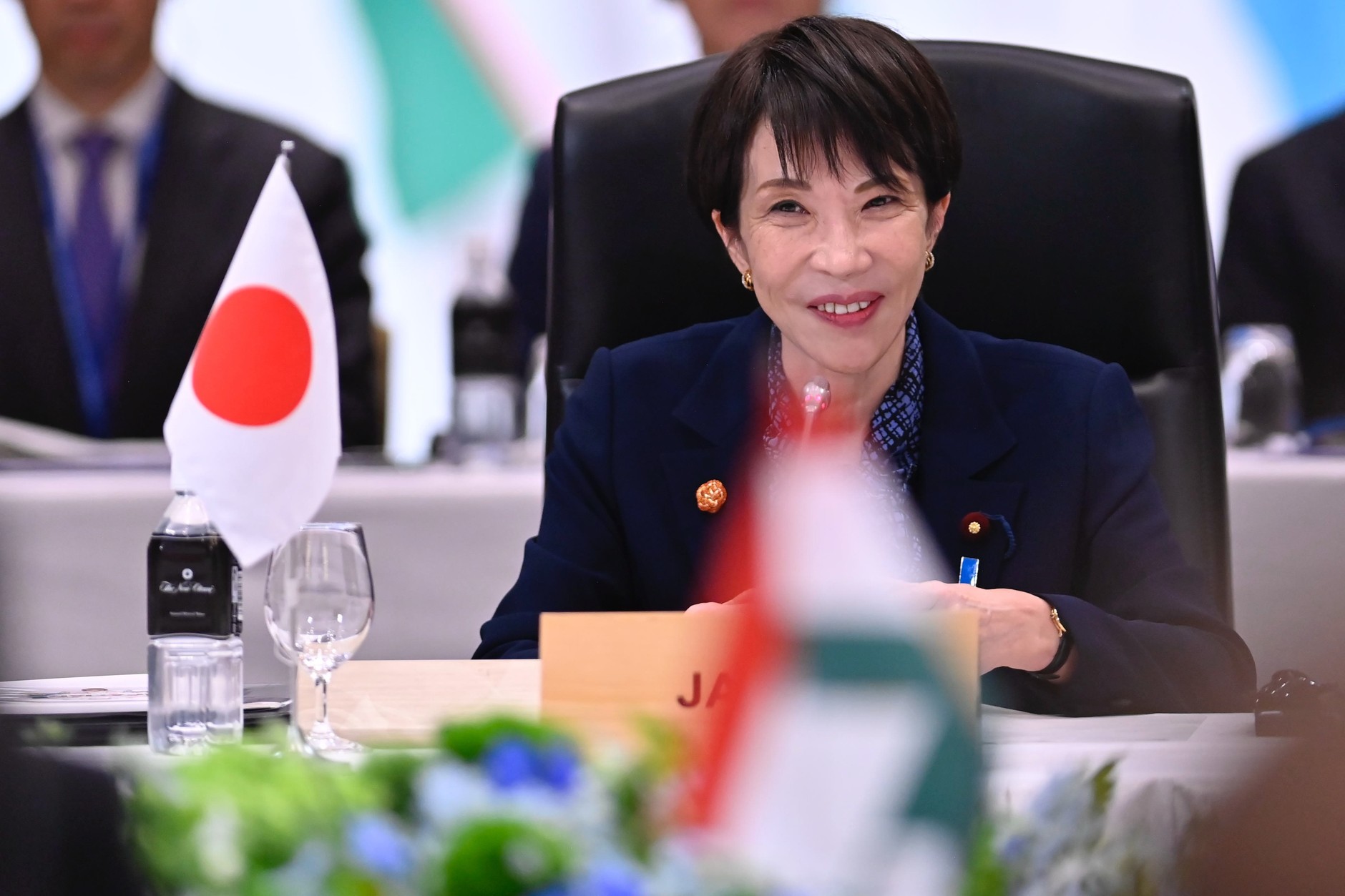
Japanese Prime Minister Sanae Takaichi during a summit attended by the presidents of Kazakhstan, Kyrgyzstan, Tajikistan, Turkmenistan and Uzbekistan, Tokyo, December 20, 2025.Anadolu / Contributor / Getty Images
All this time, post-Soviet countries were actively taking advantage of Russia's weakening – on the one hand to make money on trade with it and obtain windfall profits for helping to circumvent sanctions, and on the other hand – they were trying hard to reduce their traditional dependence on Moscow. To this end, they have accelerated the development of relations not only with China, but also with all regional and global players who have shown interest in this issue.
A striking example of this are the countries of Central Asia. All this time, they were actively looking for partners to replace Moscow and strengthened interstate relations. One of such organizations is the C5+ format, which assumes strengthening regional ties, improving relations with the United States and investments from the EU, Japan and China. The last such event was the meeting in Tokyo – the Prime Minister of Japan received the presidents of Kazakhstan, Kyrgyzstan, Tajikistan, Uzbekistan and even Turkmenistan. The decision was then made to involve the Japanese in developing the Caspian transport corridor. It connects these five Central Asian republics with EU countries – bypassing Russia.
Turning this route into a viable logistical alternative will take time and money. However, Tokyo is determined to use its technologies and investments to speed up the flow of goods along the new route and at least equalize transport times with those running on the Russian route. However, this is not the only project that connected the post-Soviet republics with Japan.
Russia's response has so far been restrained. This is due both to the fact that it is too busy with the war and too much needs the intermediation of all these countries in order to bypass sanctions, as well as the trade in goods and joint projects of Russia and the countries of Central Asia. The Kremlin is reassured by the fact that in the first half of 2025 alone, the mutual trade in goods between Kazakhstan and Russia amounted to $12 billion. (PLN 43.4 billion), and the value of trade between Kazakhstan and Japan was six times lower.
However, dynamics are important. Over the next five years, Japan intends to invest approximately USD 20 billion in the countries of the region. (PLN 72 billion). We should certainly expect further activity of both Kazakhstan and other Central Asian republics in the diversification of economic relations in 2026.
South Caucasus: collision path
The year 2025 clearly drew attention to the weakening of Russia's position in the South Caucasus. The reason is the same as in 2023 – the Kremlin lost the ability to project power during the active phase of the Russian-Ukrainian war. Moscow's claims to domination are not supported by real capabilities, it is simply unable to maintain the structure of subordination of recent years. Moscow's behavior after the downing of the Azerbaijani passenger plane and Azerbaijan's reaction clearly demonstrated this dissonance.
The crisis in Russian-Azerbaijani relations after the murder of two Azerbaijani citizens during a police operation in Yekaterinburg showed the inconsistency of Moscow's claims with the “situation on the ground” even more clearly. The government in Baku took a completely different position than the one it should have taken according to the Kremlin's expectations. Moreover, the Russian authorities were probably not prepared at all for such a decisive reaction.
After some time, they were forced to take a number of conciliatory steps to avoid a further aggravation of relations with Azerbaijan. He did not even decide on full reconciliation. This is a completely unacceptable situation for the Putin regime and would have been completely unthinkable four years ago.
At the end of 2025, it became known that Azerbaijani gas will begin to be supplied to Ukraine via Greece and Bulgaria from the Shah Deniz field. It was already delivered to Europe, but now it will also be delivered to Ukraine – the same Ukraine with which Putin is waging a war of attrition, and undermining its energy security has become one of his main goals.
The article continues below the video
Baku's harsh public reaction to the downing of an Azerbaijani plane by Russian air defense and the death of Azerbaijani citizens in 2024, an equally harsh and no less public reaction to the death of two Azerbaijanis during security force raids in Yekaterinburg in 2025, and the forcible restoration of control over Nagorno-Karabakh in 2023. All this is a consequence of the change in the balance of power in the region, or more precisely, of Russia's inability to project power in the same way as it did before the aggression against Ukraine.
Moscow betrayed Armenia over Nagorno-Karabakh, it betrayed Syria, or more precisely, Bashar al-Assad, when Ahmed al-Shara attacked Damascus, it betrayed Iran when Israel and the United States attacked its nuclear facilities, and now it has betrayed Venezuela. It has lost not only the ability to project power, but also to provide serious assistance to its allies.
The war against Ukraine became the cause Moscow's final loss of its long-standing network of influence in this region — the possibility of being an arbitrator between Baku and Yerevan. The year 2025 finally confirmed this: the two quarreling countries no longer need Moscow's mediation. This creates a new reality in which President Aliyev demands respect from Russia and may simply not come to the informal summit of the CIS countries.
This also translates into a sense of betrayal – Armenia certainly has it, as the Kremlin did not help it in any way in its confrontation with Azerbaijan. The new reality makes Economic projects that clearly harm Moscow's interests are becoming obvious to Russia's former allies — the main one is the reconstruction of the transport corridor connecting Azerbaijan with the Nakhchivan Autonomous Republic on the border with Turkey and Iran. Could it have been imagined not long ago that Armenia would buy gasoline from Azerbaijan? Or any other goods? And yet he buys it.
Weapons market: lost potential
The year 2025 was marked by another important trend that directly – and negatively – affected Russia's geopolitical position: the reduction of its ability to use the sale of technologically advanced weapons as an important tool of influence and the basis for long-term alliances with regional superpowers.
Although there were reports in the media before Putin's visit to India that India intended to buy additional missiles for the S-400 air defense system from Russia, and even the amounts of potential contracts were given, the new reality introduces important adjustments.
It is not just about Russia's inability to timely deliver two of the five S-400 systems ordered by New Delhi, but about Russia's very ability to produce air defense systems in sufficient quantity and, last but not least, quality. As for the first element, i.e. the number of systems produced, 2025 has become the year of systematic destruction of Russian air defense by Ukrainian drones.
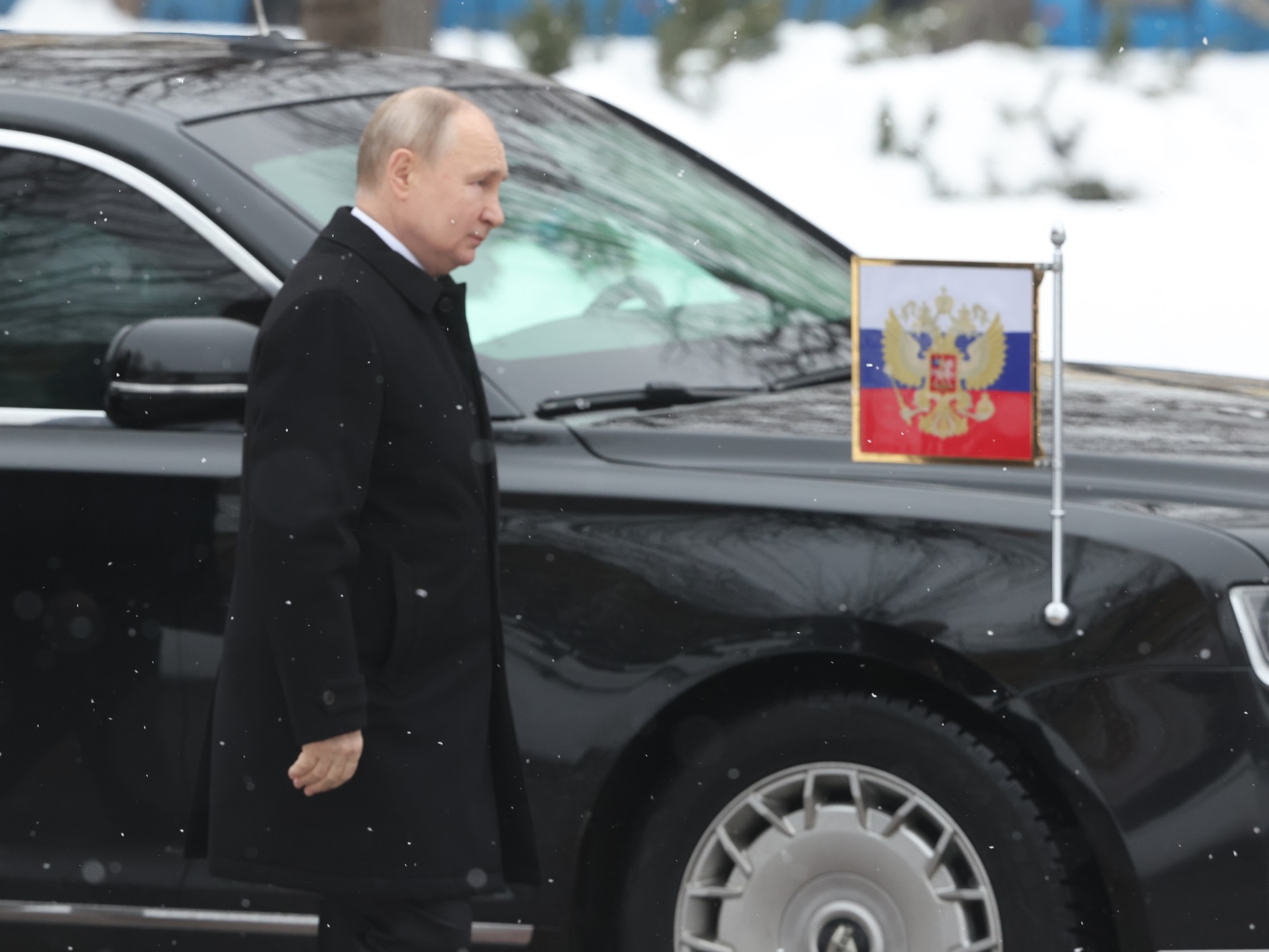
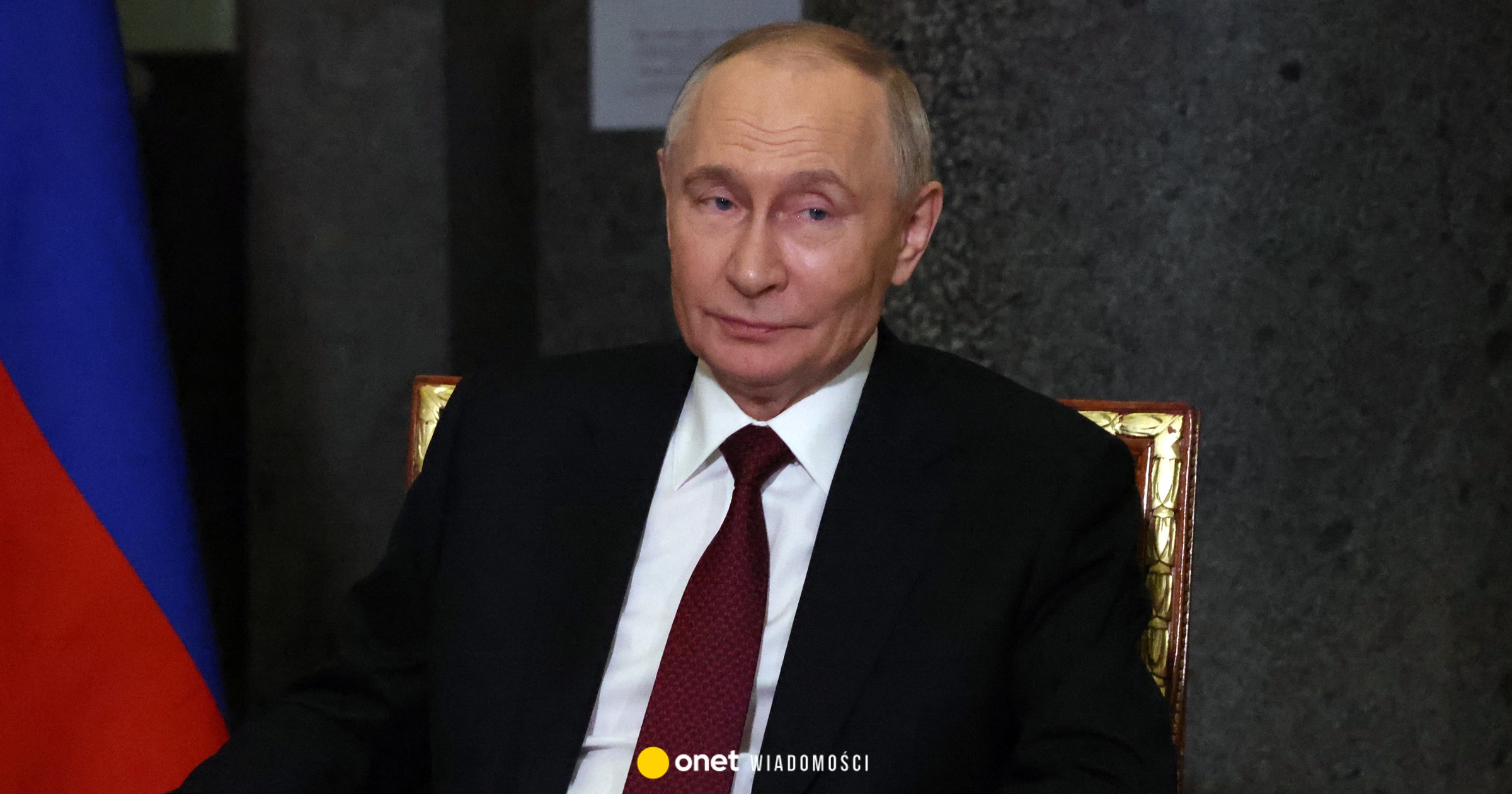
Vladimir Putin in Moscow, February 23, 2024.Contributor / Contributor / Getty Images
It also showed that Russia needs even more of these systems for its own needs. The problem with their quality can also be easily explained – an alternative to Western components, which are increasingly difficult to obtain, are well-known Chinese products. However, the latter are generally less effective than their Western counterparts.
As the sanctions system becomes more complicated, it is becoming more and more difficult to obtain Western components, and the demand for them is only growing. These problems are becoming more and more obvious. On social media in India There are even campaigns suggesting that we should consider whether it is worth investing in the Russian arms industry in conditions of increasing uncertainty of its functioning and its priorities, which include the war in Ukraine. Another thing is that China may be behind such campaigns in India, but this is a topic for a larger discussion.
The “easy trip” of US special forces to Venezuela amid the resounding silence of Russian air defense systems certainly did not add points to the Kremlin's arms diplomacy.
A question of identity
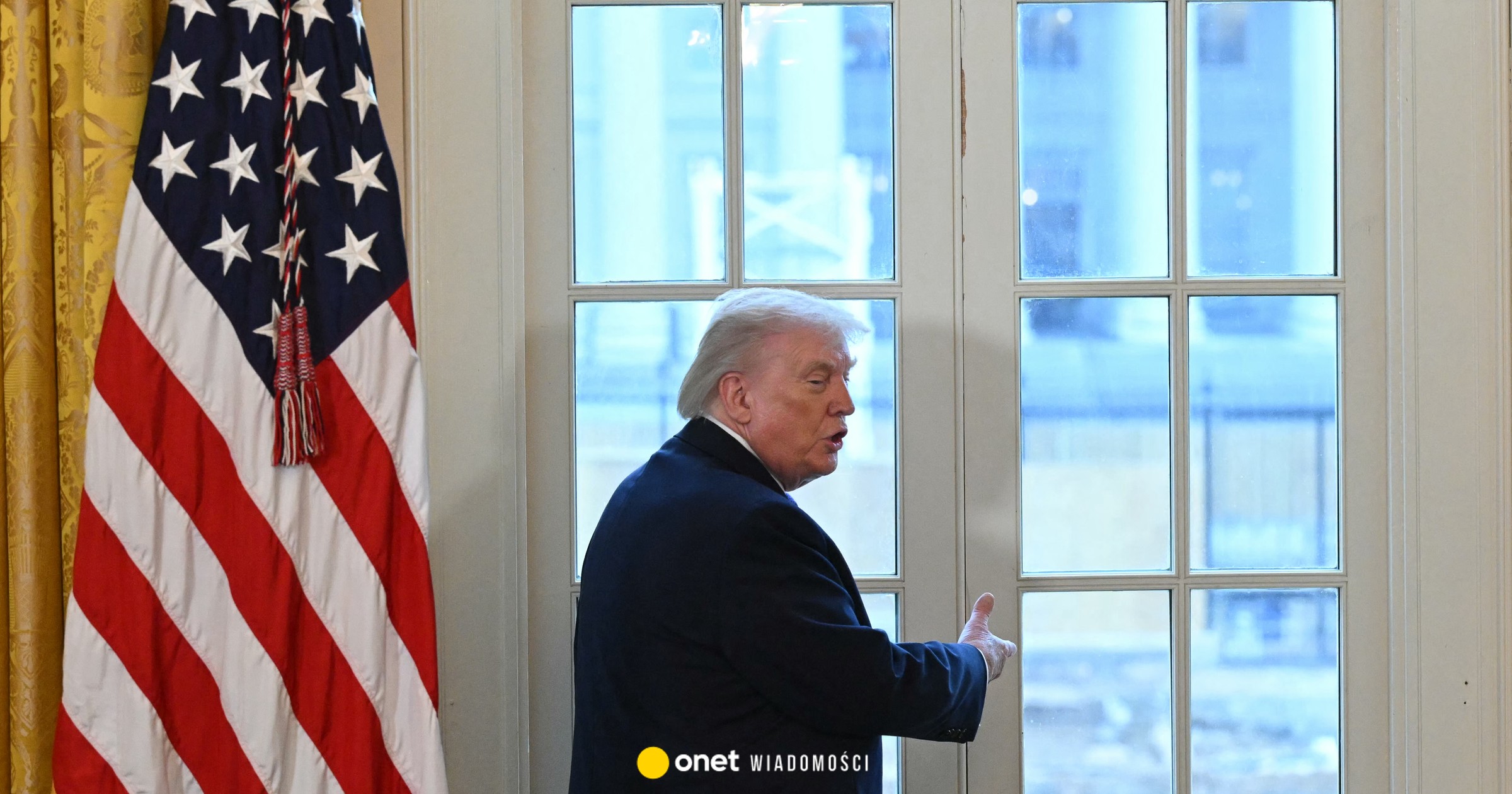
Moscow's inability to project power contrasts sharply with Washington's power. Trump has clearly demonstrated that until you are able to bring order by brutal force in the region you consider to be your backyard, I will do it most effectively and without losses where my backyard is.
Therefore, the Kremlin's inability to exert influence is dangerous for it not only from the point of view of image, economy, geopolitics and politics. It is now an existential issue and a question of identity.
The Kremlin was clearly not prepared for the emergence of a leader who would be ready to violate international law in a similar way and actively demonstrate power, violating the interests of others, including: Russia. Russians probably believed that only an unprincipled Russian leader was capable of this, and this is what makes him a unique figure in world politics and confirms Russia's claim to superpower status.
Not the economy or even nuclear weapons, but precisely this ability and willingness to demonstrate power – that is what counts. Venezuela has shown that the Russian leader only has the willingness, not the ability, to demonstrate force. And he caused it himself – first by starting a full-fledged war, and then refusing to end it in order to minimize losses.