Maduro wasn't worth the US military's big secret. Experts speak clearly

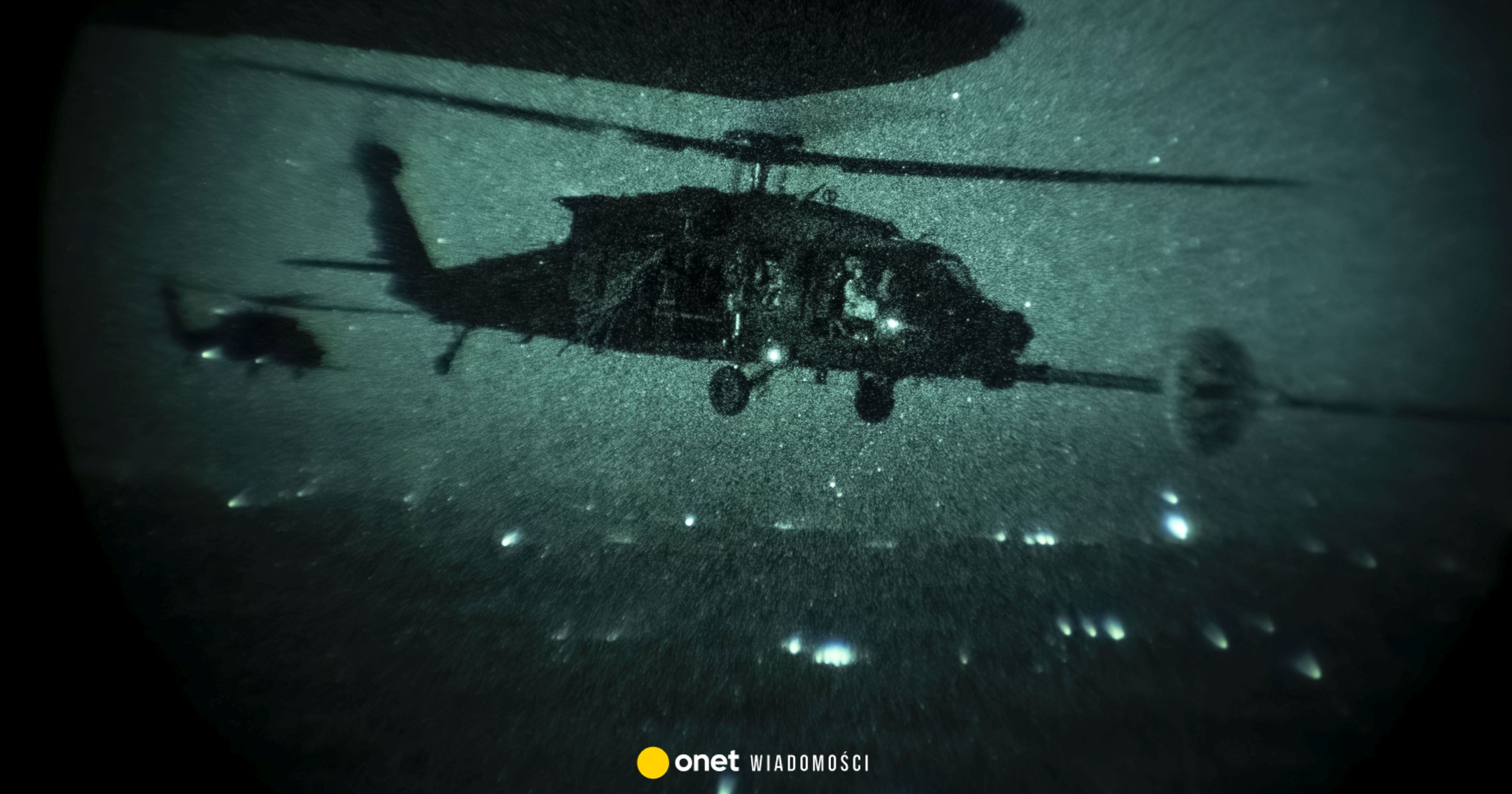
When special forces attacked the compound where Osama Bin Laden was staying in May 2011, the key element of this operation were specially modified Black Hawk helicopters, multi-role, extremely versatile structures that have been an integral element of American special forces for years. The recordings that appeared on the Internet during the operation to kidnap President Maduro show that the Black Hawks also participated in this mission, but in a more classic, albeit armed, version.
The fact that this time the Pentagon has not decided to use “invisible” black hawks raises the question of the current status of these globally unique units. It's also a good opportunity to get to know these extraordinary machines better and answer the question, why didn't the Americans decide to use these structures?
The history of “invisible” black hawks dates back to the 1970s, when stealth technology, which was fully revealed to the world thanks to the F-117 Nighthawk aircraft, was just in its infancy. However, already then the American army was planning to use it to expand the capabilities of its helicopters. Interestingly, the current status of these unusual and mysterious structures in the US forces is not actually known — in fact, we don't even know what these machines officially look like. On the Internet, you can only find photos of the Black Hawk from 2020 in the “invisible” (or intended to show the theoretical appearance of such a structure) version of the EH-60 helicopter designed to conduct electronic warfare and electronic reconnaissance activities. As you can see in the photo below, the fuselage of the machine has been modified in such a way as to lower its radar signature, but it is difficult to say whether this is what “stealth hawks” look like today – if, let us emphasize this, the Americans actually have such units in their air arsenal.
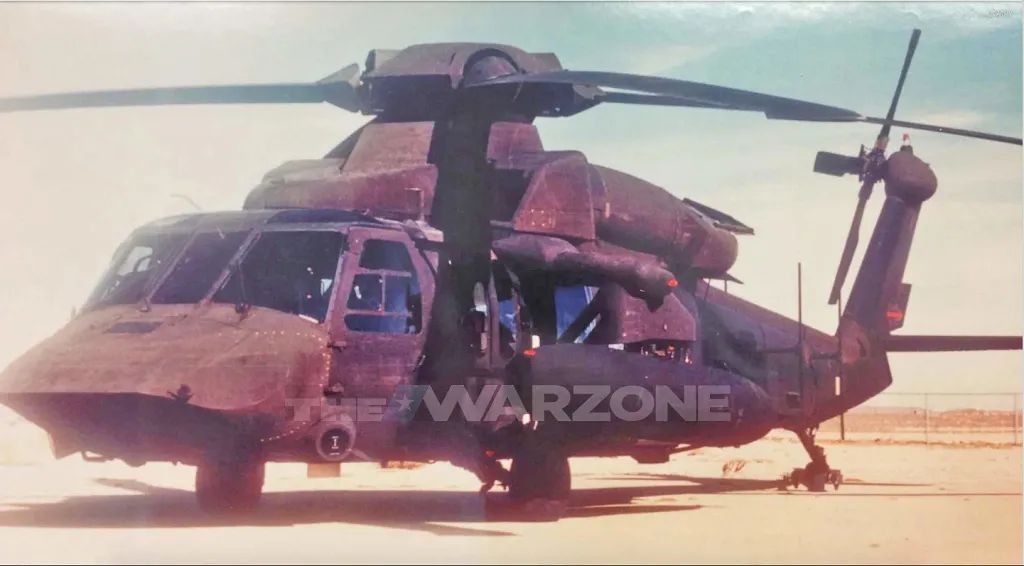
Modified EH-60 helicopterThe War Zone
From what we know the helicopters that the Americans used in the mission to eliminate Bin Laden were highly experimental, even exotic designswhich were taken from the warehouses of the famous Area 51 for the mission. The first rumors about these machines could be heard in the US army, but even ten years earlier, right at the beginning of the 21st century. Sean Naylor writes about it in the book “Relentless Strike” from 2015.
“Invisible” Black Hawks have gained an almost mythical status, like unicorns. “I remember first hearing about them in 2000 or 2001,” one Delta Force operator tells me. Their program quickly gained popularity. “I remember hearing in 2004 that it was in the budget,” adds the same source. Specific knowledge of the program was limited to those who needed to know it, and this was an unusually small group. Shortly thereafter, the command of the 160th Regiment asked the 1st Battalion – the basic unit of Task Force Brown – to send two crews to Nellis Air Base in Nevada (i.e. to the so-called Area 51 – ed.) to begin training on the new helicopters. One group was eventually sent after several pilots volunteered. “I never saw them again,” an informant from the 160th told me. “They were assigned there permanently.” The program became more formalized over time. The helicopters were stationed at Nellis Air Force Base, but the crews of the 160th Regiment also trained on them at other facilities scattered throughout the southwestern United States: Area 51, the China Lake Naval Air Weapons Station in California, and the Yuma Test Center in Arizona. The United States Special Operations Command planned to create a fleet of four stealth helicopters, which were to become the foundation for a new secret aviation unit stationed in Nevada. Ultimately, command canceled this plan, but the first two stealth helicopters already existed and some 1st Battalion crews were being sent to Nellis to train on them.
Training in operating stealth helicopters was needed for a simple reason – the machines received such significant upgrades that they became more difficult to flythan in the case of a normal black hawk. This came to light during the 2011 mission, during which one of the helicopters was lost during a hard landing. It was then that the public actually learned about the existence of this type of construction in the American arsenal.
The secret nature of the mission in Pakistan meant that the Americans had no choice but to leave the damaged machine behind, unable to fly; they only managed to plant explosives under it. However, the remains of the secret helicopter were in the possession of the Pakistani authorities for over two weeks and, according to unofficial reports, Chinese and Russian experts were allowed to access them.who had the opportunity to examine the tail part of the machine covered with a special coating that absorbs radio radiation.
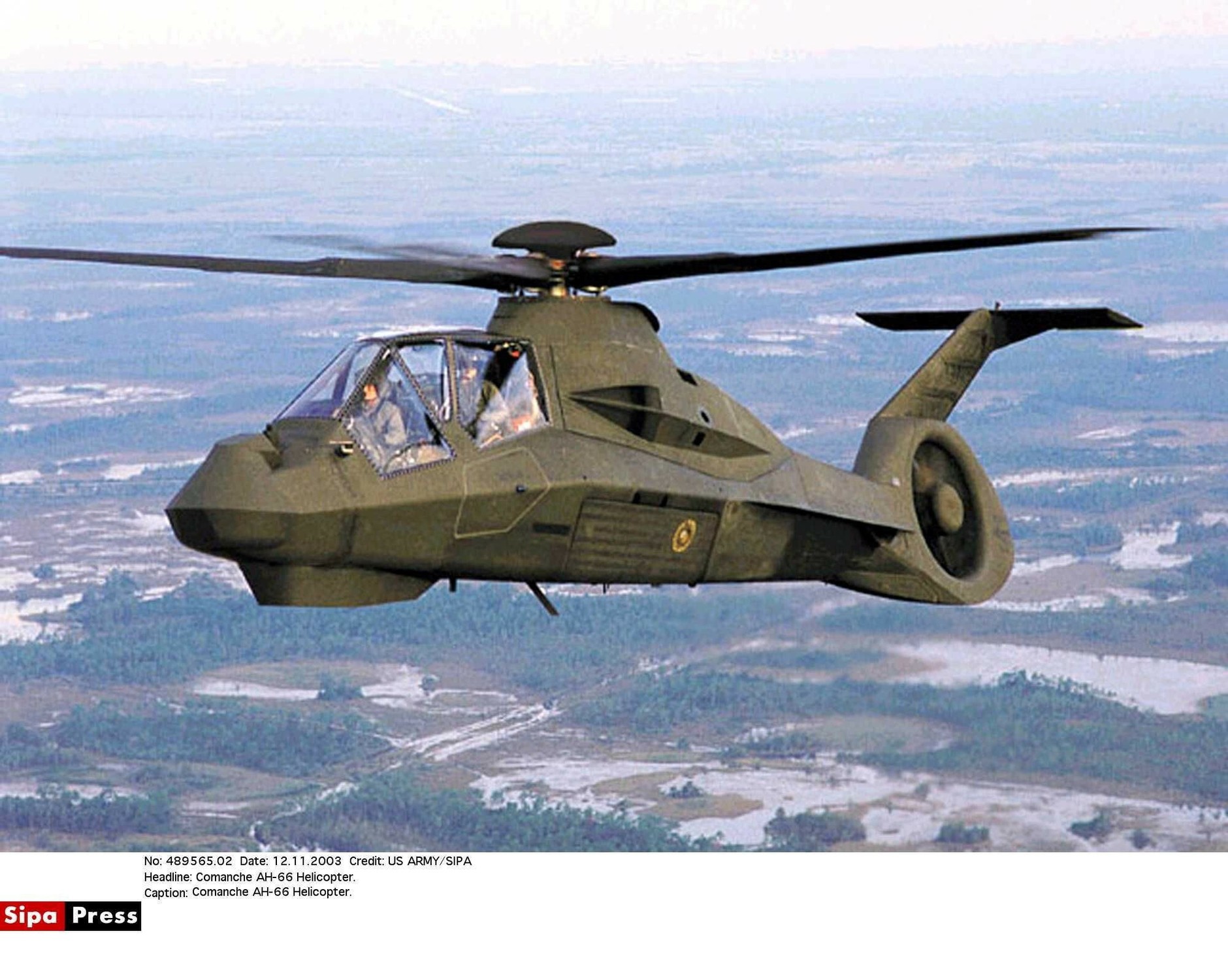
Do you remember the Comanche helicopter? It also used stealth technology, but ultimately never entered serviceEast News/US ARMY/SIPA
Since the 2011 mission, we have never heard officially about the activities of “invisible” black hawks again, however, it appears that the Pentagon continued to use them in the following years. Helicopters of this type were allegedly used in 2014 during an unsuccessful attempt to rescue hostages held by ISIS in Syria, and they are also linked to the US special operation in North Korea in 2019. Interestingly, according to unconfirmed reports, already in 2011, the Pentagon allegedly had the second generation of Black Hawk helicopters in a stealth version, but the Americans, fearing the loss of their technological secrets, decided to use the older version helicopters.
According to other reports, the second generation of “stealth hawks” was created after the killing of the Al-Qaeda leader. It is also possible that since then the US special forces have already received the third generation of “invisible” helicopters, after all we are talking about the absolute leader in work on stealth technology, as evidenced by the F-35 fighter released in recent years and the rapidly approaching F-47.
Given the great secrecy surrounding these machines, it is not surprising that the helicopters were not used during the Maduro kidnapping. This is due to, among others, from the American course a mission whose characteristics did not match the capabilities of “invisible” black hooks. Suffice it to mention that during the entire operation, the Americans used a total of 200 people from various branches of the American army, who were transported to the facility where the President of Venezuela was staying. It is therefore not surprising that Chinook helicopters were used for this purpose, which have a much larger capacity than Black Hawks.
The fact that we know so little about the US Army's “invisible” helicopters is also a clear signal that the Pentagon treats these machines as an extremely valuable resource and if there is no absolute need to use them (and thus risk the loss of such a unit), they simply stay at home. Additionally, it is best to use this type of structures without the support of “visible” machines, so as to maximize their capabilities and allow them to reach the mission target undetected. The use of ordinary black hawks and Chinook helicopters meant that “stealth hawks” lost their main advantage.
It is worth adding that the “Absolute Resolve” operation was supported by other interesting American machines, e.g. specialized RQ-170 Sentinel drones using stealth technology. These are almost as mysterious structures as “Steatlh Hawks”. We only know that they entered service around 2007, but the Americans have not yet revealed the exact capabilities and tasks they perform for the army and the Central Intelligence Agency (CIA). According to experts, drones are used for reconnaissance and aerial reconnaissance and were also reportedly used to prepare and support the mission to kill Bin Laden.
As you can see, the “invisible” Black Hawk helicopters are currently one of the most mysterious vehicles in the US military, and so far there is no indication that this will change.